


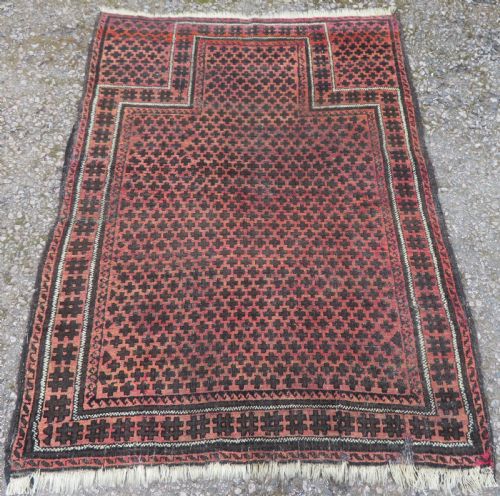

Wool Tribal Prayer Rug
These wool tribal prayer rug examples bring centuries of nomadic and village weaving traditions into domestic spaces.
Wool Tribal Prayer Rug
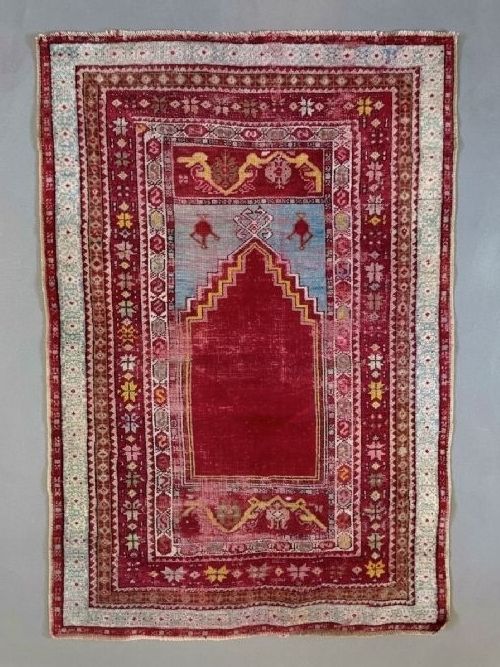
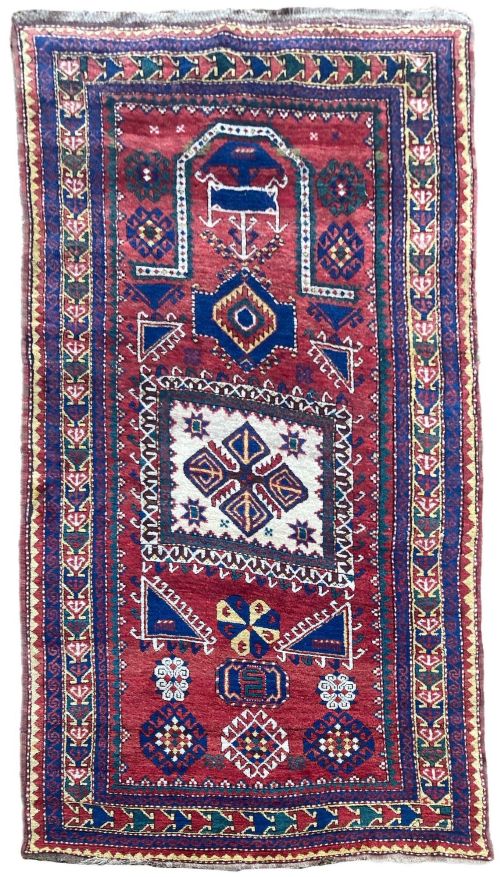
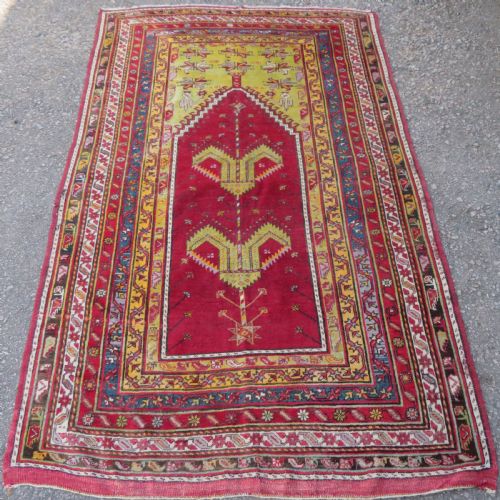
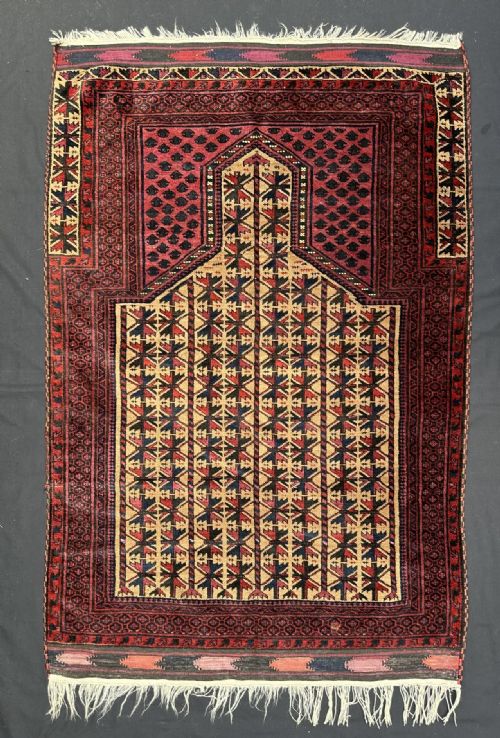
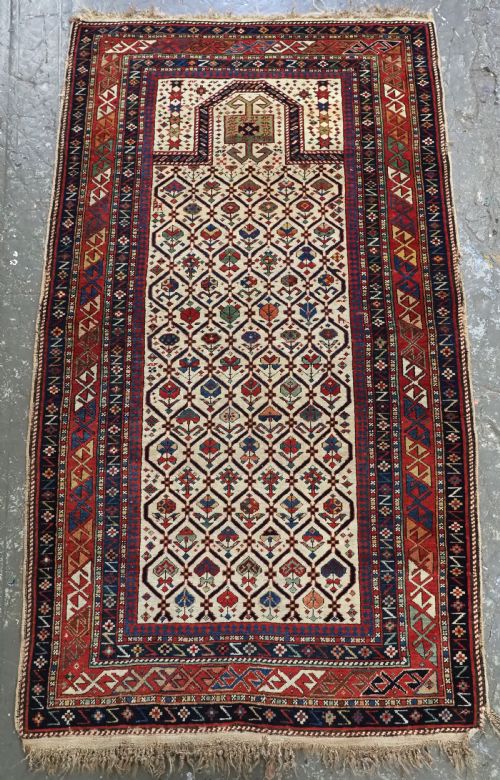
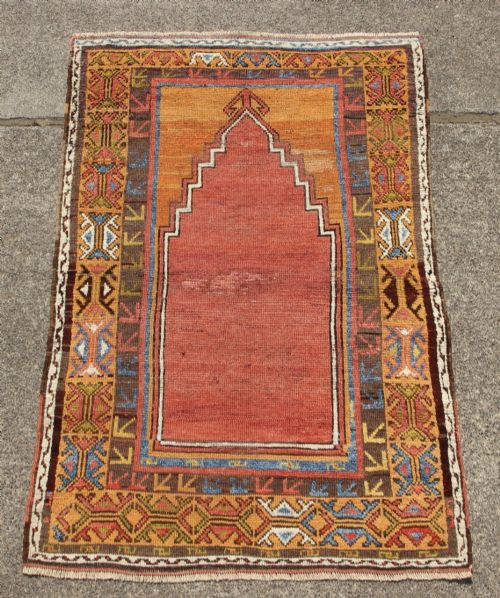
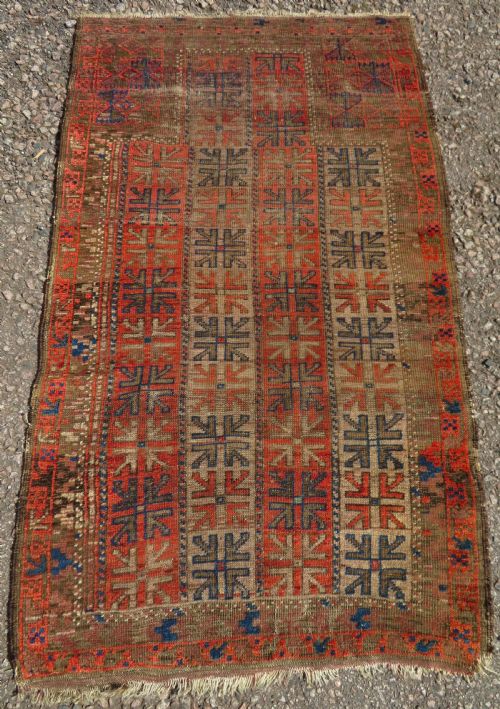
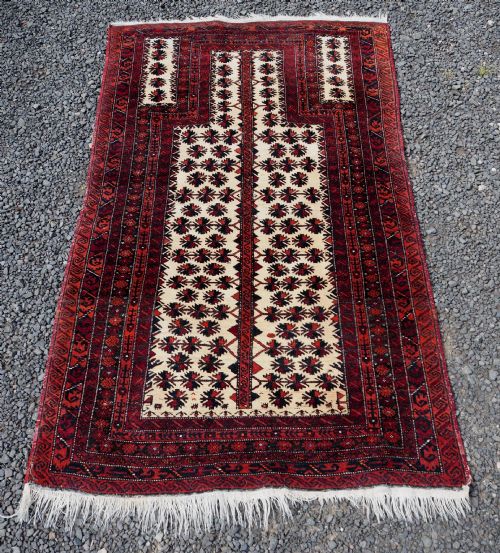
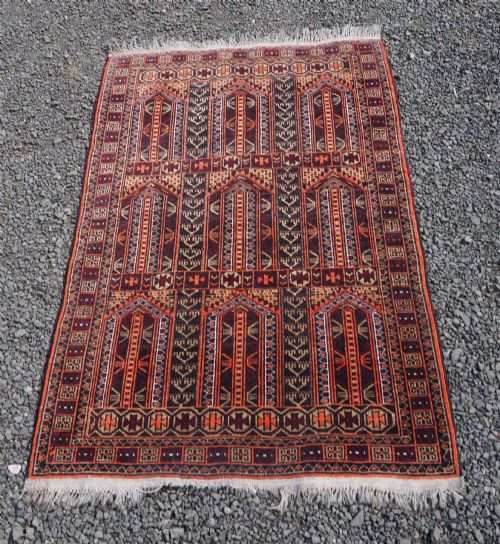
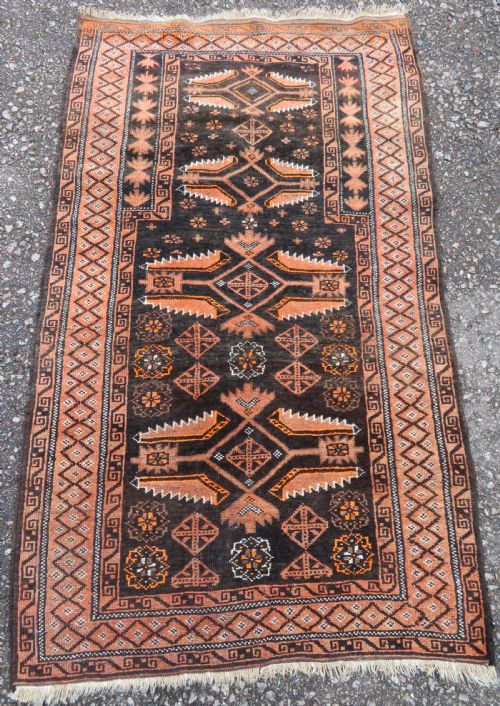
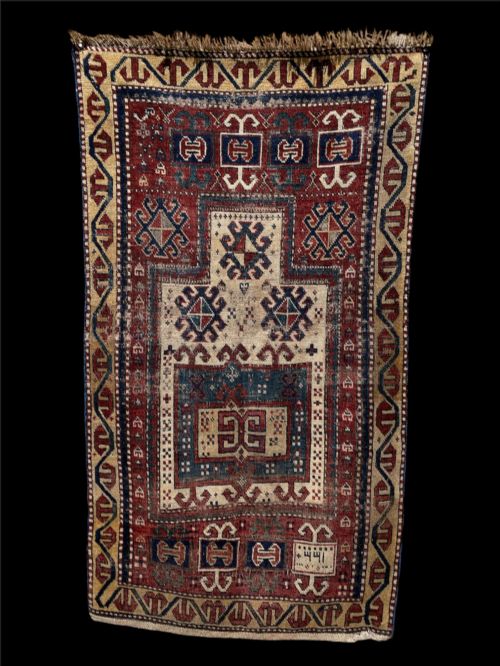
A wool tribal prayer rug brings together historical textile traditions from Anatolia, the Caucasus, and Persia, serving distinct devotional purposes with defined architectural formats. When searching for a wool tribal prayer rug, buyers encounter hand-knotted pieces created by village and nomadic groups including Baluch, Afghan, and Caucasian weavers. The most frequent examples on this page date from the nineteenth and early twentieth centuries, displaying characteristic niche designs used for directional prayer.
The architectural layouts reflect specific regional cultures, such as the single or double mihrab arches seen in Anatolian and Afghan weaving. These formats guided the worshipper toward Mecca, functioning as portable spaces for daily ritual observance. Surviving examples demonstrate the utilitarian nature of these textiles, which were worked by hand for domestic and community shrines rather than for display alone.
Materials and construction
Weavers relied primarily on wool, hand-spun wool, and camel wool for the pile, combining these with cotton or goat hair for the foundations. Natural dyes imparted rich tones to the wool, creating the characteristic palette found across nineteenth and early twentieth-century village pieces. These materials provided durability for nomadic life while supporting intricate geometric and floral lattice designs.
The construction involves hand-knotting techniques passed down through generations within tribal groups such as the Timuri, Taimani, and Kizil Ayak. Long kilim ends and mixed techniques appear on specific regional formats, showing how structural utility merged with decorative border work. Each rug took shape on upright or horizontal looms set up in camps and villages.
Some weavers added tiny talismanic motifs hidden inside the prayer arch, perhaps to ensure the carpets carried a little extra protection out on the migration trails.
Evaluating the range
The upper tier of these textiles displays exceptional crispness in drawing and deep saturation in the natural dye palette. Such pieces maintain structural integrity in the pile alongside well-preserved kilim ends, reflecting skilled hand-spinning and careful knot density.
Examples lower in the range show heavy distress, uneven wear, or muddy colour interactions resulting from inferior dye preparation or heavy utilitarian use. While age brings natural patination, the distinction lies in whether the remaining pile allows the original design geometry to remain legible.
The Wool Tribal Prayer Rug Glossary
- Mihrab
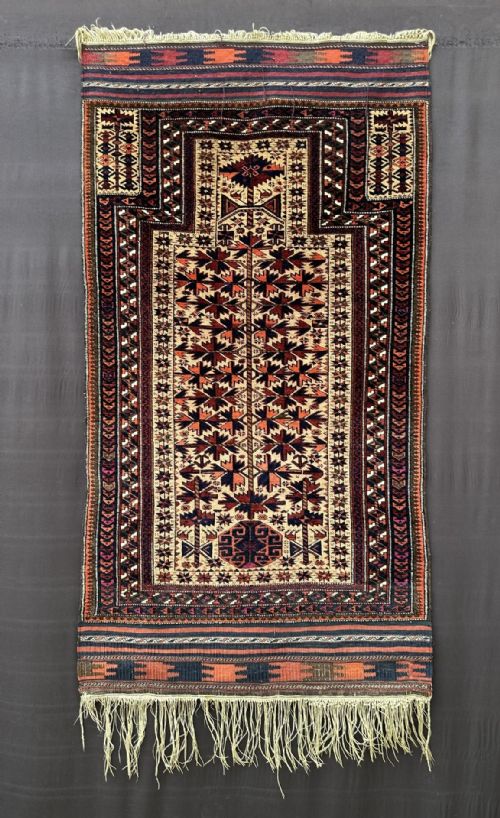
- The arched niche design at one or both ends of a prayer rug that mimics the prayer hall architecture of a mosque. This focal point directs the placement of the worshipper during ritual prayer.
- Kilim end
- Flatwoven sections extending beyond the knotted pile at the top and bottom of the rug. These portions protect the main body from fraying during daily use.
- Natural dye
- Colouring agents derived from plants, roots, and insects rather than synthetic compounds. They produce nuanced, variable tones that age gracefully within the wool pile.
- Hand-spun wool
- Yarn prepared manually using a drop spindle or spinning wheel rather than industrial machinery. This method yields uneven thickness that absorbs natural dyes with subtle depth.
- Double mihrab
- A format featuring pointed arches at both ends of the central field. This symmetrical layout appears frequently in Anatolian and Afghan tribal weaving.
Wool Tribal Prayer Rug: Frequently Asked Questions
What is a wool tribal prayer rug?
A wool tribal prayer rug is a portable hand-knotted textile created by nomadic or village weavers in regions such as Anatolia, the Caucasus, and Persia. They were designed for daily personal devotion.
The defining characteristic is the mihrab, an arch shape that indicates the direction of prayer. These pieces utilise local materials like hand-spun wool and natural dyes to produce durable floor coverings with distinct regional patterns.
How were these rugs used originally?
Nomadic and village weavers produced these textiles to serve as clean, portable spaces for ritual daily prayer. They were rolled out when needed and stored away when not in use.
Because they fulfilled a specific religious function, the designs often incorporated protective symbols alongside the central prayer arch. Over time, many also served practical domestic roles within tents and village homes.
How do I care for an antique prayer rug?
Living with these textiles requires gentle maintenance, such as regular light vacuuming without a rotating brush to protect the delicate wool pile and flatwoven ends. Keeping them out of direct sunlight prevents the natural dyes from fading.
Professional cleaning tailored to antique textiles helps preserve the structural integrity of the foundation. Placing a breathable rug underlay underneath also reduces friction against hard floors.
How can I tell different regional styles apart?
Regional attribution relies on observing specific structural traits, colour palettes, and motif arrangements unique to weaving groups like the Baluch, Caucasian, or Anatolian communities. For instance, Caucasian pieces often display sharp geometric lattices, while Afghan and Persian tribal pieces favour deep reds and camels.
Border designs and the presence of single or double arches further clarify where and approximately when a piece was knotted.