





Wool Needlework Picture
A wool needlework picture brings textured depth and historic character to a room through centuries of hand-stitched artistry.
Wool Needlework Picture
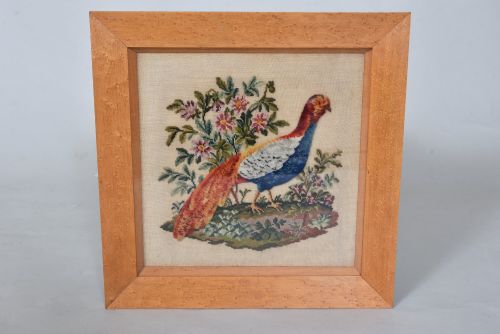
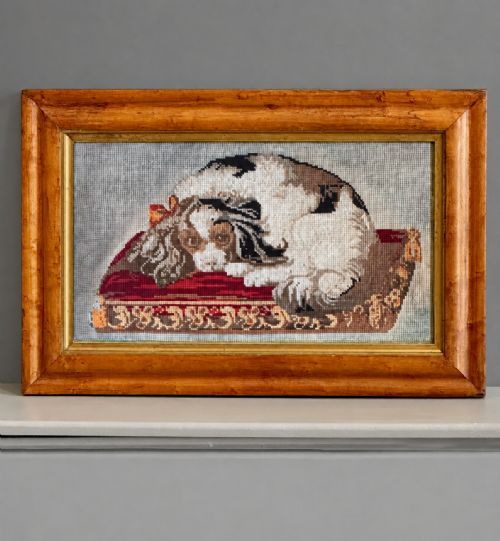
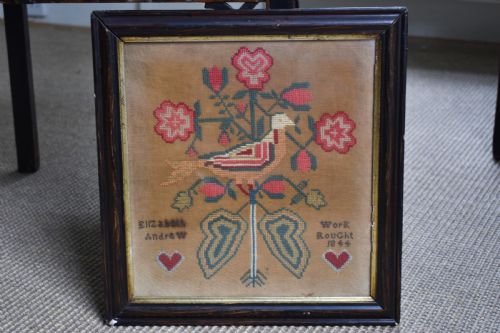
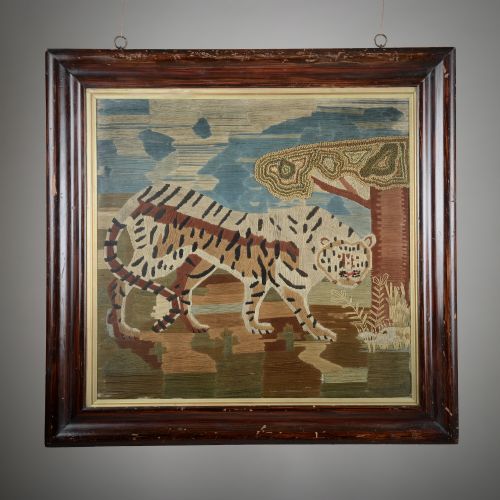
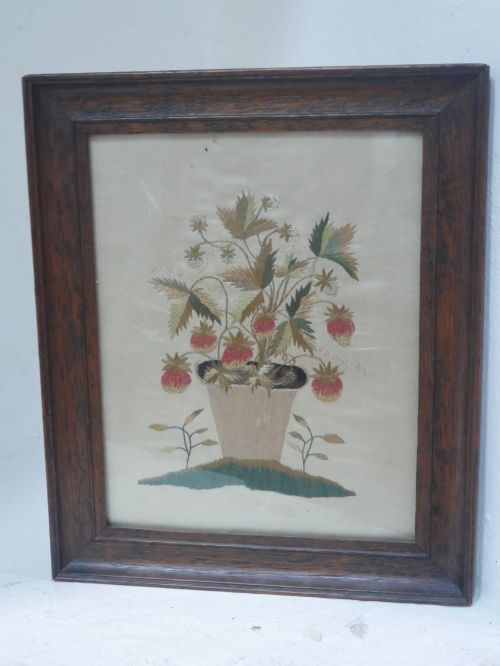
A wool needlework picture is a textile wall art piece worked on canvas or linen using wool, often incorporating silk or other fibres. These works span from the 17th century through the Victorian era and into the early 20th century, covering domestic scenes, animals, and classical subjects.
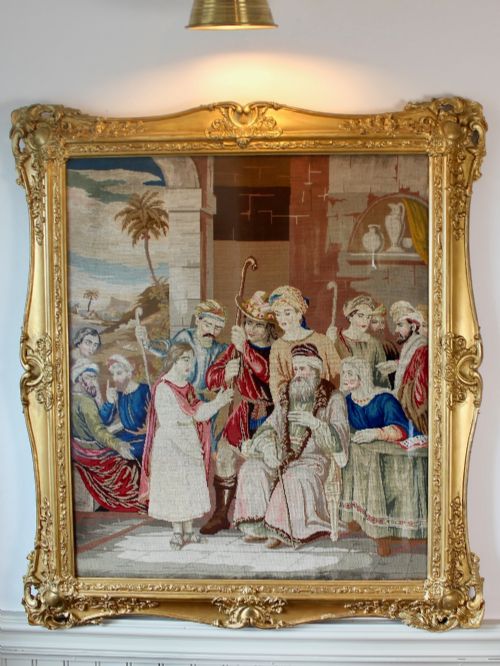
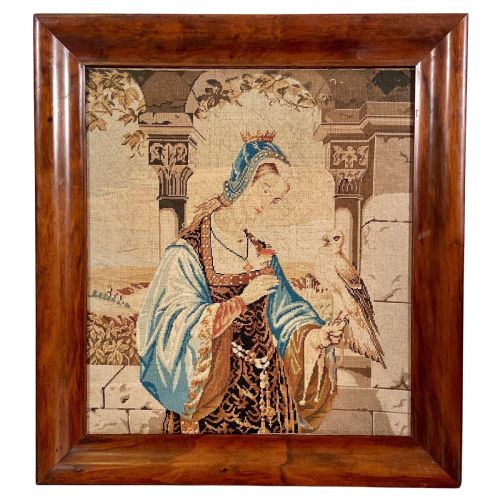
The most common examples encountered on this page date from the 18th and 19th centuries, including Victorian Berlin wool work and sailor-made woolies. Subjects range from pastoral farming scenes and portraits to birds, animals, and religious depictions.
Pieces frequently survive in their original frames, which include burr maple, rosewood, oak, and giltwood. Some examples utilise specialist surrounds such as verre églomisé glass panels to frame the textile.
Materials and technique
Makers stitched wool, and occasionally silk, onto a foundational ground of canvas or linen using varying gauges of stitch such as gros-point and petit-point. Plushwork introduced a raised, velvet-like pile to particular elements of the design.
Framing played a crucial role in the preservation of these textiles, utilising woods like oak, rosewood, and burr maple alongside protective glass layers. Giltwood frames provided an ornate surround for larger wall hangings and German Berlin wool work panels.
Wool Needlework Picture Retail Price Guide 2026
Typical asking prices for wool needlework picture among the pieces listed under this phrase on Sellingantiques today, from the lower quarter to the upper quarter. They describe what is for sale here now, not the wider market.
Listings feature wool needlework pictures spanning from the 17th century to the 1930s, incorporating wood, glass, gold leaf, and giltwood frames.
Distinctions in quality
The survival of original framing, particularly burr maple or verre églomisé glass, elevates a piece. The clarity of the wool pile and the structural integrity of the underlying canvas or linen determine the overall standard.
The Wool Needlework Picture Glossary
- Berlin work
- A style of needlepoint popular in the 19th century that used charted designs printed on grid paper. It allowed makers to produce intricate pictorial compositions using brightly coloured wools.
- Gros-point
- A coarse counted-thread embroidery stitch used on canvas. It provides a durable, textured surface ideal for larger areas of background or foliage in needlework pictures.
- Petit-point
- A fine tent stitch worked over a single thread of canvas. This technique allowed makers to achieve high detail in facial expressions and intricate motifs.
- Woolie
- A colloquial term for embroideries made by sailors at sea during the 19th century. They typically depict maritime scenes or ships using wool on canvas.
- Verre églomisé
- A process of applying cold gilding and painting to the reverse of glass. It is often found on frames surrounding period needlework pictures.
Wool Needlework Picture: Frequently Asked Questions
How do I hang a wool needlework picture?
Protect the textile by placing it away from direct sunlight and damp environments. Ensure the hanging wire and wall fixings adequately support the weight of the framed piece.
Professional framing with conservation-grade glass helps shield the wool fibres from environmental degradation and dust accumulation over time.
What is the difference between Berlin work and a sampler?
Berlin work utilises charted grid patterns to create pictorial scenes, portraits, or animals using rich wool yarns. Samplers primarily served to demonstrate a maker's proficiency in various alphabets, numerals, and stitch types.
Samplers often lean towards orderly rows of lettering and motifs, whereas Berlin work functions as a complete framed picture.
Can I clean an antique needlework picture?
Surface dust can be gently removed using a soft brush with light, outward strokes. Avoid using water or liquid cleaners on the wool or canvas.
Professional textile conservators should handle deeper cleaning or repairs to prevent distortion of the historic fibres and backing.
How do I identify the period of a needlework picture?
Examine the framing materials, canvas weave, and colour palette alongside the subject matter. 18th-century examples often feature silk mixed with wool in pastoral or classical compositions, while mid-19th-century works frequently employ bright Berlin wools.
Backboards, old labels, and framing styles provide further clues to the date of execution.