


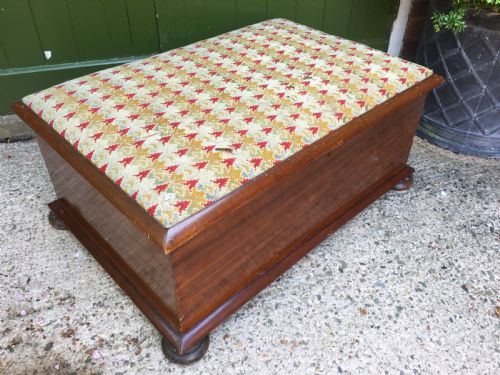


Mahogany Framed Needlepoint
Mahogany framed needlepoint brings together rich timber frames and intricate stitched textiles, offering a warm decorative touch for traditional interiors.
Mahogany Framed Needlepoint
Mahogany framed needlepoint spans practical furnishings and decorative wall pieces created across the nineteenth and early twentieth centuries. Buyers seeking mahogany framed needlepoint will encounter items ranging from low footstools and nursing chairs to fire screens and framed textile art.
Victorian examples dominate the selection alongside pieces from the Regency period and the early twentieth century. Common forms include long footstools, ottomans, and adjustable tapestry frames worked in wool or silk.
Stylistic influences stretch from Queen Anne and Georgian revivals to classic Victorian patterns depicting florals, animals, and samplers. Each piece unites structural mahogany woodwork with hand-stitched canvas work.
How they were made
Makers constructed the supports from solid mahogany, shaping the timber into chair frames, footstools, and screen surrounds with polished wooden finishes. These wooden structures frequently incorporate revival details such as cabriole legs or turned supports.
The textile elements rely on wool and silk threads stitched onto canvas grounds using techniques like gros point. Protective glass panels occasionally shield delicate needlework samplers and wall art from dust and damage.
Mahogany Framed Needlepoint Retail Price Guide 2026
Typical asking prices for mahogany framed needlepoint among the pieces listed under this phrase on Sellingantiques today, from the lower quarter to the upper quarter. They describe what is for sale here now, not the wider market.
Margaret Ann Blackow stitched her sampler at age twelve, preserving her childhood handiwork for modern living rooms.
What varies in quality
Quality rests upon the tightness and complexity of the needlework stitches, where finer thread work and more pictorial detail elevate a piece. The crispness of the mahogany framing and the integrity of the joinery further distinguish finer examples.
Originality plays a decisive role, particularly when footstools or ottomans retain their period needlework tops. Pieces displaying well-preserved textiles paired with robust, unblemished mahogany frames represent the highest standard.
The Mahogany Framed Needlepoint Glossary
- Gros point
- A coarse needlepoint stitch worked on canvas, commonly utilised for durable upholstery on footstools and ottomans.
- Needlework sampler
- A piece of textile art created to demonstrate a maker's proficiency in various stitches and alphabets.
- Fire screen
- A decorative wooden frame holding a textile panel, designed to shield a person's face from the heat of an open fireplace.
- Tapestry frame
- A wooden stretcher used to keep canvas taut while hand-stitching needlepoint designs.
- Nursing chair
- A low-seated chair traditionally used for nursing children, often featuring an upholstered seat and back.
Mahogany Framed Needlepoint: Frequently Asked Questions
Are these pieces suitable for daily use?
Sturdier items like mahogany footstools and ottomans function well for everyday placement in traditional rooms. Lighter items such as needlework pictures and wall hangings serve primarily decorative purposes.
Consider the condition of the underlying frame and canvas before subjecting older furniture pieces to heavy weight. Gentle use preserves the fragile historical stitching.
How do I date a Victorian piece?
Examine the timber characteristics, construction methods, and stylistic motifs associated with the mid to late nineteenth century. Victorian items often feature characteristic mahogany turnings and deep-toned wood finishes.
Inscriptions on samplers, such as a maker's name and age, frequently provide an exact date for the textile work. Comparing the needlework style to documented patterns helps narrow down the period.
What is the difference between gros point and standard needlepoint?
Gros point utilises a heavier yarn and a coarser canvas mesh, producing a durable texture suited for heavy wear items like footstools. Standard needlepoint often incorporates finer petit point stitching for greater pictorial detail.
Many nineteenth-century pieces combine both stitch types to achieve shading and texture within a single pictorial scene.
Can tapestry frames still be used for stitching?
Antique tapestry frames function effectively as adjustable stretchers for contemporary needlework projects. The wooden screw mechanisms allow modern makers to tension canvas securely.
Many collectors also display these frames simply as decorative objects showcasing historical woodworking and partial textile art.