
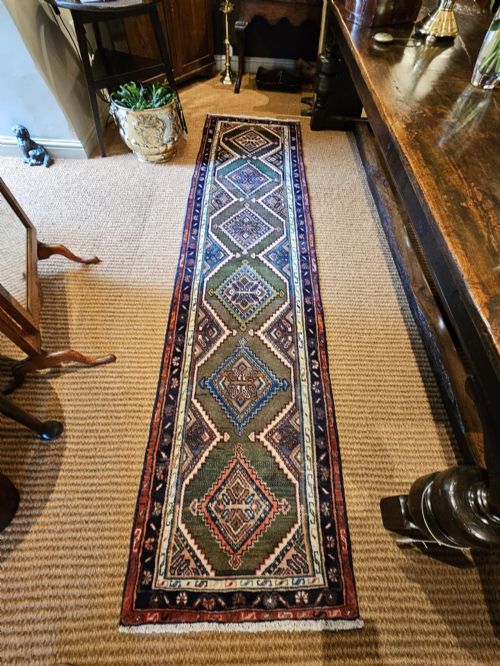
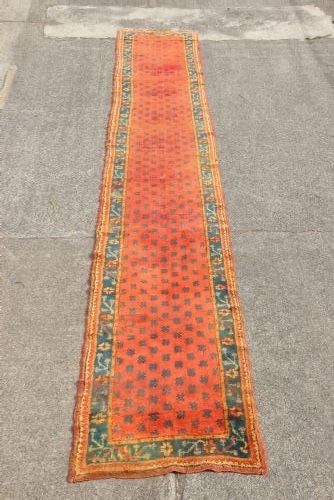
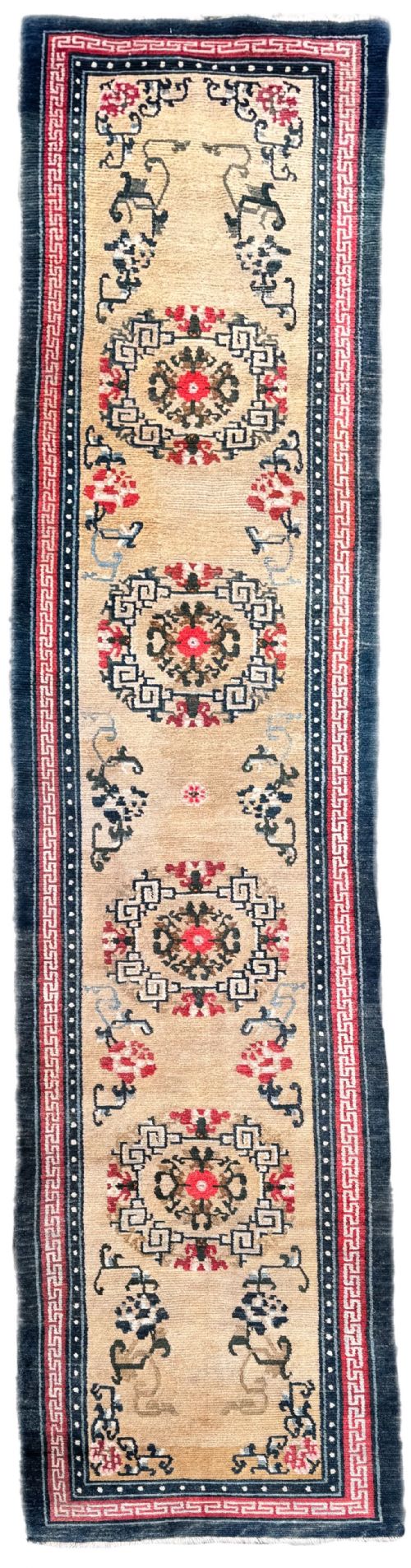
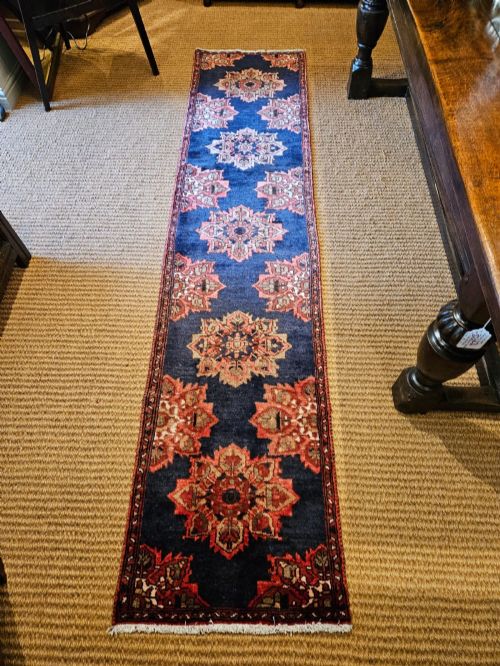


Wool Narrow Corridor Rug
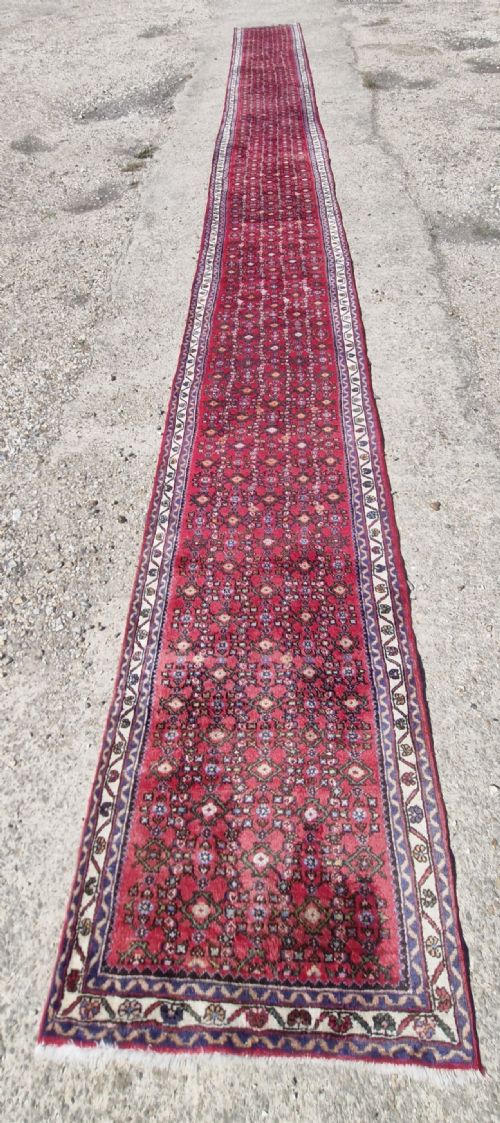
A wool narrow corridor rug provides a durable, elongated path for hallways, spanning periods from the late nineteenth century to the mid-twentieth century.
Wool Narrow Corridor Rug
A wool narrow corridor rug is designed specifically for halls, landings and long domestic passageways where standard floor coverings do not fit. These pieces stretch in length while maintaining a restricted width, often constructed by village and tribal weavers across Persia, Turkey, the Caucasus and North Africa.
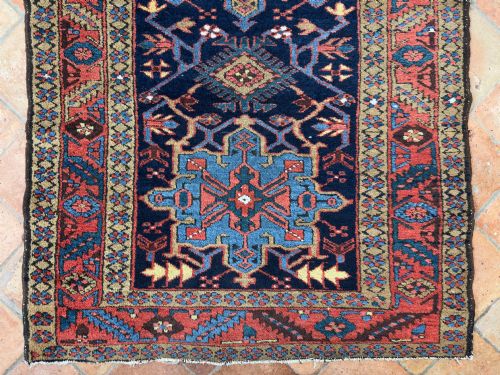
The inventory on this page relies heavily on Persian village types, alongside Moroccan Berber and Turkish specimens. Buyers encounter formats originating from traditional weaving centres such as Heriz, Hamadan, Kurdish regions and Serab, dated mostly between eighteen eighty and nineteen thirty.
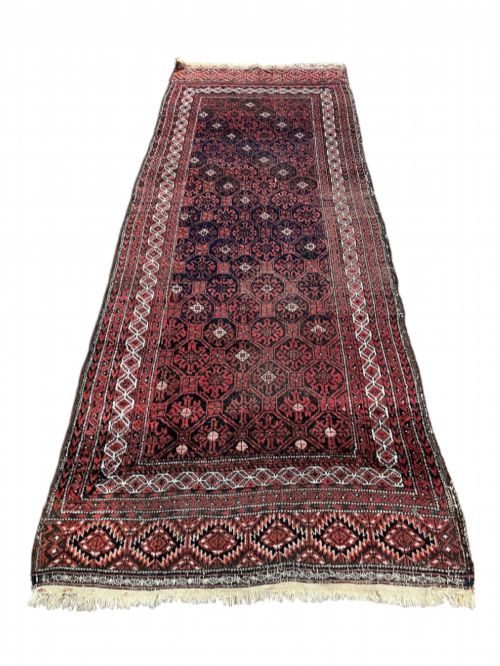
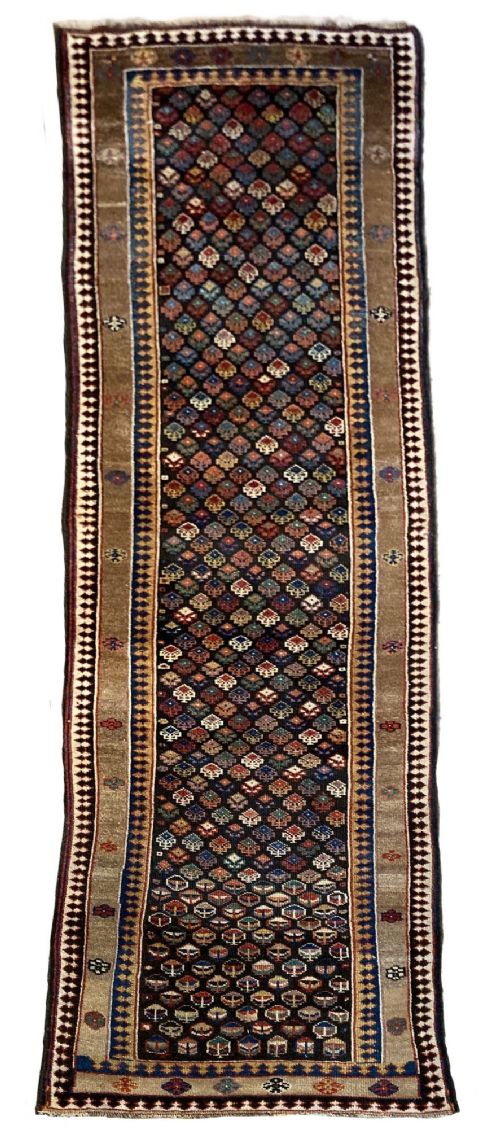
Most examples take the form of runner rugs and long hallway carpets with geometric or stylized medallion designs. The materials emphasise heavy use, utilising natural wool pile on cotton or wool foundations to withstand high foot traffic in domestic corridors.
Materials and construction methods
The pieces listed here utilise hand-spun wool and standard wool pile knotted or woven onto cotton foundations. Certain specimens incorporate camel hair alongside sheep wool to introduce natural undyed tones into the field.
Weavers employed traditional knotting techniques on upright looms, producing dense piles designed to absorb friction in heavy-use areas. Flatwoven kilim versions rely on slit-weave construction without a raised pile, yielding a thinner profile for narrow spaces.
Several nineteenth-century Kurdish runners quietly record local village life by embedding tiny figures of tribeswomen and perched birds directly into the geometric borders.
Distinctions in craftsmanship
Quality in these floor coverings rests on knot density, the precision of the geometric layout, and the stability of the foundation. Tighter knotting allows finer details in tribal motifs and ensures the pile retains its structure over decades of use.
The choice of dyestuffs dictates visual depth, where skilled application of natural dyes creates subtle tonal variations across the wool field. Structural integrity in the selvedges and ends separates sturdier village pieces from more fragile examples.
Heriz·Hamadan·Kurdish
The Wool Narrow Corridor Rug Glossary
- Runner
- A long, narrow carpet format designed for hallways, corridors and staircases. It typically measures three times or more in length than its width.
- Kilim
- A flatwoven textile produced without a pile by tightly interweaving warp and weft strands. This technique creates a lightweight rug with identical patterns visible on both sides.
- Pile
- The upright cut or uncut loops of wool that form the usable surface of a knotted rug. Density in this layer dictates how well the textile resists wear.
- Warp
- The stationary vertical threads stretched on a loom that form the structural skeleton of the rug. The exposed fringe at either end of the piece consists of these finished threads.
- Weft
- The horizontal threads passed through the warp threads to bind the knots in place. In traditional weaving, these threads are beaten down firmly after each row.
Wool Narrow Corridor Rug: Frequently Asked Questions
Where should I place a long runner?
These textiles suit high-traffic domestic corridors, narrow entrance halls, and long landings where linear floor covering is required.
Their elongated proportions protect wooden floorboards in heavily used transitional spaces without overwhelming small rooms.
How do I identify a village rug?
Village pieces often display asymmetrical geometric patterns, stylized animal or human figures, and spontaneous colour shifts woven from memory rather than strict cartoons.
They generally show slightly coarser knotting and heavier wool foundations compared to city workshop productions.
What is camel hair used for?
Weavers incorporated un-dyed camel hair to introduce warm golden-brown and sandy tones into the background or border designs.
This material provides natural colour variation that does not fade or shift in the same manner as dyed wool.
How do flatweaves differ from piled rugs?
Flatweaves lack a raised pile entirely, depending on interlocking weft threads to create a smooth, thin textile surface.
This construction makes them lighter and easier to lift for cleaning, though they offer less cushion underfoot than knotted wool piles.