





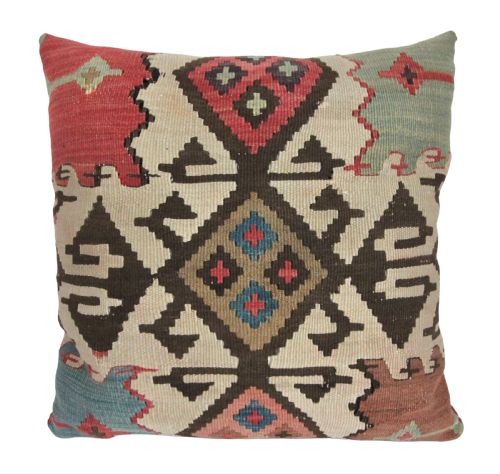
Wool Anatolian Kilim
A wool anatolian kilim brings tactile warmth and historic nomadic geometry into a room through flatweave construction.
Wool Anatolian Kilim
When you search for a wool anatolian kilim, you encounter flatweave floor coverings, runners, wall hangings and cushions originating from various regions of Turkey. These textiles span periods from the mid-nineteenth century through the early decades of the twentieth century, reflecting traditional tribal and nomadic designs. The selection ranges from large format rugs to smaller bag face cushions.
You are most likely to meet practical cushion covers fashioned from repurposed saddle bags alongside room-sized flatweave carpets and runners. The pieces encompass specific regional styles from Malatya, Konya, Ushak, Bergama, Esme, Reyhanli, Mut, Obruk, Kayseri, Sarkoy, Afyon, Fethiye and Sivrihisar. Each region contributes distinct patterns and proportions to the available range.
How they were made
The construction relies primarily on wool, often combined with cotton foundations and occasional leather details. Artisans interlace warp and weft threads without producing a pile, creating a flat textile surface that holds up well to daily foot traffic.
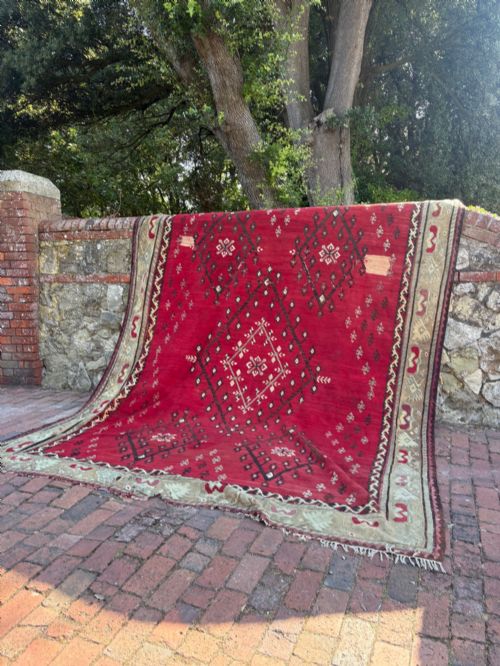
Many larger rugs and carpets are woven in two separate parts and joined together down the centre to achieve a broader span. Decorative elements incorporate embroidered panels and intricate tribal motifs specific to eastern and central regions.
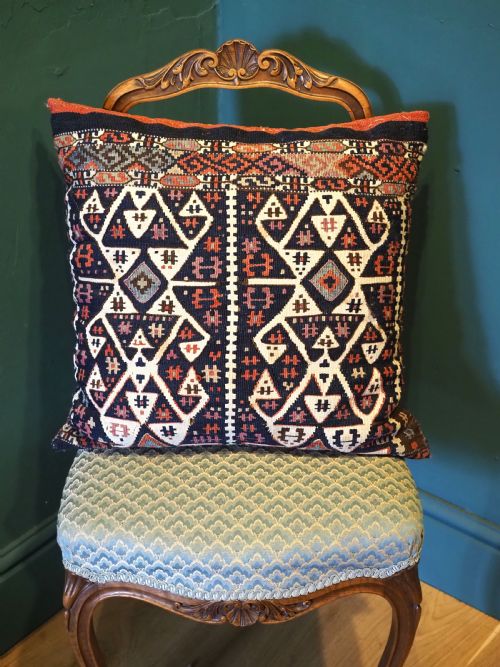
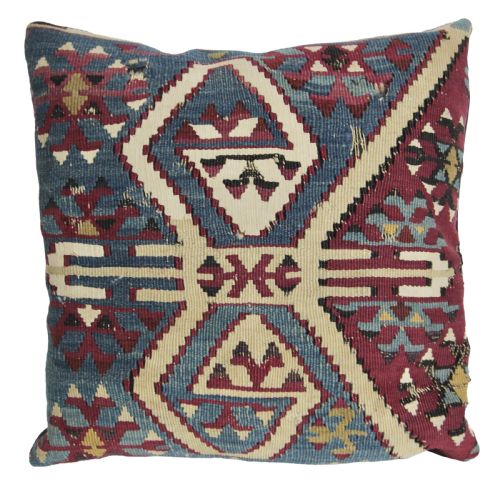
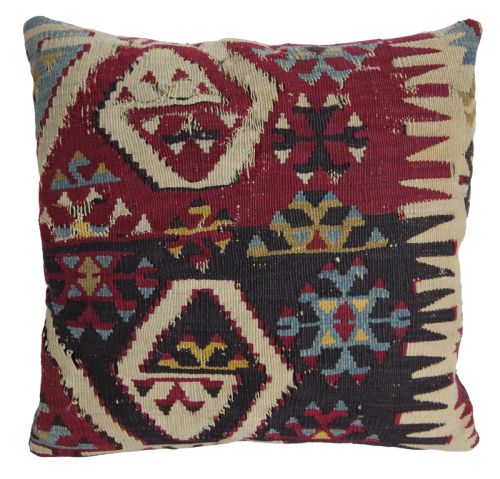
Many cheerful cushions owe their existence to hardworking pack animals that once carried nomadic belongings across Anatolia.
What varies in quality
Quality separates along the clarity of the regional design, the integrity of the weave, and the preservation of the original pigments. Strong regional attribution and balanced proportions distinguish finer examples from standard utility pieces.
The condition of the wool, the presence of timeworn repairs, and the depth of colour dictate the standing of an individual piece within the historical range.
The Wool Anatolian Kilim Glossary
- Kilim
- A flatwoven carpet or rug produced in Turkey and surrounding regions. These textiles lack a pile, relying on tightly packed weft threads over a warp foundation to form geometric patterns.
- Flatweave
- A textile construction method where horizontal weft threads pass alternately over and under vertical warp threads. This technique yields a thin, durable fabric without pile.
- Cicim
- A supplementary weft embroidery technique applied to woven textiles. This method creates raised surface patterns that stand proud of the base cloth.
- Saddle bag
- A paired utility pouch used by nomads for transport on animals. These bags are frequently separated and converted into cushions or small decorative panels.
- Warp
- The vertical threads stretched tightly on a loom before weaving begins. The weft threads pass through these foundational strands to build the cloth.
Wool Anatolian Kilim: Frequently Asked Questions
How were kilims used originally?
Nomadic and village communities utilised flatweaves as floor rugs, horse covers, bedding and storage bags for daily domestic life.
Larger carpets insulated tent floors, while smaller saddle bags transported belongings across Anatolian trade routes.
How do I care for a vintage kilim?
Gentle vacuuming without a rotating brush protects the flatweave structure from excessive fibre distortion and wear over time.
Professional textile cleaning preserves the natural wool fibres and dyes without causing shrinkage or bleeding.
How do I identify regional kilim types?
Regional attribution relies on specific colour palettes, motif arrangements and weaving structures characteristic of towns like Malatya or Konya.
Examining the construction details, such as two-part joins or specific embroidery, helps pinpoint the origin.