






Geometric Patterned Kilim
These geometric patterned kilim pieces are flat-woven textiles and upholstered furnishings that bring distinct tribal motifs and regional character into a room.
Geometric Patterned Kilim
A geometric patterned kilim encompasses traditional flat-woven rugs, carpets, and runners alongside smaller cushions, bag faces, and bread sofrehs originating from tribal and nomadic weaving traditions. Buyers searching this phrase will frequently encounter floor coverings alongside period seating upholstered in flat-woven textile fabrics.
The selection ranges across nineteenth and early twentieth-century examples spanning Persian, Anatolian, Caucasian, Balkan, and Central Asian regions. These pieces display distinct regional aesthetics through repeating medallions, lattice layouts, and banded motifs woven by groups such as the Qashqai, Yomut Turkmen, and Afghan makers.
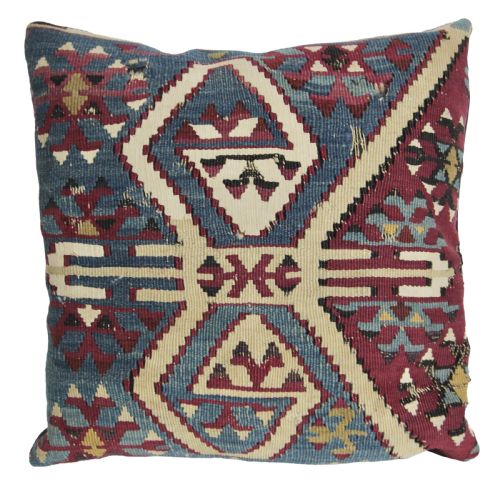
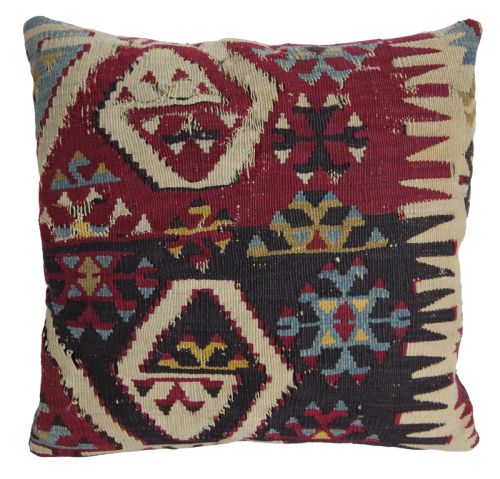
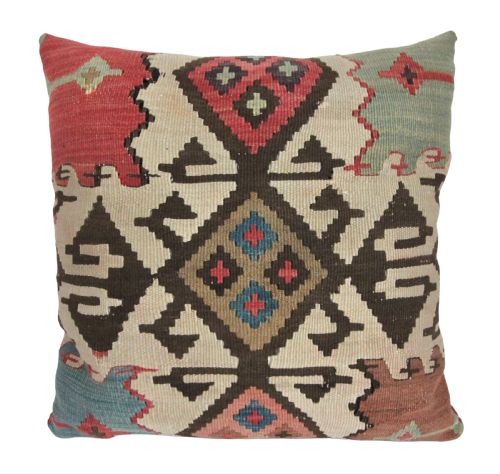
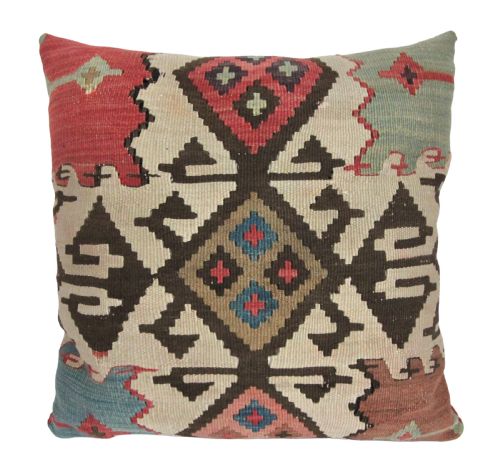
Beyond large floor rugs, the evidence shows a strong presence of functional objects adapted into home furnishings, including throw cushions and armchairs covered in antique kilim fabric. Such items bridge the gap between historic tribal weaving and practical interior decoration.
How they were made
These textiles rely on wool and cotton foundations worked through flat-weave and tapestry techniques that produce non-pile surfaces with sharp, clean lines in the patterns. Natural dyes supply the colour palette across the rugs, cushions, and flat-woven panels.
Upholstered items integrate these woven textiles onto hardwood frames utilising brass detailing and traditional sprung construction, as seen in period seating pieces. Selected floor rugs incorporate soumak wrapping techniques alongside standard flat-weaving to build raised textural elements into the geometric designs.
The documented object types span from large area rugs and runners down to small cushions and repurposed bread sofrehs.
What varies in quality
Quality in these flat-weaves rests upon the crispness of the geometric design execution, the complexity of the regional motifs, and the preservation of the natural dye palette. Strong contrast and well-defined medallion or lattice structures separate finer tribal weaving from simpler utilitarian pieces.
The condition of the wool weave and the integrity of the flat-woven structure dictate the standing of individual textiles. Pieces retaining long kilim ends, original bag face integrity, or untouched upholstery fabric command attention for their survival of historic form.
The Geometric Patterned Kilim Glossary
- Kilim
- A flat-woven carpet or rug produced without a pile by tightly interlacing warp and weft threads. This technique creates sharp geometric patterns visible from both sides.
- Soumak
- A flat-weaving technique involving wrapping weft threads over and under the warps to create a raised, braided surface texture. It adds durability and structural thickness to the textile.
- Sofreh
- A flat-woven cloth traditionally used for serving bread or gathering food among nomadic communities. These pieces often feature specific central field arrangements suited to their original domestic function.
- Bag face
- The decorated front panel of a nomadic storage sack preserved and repurposed as a smaller textile collectible. They display concentrated tribal patterns scaled for portable storage.
- Medallion
- A central symmetrical geometric ornament placed in the middle of the textile field. It forms the primary focal point of the composition.
Geometric Patterned Kilim: Frequently Asked Questions
What is a kilim?
A kilim is a flat-woven textile produced by tightly interlocking warp and weft threads rather than knotting pile yarn into a foundation. This method yields a lighter, reversible fabric featuring sharp angular and geometric patterns.
Historically woven by nomadic and village communities across the Middle East, Anatolia, and parts of Europe, these textiles served as floor coverings, blankets, and storage bags before entering the collector market.
How were these textiles used?
Nomadic and village groups utilised flat-woven kilims primarily as floor coverings, tent dividers, and animal trappings. They also fashioned them into storage sacks, bread cloths, and cushions for daily domestic life.
In modern interiors, these historic pieces transition readily into area rugs, decorative throw cushions, and upholstery coverings on period seating like armchairs and sofas.
How do I care for antique kilims?
Protect antique flat-weaves by placing a quality rug underlay beneath floor pieces to prevent slipping and reduce fibre wear from foot traffic. Vacuum them gently with suction only, avoiding rotating brush bars that can snag the wool.
Keep textiles out of direct, prolonged sunlight to protect natural dyes from fading. For upholstered pieces, professional dry cleaning suited to antique textiles is recommended.
How do I identify regional styles?
Regional identification relies on observing the specific geometric vocabulary, colour combinations, and weaving structures native to particular tribal groups. Persian Qashqai work often employs rich reds and deep blues with balanced medallion layouts, whereas Balkan Pirot pieces favour detailed lattice and repeat patterns.
Examining the weave tightness, edge finishes, and wool quality helps connect a textile to its geographical origin.