
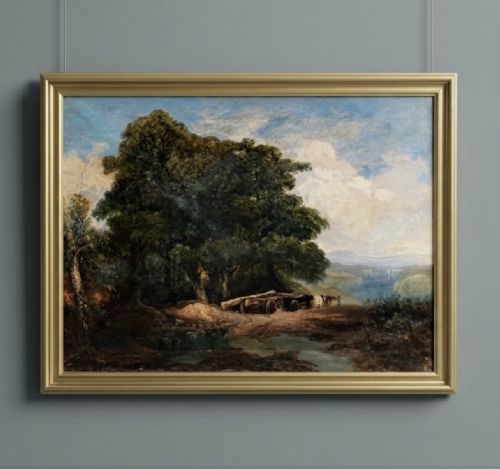

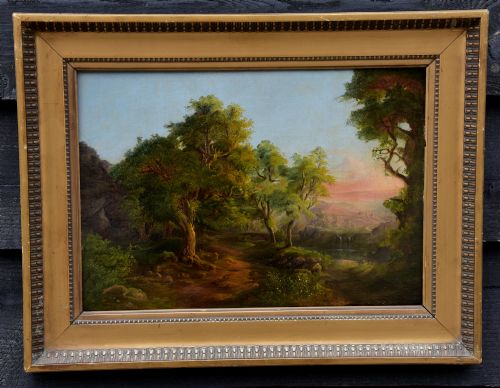
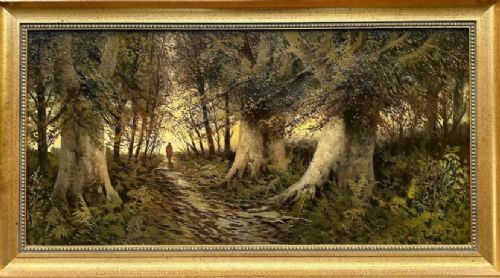
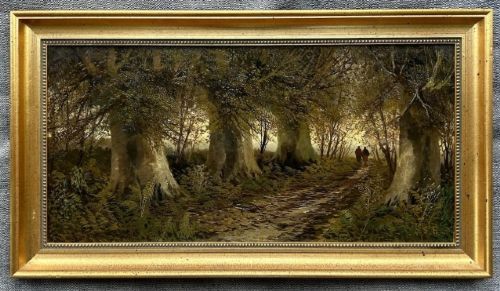
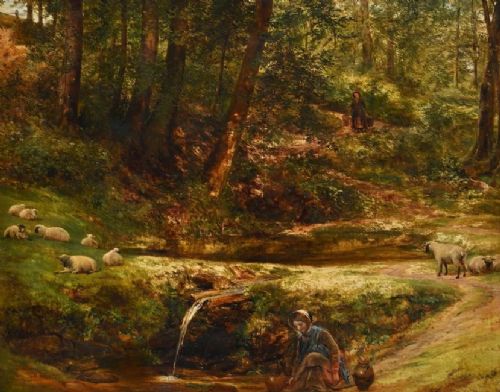
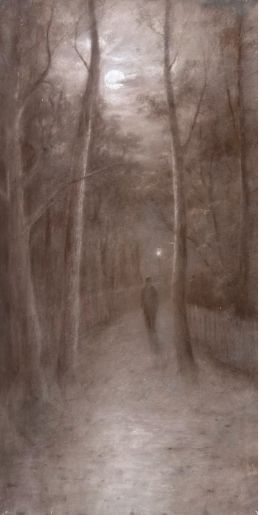

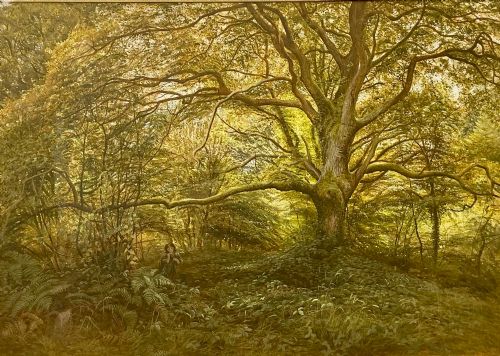
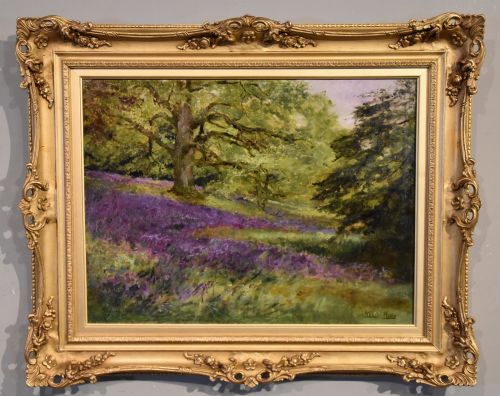
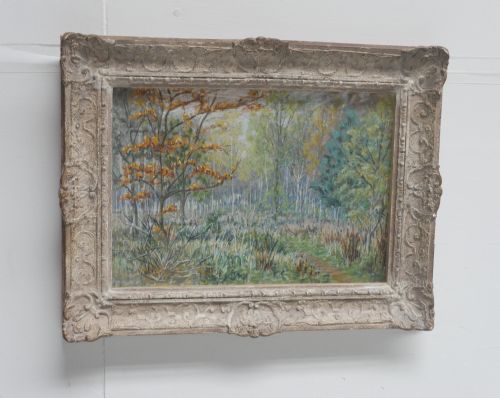


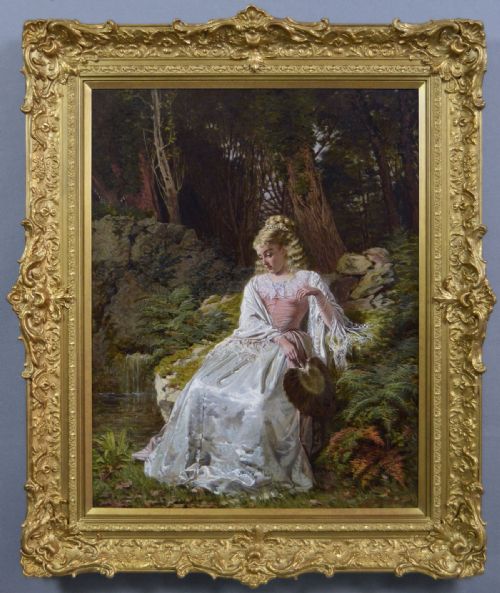

Woodland Landscape Painting
A woodland landscape painting captures the quiet depth of trees, streams, and forest paths through generations of British and European artistry.
Woodland Landscape Painting
A woodland landscape painting brings the natural world indoors, depicting forest canopies, shaded paths, and tranquil rivers through the eyes of past artists.
The selections available here span from the nineteenth century through the mid-twentieth century, capturing changing artistic approaches to the countryside.
Buyers encounter oil paintings on canvas or board, alongside delicate watercolours and pastel works that record rural scenes from Britain and beyond.
How They Were Made
Artists built their compositions using oil paint on stretched canvas or wooden panels, applying pigment to capture the shifting light beneath tree branches.
Watercolour and pastel works on paper relied on fluid washes and dry strokes to render the soft textures of woodland foliage and damp earth.
Many historical pieces were framed in carved wood, protecting the painted surface while complementing the earthy tones of the natural subject matter.
Woodland Landscape Painting Retail Price Guide 2026
Typical asking prices for woodland landscape painting among the pieces listed under this phrase on Sellingantiques today, from the lower quarter to the upper quarter. They describe what is for sale here now, not the wider market.
The listings feature works created across eight distinct decades, spanning from the Victorian era into the post-war period.
What Varies in Quality
The success of a piece depends upon the artist's handling of light and shadow, which brings depth and atmosphere to the painted trees and undergrowth.
Brushwork reveals the confidence of the maker, distinguishing tightly rendered academic studies from looser, more expressive impressionist interpretations.
Richard Sebastian Bond·William H Myers·Thomas W Lascelles·Richard Redgrave·Paul Desire Trouillebert·Henry Yeen King·Arthur Herbert Rigg·Thomas Bromley Blacklock·William Hoggatt·Thomas Edward Roberts·James Mallard Bromley·Owen Bowen·Clarence Henry Roe·David Watts·William Mellor·Alfred Grey·Henri Joseph Harpignies·John Wright Oakes·Walter Follen Bishop·James Proudfoot·Rowland Henry Hill·Edmund George Warren·Abraham Hulk Jnr·Alfred W Parsons·Harold Swanwick
The Woodland Landscape Painting Glossary
- Oil on Canvas
- A painting medium where pigments bound in oil are applied to a woven fabric support stretched over a wooden frame. This combination allows for rich colour blending and textured brushwork.
- Watercolour
- A paint consisting of water-soluble pigments applied to paper. It creates luminous, transparent washes that suit delicate landscape studies.
- Barbizon School
- A nineteenth-century French art movement focused on realistic landscape painting en plein air. Artists in this circle drew direct inspiration from forests and rural fields.
- Board
- A rigid support panel used instead of canvas for painting. Artists frequently utilised wooden boards or card for smaller outdoor studies.
Woodland Landscape Painting: Frequently Asked Questions
What periods do these paintings cover?
The available works span from the seventeenth century through to the mid-twentieth century, with a strong concentration of nineteenth-century Victorian pieces and early twentieth-century examples.
This broad timeline shows how artistic interpretations of rural scenes evolved across different generations of painters.
How were these landscape scenes painted?
Makers utilised oil paint on canvas or wooden boards, as well as watercolours and pastels on paper, to record woodland views.
Many artists worked outdoors to capture natural light directly, translating foliage and streams onto their chosen support.
Where do these woodland scenes originate?
The pieces originate primarily from British artists depicting local countryside, rivers, and woods, alongside continental European works from traditions such as the Barbizon School.
Regional locations span from Welsh valleys and English woodlands to specific areas like the Isle of Man.
How should I hang a landscape painting?
Choose a wall with balanced ambient light, avoiding direct harsh sunlight that might affect older watercolours or oil pigments over time.
Ensure the piece is hung securely at eye level to best appreciate the brushwork and depth of the forest scene.