

Wooden Writing Cabinet
A wooden writing cabinet brings order to correspondence, housing papers and ink with the warmth of mahogany, walnut, or oak.
Wooden Writing Cabinet
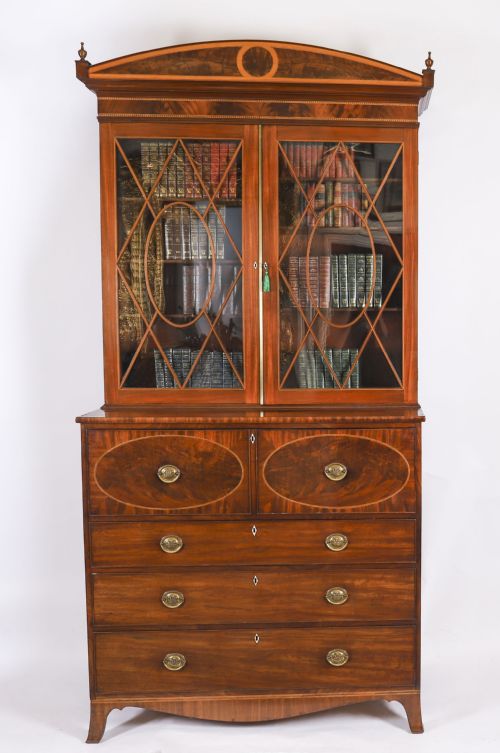
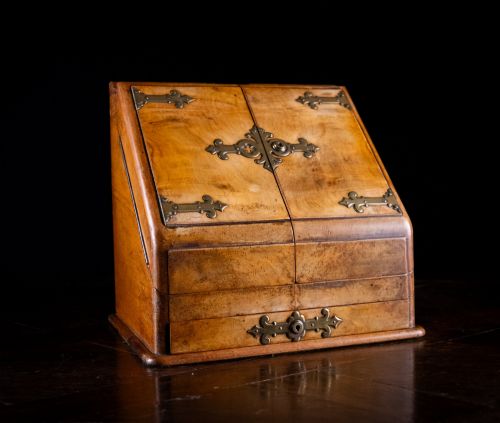
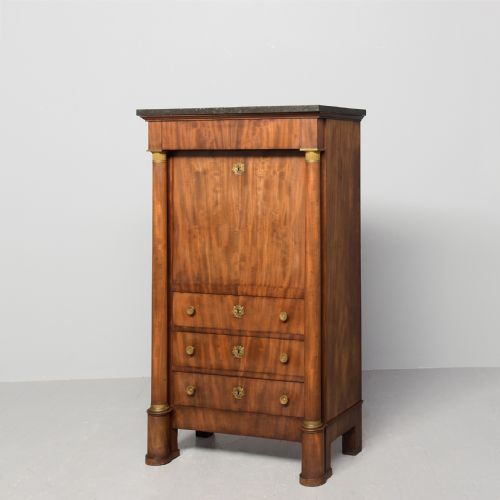
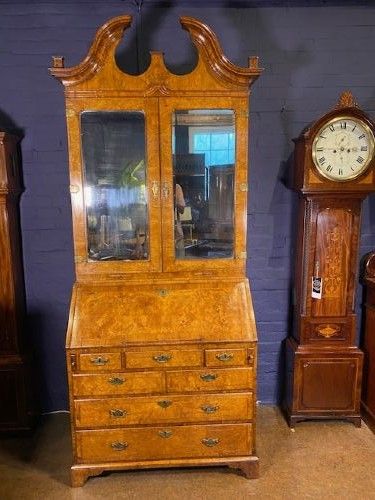
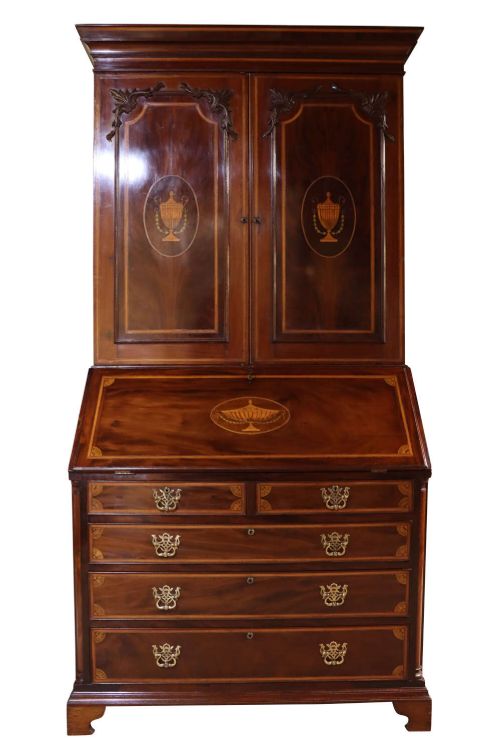
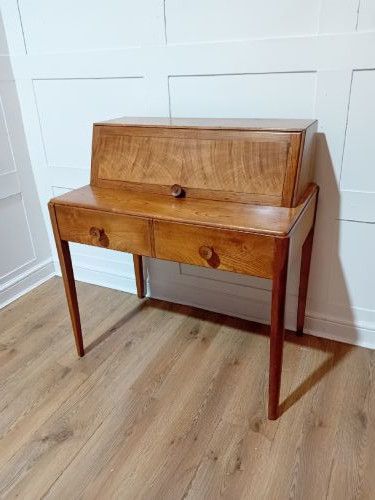
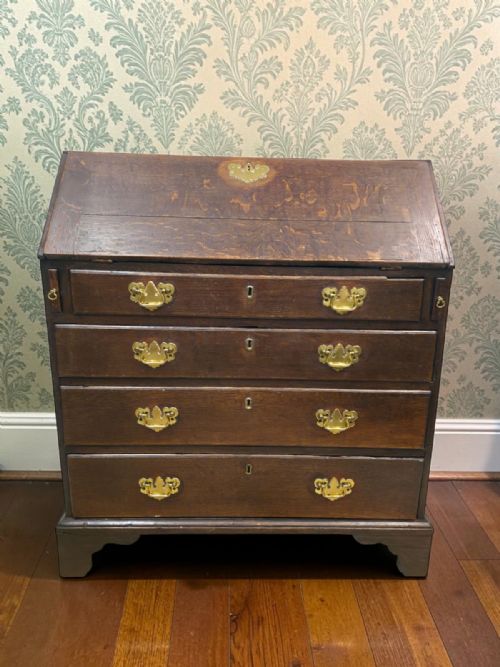
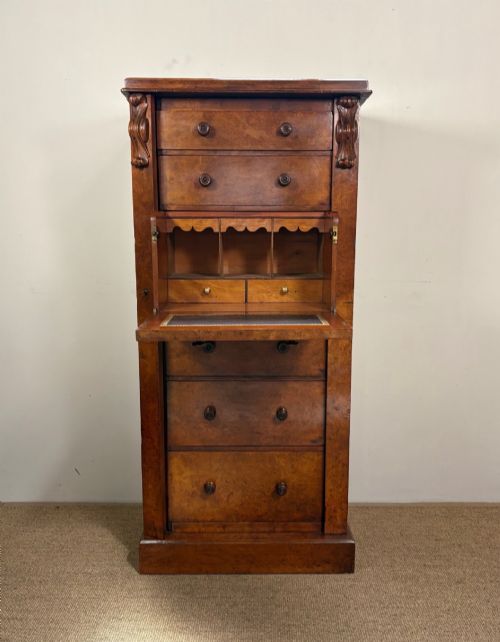
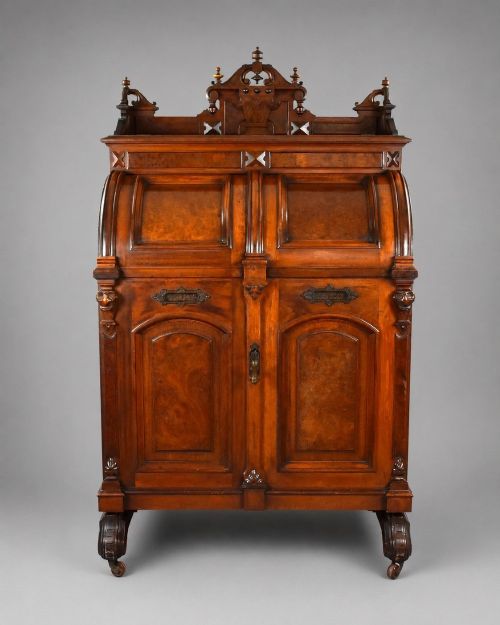
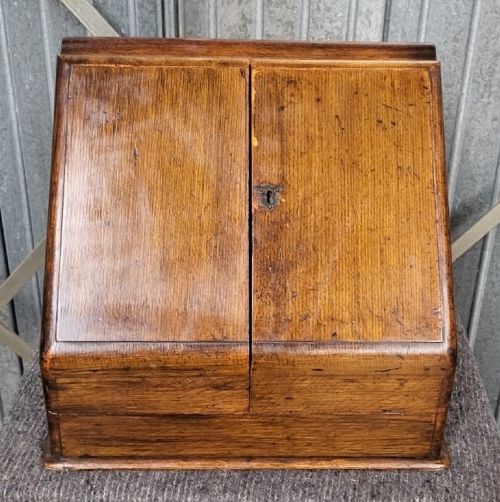
A wooden writing cabinet encompasses diverse functional forms designed for correspondence and storage, ranging from compact stationery boxes and Davenport desks to grand bureau bookcases and secretaire chests. These pieces span multiple eras, with examples appearing from the seventeenth century through the Victorian period, Edwardian era, and the 1930s.
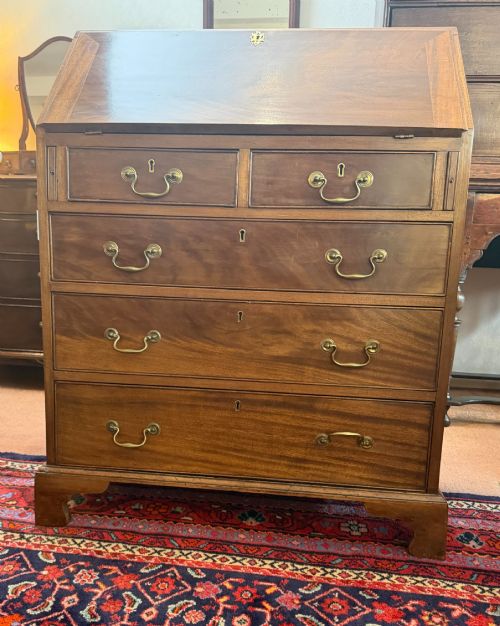
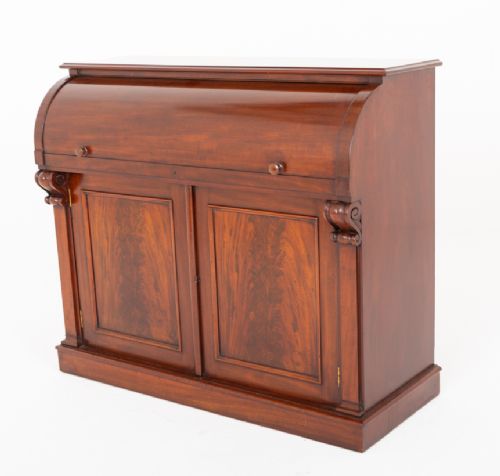
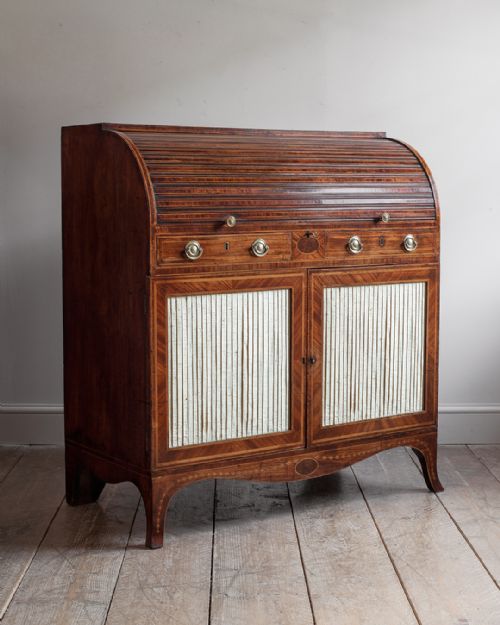
The most prevalent versions encountered on this page are Georgian and Victorian mahogany or walnut bureaux and writing cabinets. These typically feature fall fronts, cylinder desks, or upper bookcase sections combined with fitted interior compartments for papers.
Origins include English workshops, French ateliers, and Welsh or Swedish makers, reflecting varied regional cabinet-making traditions across Europe. Pieces range from formal Georgian gentlemen's desks to smaller ladies' writing tables and specialised stationery cases.
Materials and Construction
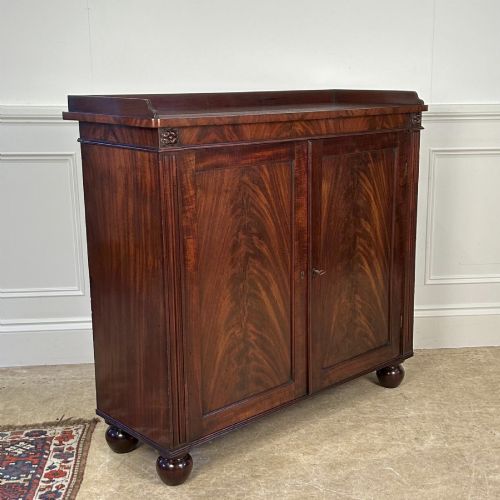
Cabinet-makers relied heavily on timbers such as mahogany, walnut, oak, and satinwood, often selecting burr walnut veneers or flame mahogany for decorative surfaces. Inlaid details in contrasting woods and brass mounts or handles add structural definition and ornamental contrast.
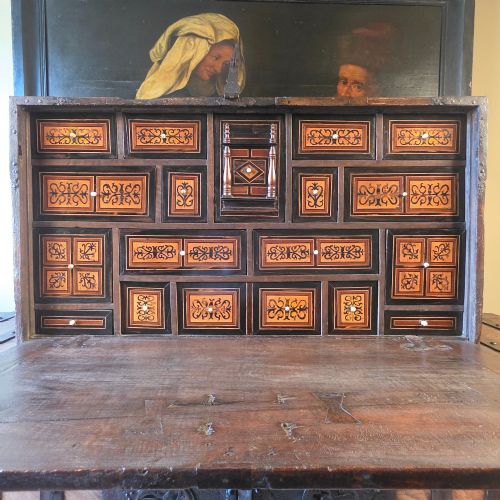
Interiors demonstrate sophisticated joinery, incorporating pigeonholes, small drawers, and leather writing surfaces alongside mechanical tambours or fall-front mechanisms. Secondary woods and traditional dovetail joints secure the stability of carcases and drawers across centuries of use.
The selection spans compact nineteenth-century Davenport desks and expansive Georgian secretaire bookcases.
Craftsmanship and Proportion
Quality rests in the selection of timber figures, such as matched flame mahogany or rich burr walnut, and the precision of inlaid details. Superior pieces exhibit seamless integration of moving parts, such as balanced fall fronts and smooth cylinder actions.
The sophistication of the internal layout distinguishes finer examples, including secret compartments, well-figured satinwood secondary drawers, and original brass hardware. Architectural harmony and restrained proportions separate bespoke workshop productions from standard output.
ARTHUR BASIL REYNOLDS·Gillows·Maple & Co.·Bryn Mawr
The Wooden Writing Cabinet Glossary
- Bureaux
- A writing desk featuring a sloping hinged lid that opens to reveal fitted interior compartments and drawers. The plural form describes multiple desks of this specific configuration.
- Secretaire
- A piece of furniture incorporating a concealed writing drawer or a drop-front desk panel. It often disguises its writing function behind standard drawer fronts or bookcase doors.
- Davenport
- A compact pedestal desk with a sloping writing surface, usually fitted with side drawers and a stationery compartment on top. They became particularly popular during the Regency and Victorian periods.
- Tambour
- A sliding shutter constructed from narrow strips of wood glued to a fabric backing, allowing it to curve around a cylinder desk drum. It conceals pigeonholes and writing supplies smoothly.
- Stationery Box
- A tabletop desk accessory designed to hold envelopes, paper, and writing implements upright. They often feature glass panels, brass mounts, and internal dividers.
Wooden Writing Cabinet: Frequently Asked Questions
How do I use a bureau?
Lower the hinged fall-front panel to create a stable writing surface supported by automatic lopers or brackets. This reveals an arrangement of small drawers and pigeonholes designed for stationery and correspondence.
When writing is finished, return papers to the interior compartments and raise the front panel to conceal the work area and maintain a tidy room.
What is a secretaire bookcase?
A secretaire bookcase combines upper shelving for books with a lower section containing a pull-out or drop-front desk drawer. This dual purpose made them practical for libraries and studies where space was limited.
The writing section typically locks independently to secure personal papers and writing instruments away from general view.
Where should I place a cabinet?
Position your writing cabinet away from direct sunlight and heat sources to protect timber finishes and prevent veneer cracking. Adequate clearance is required around fall-front desks and Davenport models to allow drawers and lids to open fully.
They function effectively in studies, living rooms, or hallways as both workspace and display furniture.
How do I identify a Georgian piece?
Look for dense mahogany or oak timbers, restrained classical proportions, and hand-cut dovetails within the drawer construction. Georgian pieces often display subtle brass hardware and simpler internal layouts compared to later Victorian designs.
Check for period-specific construction methods, such as backboards made of single wide planks and original iron or brass locks.