
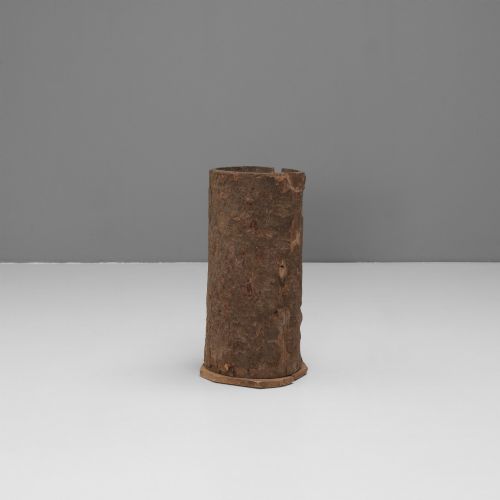


Wooden Walking Stick Stand
A wooden walking stick stand keeps heavy canes and wet umbrellas upright in the hallway, bringing order to the entrance.
Wooden Walking Stick Stand
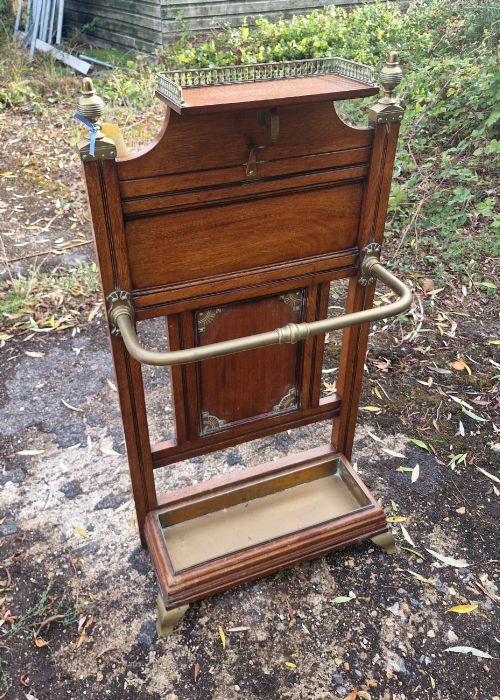
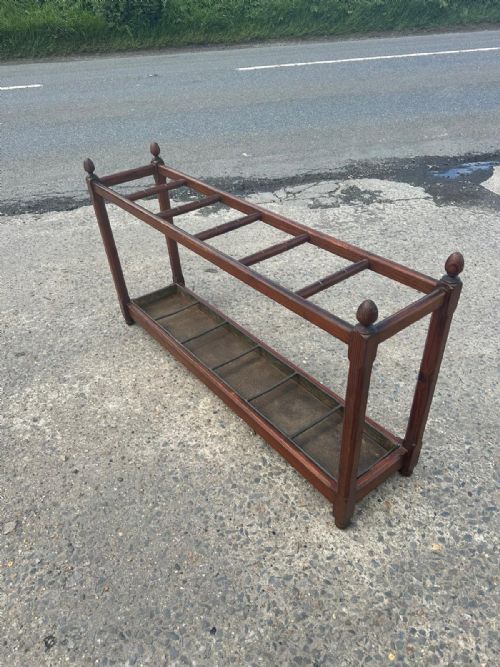
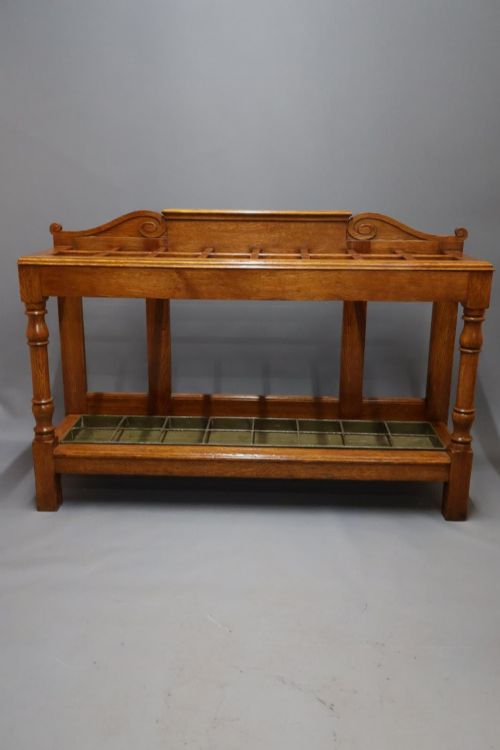
A wooden walking stick stand serves as a practical furniture piece for the hallway, designed to hold umbrellas, parasols, and walking canes. These items emerge from the nineteenth century, the Victorian era, and the Edwardian period, spanning from eighteen-eighty to nineteen-thirty.
Regional and stylistic variations appear across the selection, including Gothic Revival pieces, Arts and Crafts models, and Aesthetic Movement designs. Makers such as Heals of London, Shoolbred, and R.A. Lister contribute to the range of nineteenth and twentieth-century examples.
Materials and construction
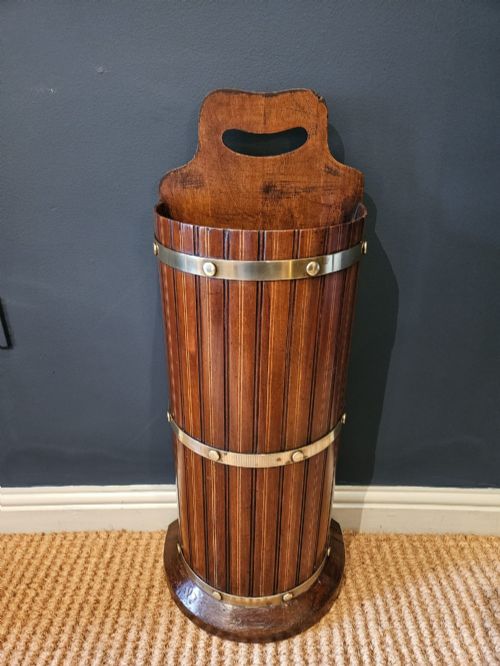
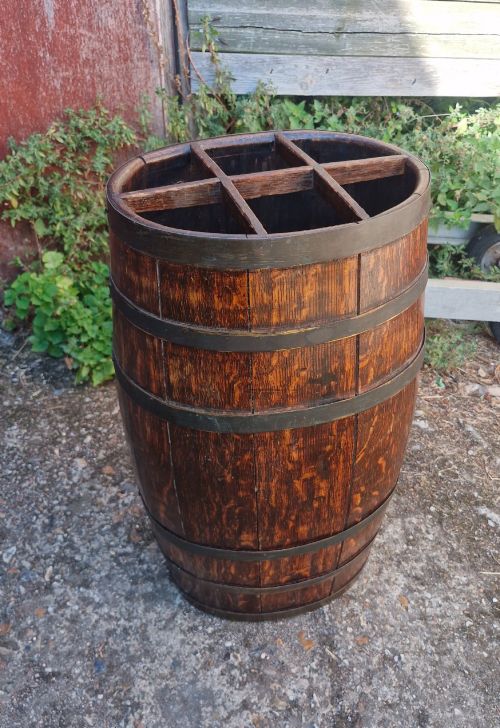
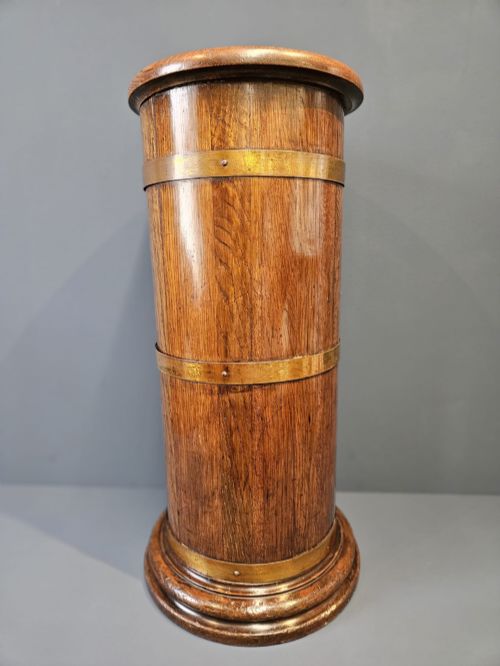
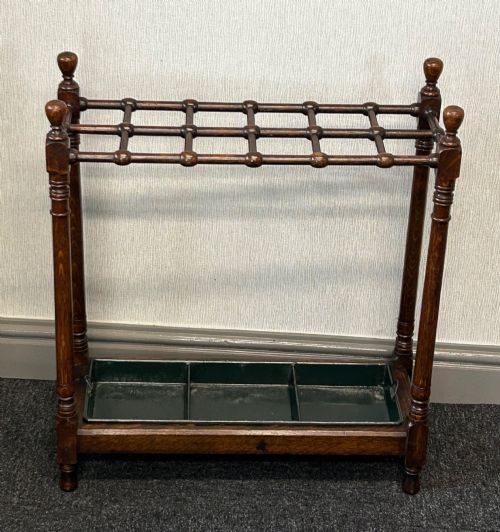
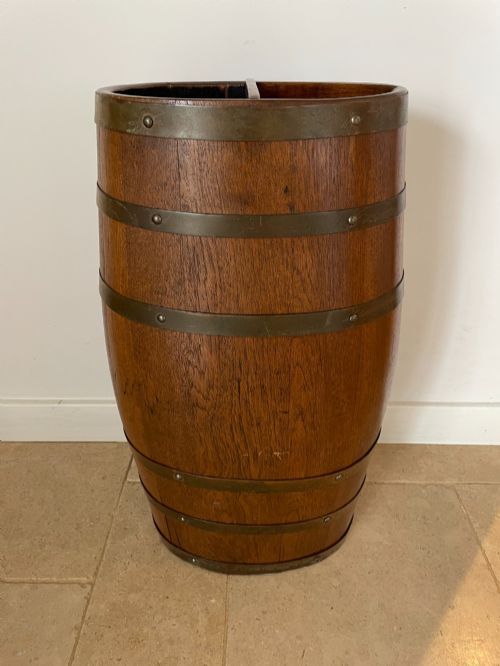
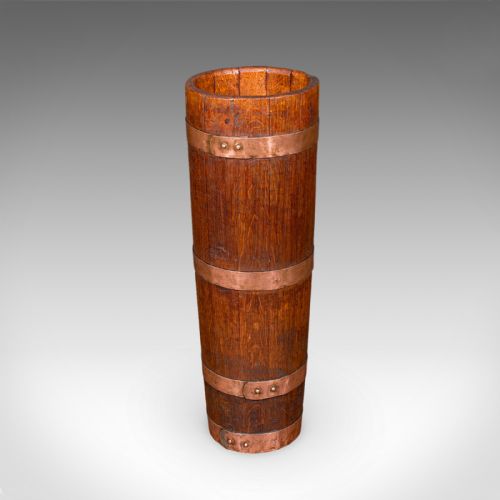
Carpenters utilised solid timbers such as oak, mahogany, walnut, and pitch pine, frequently employing coopered stave construction for barrel-shaped stands. Brass and metal bands secure these wooden staves, while zinc or metal drip trays sit at the base to catch moisture from wet umbrellas.
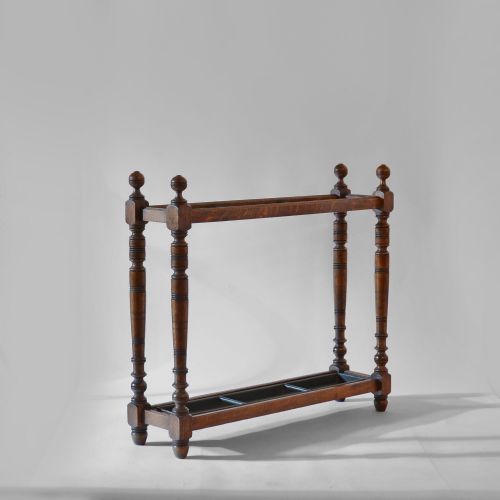
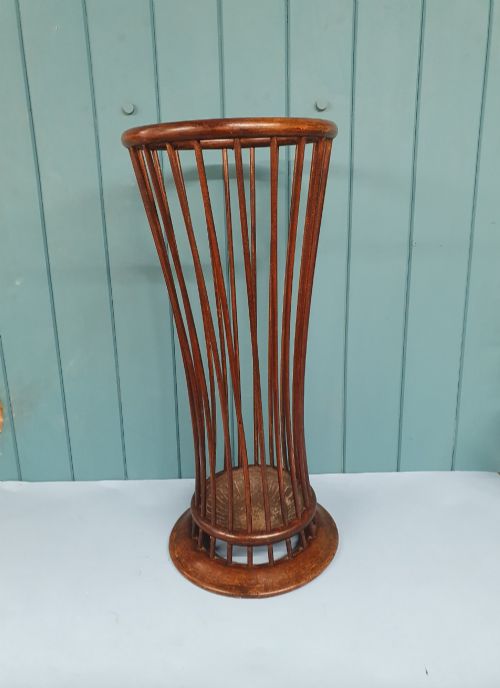
Detailing involves turned stick loops, carved panels, and inlaid maple, reflecting styles from Gothic Revival to Arts and Crafts. Metal fittings, handles, and cast-iron components provide structural support and longevity to the hallway racks.
Carved bears watch over hallway umbrellas in unusual Black Forest cane holders.
Distinctions in manufacture
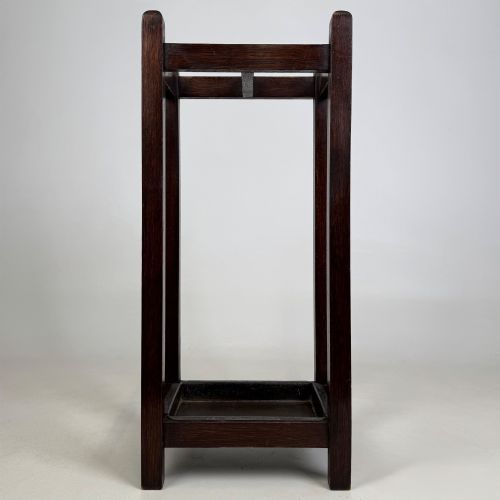
Quality rests on the selection of timber and the integrity of the cooperage or joinery, where tightly fitted staves and substantial brass bindings distinguish superior pieces from simpler utilitarian boxes. The presence of an original metal drip tray preserves the internal base from rot and adds to the integrity of the piece.
Design ambition separates standard hall furniture from distinguished examples bearing maker attributions or complex carving, such as Black Forest bear motifs or Gothic tracery. Proportion and timber figuring elevate certain oak and mahogany stands above ordinary domestic items.
Heals of London·Shoolbred·R.A. Lister
The Wooden Walking Stick Stand Glossary
- Coopered
- Built from curved wooden staves bound together with metal hoops, much like a traditional barrel. This technique ensures the waterproof cylinder holds wet umbrellas securely.
- Demi lune
- Shaped as a half-circle, designed to sit flat against a hallway wall. Such stands save floor space while accommodating multiple walking sticks.
- Drip tray
- A removable metal or zinc pan placed at the bottom of the stand to collect water from wet umbrellas. Original trays prevent the internal wooden base from rotting.
- Hall rack
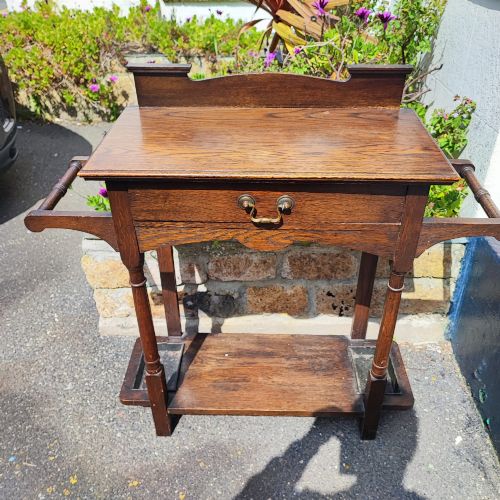
- A larger entranceway furniture piece combining coat hooks, a mirror, and a umbrella stand base. These items organise outerwear and walking sticks together in the main entrance.
- Brass bound
- Fitted with brass bands or hoops around the circumference of the wooden body. This method provides structural reinforcement and decorative contrast.
Wooden Walking Stick Stand: Frequently Asked Questions
What is a wooden walking stick stand?
A wooden walking stick stand is a dedicated hallway furnishing designed to store canes, umbrellas, and parasols vertically. These items keep entryways tidy by containing wet tips and stray handles.
Most examples date from the Victorian and Edwardian eras, utilising timbers like oak, mahogany, and pitch pine. They range from simple coopered barrels to elaborate hall racks with integrated metal drip trays.
How do I care for a wooden stick stand?
Caring for a vintage wooden stick stand involves managing moisture to protect the timber and internal metal components. Emptying and drying the metal drip tray regularly prevents water damage to the base.
Applying a traditional beeswax polish helps maintain the finish of the oak or mahogany exterior. Placing the stand away from direct heat sources prevents the wooden staves from shrinking or cracking.
How do I identify a Victorian stick stand?
Identifying a Victorian stick stand relies on observing timber choices, construction methods, and stylistic cues typical of the nineteenth century. Common indicators include heavy brass-bound oak barrels, pitch pine bodies, and dark mahogany frames.
Stylistic elements such as Gothic Revival tracery, Aesthetic Movement lines, or deep hand-carving point directly to this period. Original zinc or metal drip trays and age-appropriate patina further confirm the era.
Where were stick stands used in the home?
Stick stands were positioned in the entrance hall, vestibule, or boot room of nineteenth and early twentieth-century houses. Guests and residents placed their walking canes, umbrellas, and riding crops inside upon entering.
In larger country houses, these stands accompanied coat racks and mirrors to handle the outdoor gear of visitors. Their placement ensured that wet items remained near the door away from main living spaces.