



Wooden Walking Cane Stand
A wooden walking cane stand holds hallway accessories in timber, most often oak or mahogany from the Victorian period.
Wooden Walking Cane Stand
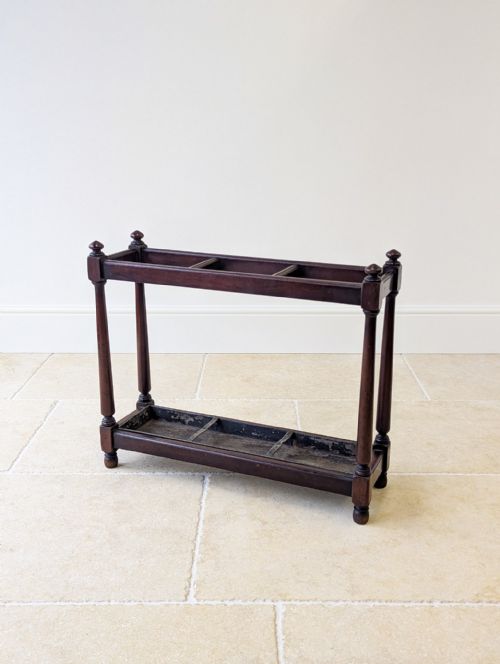
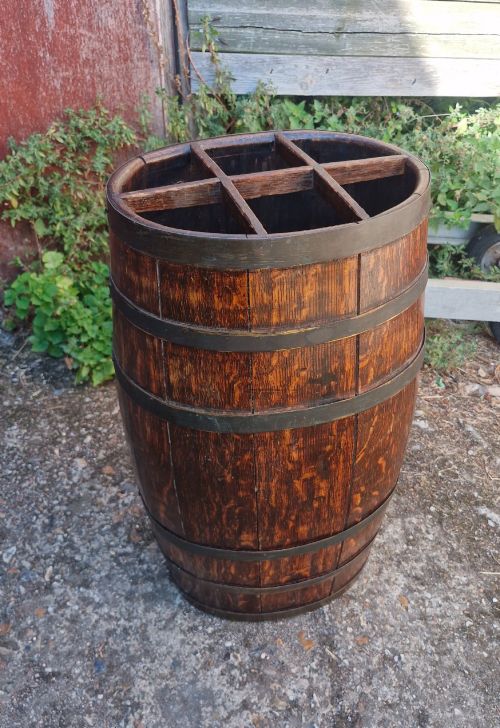
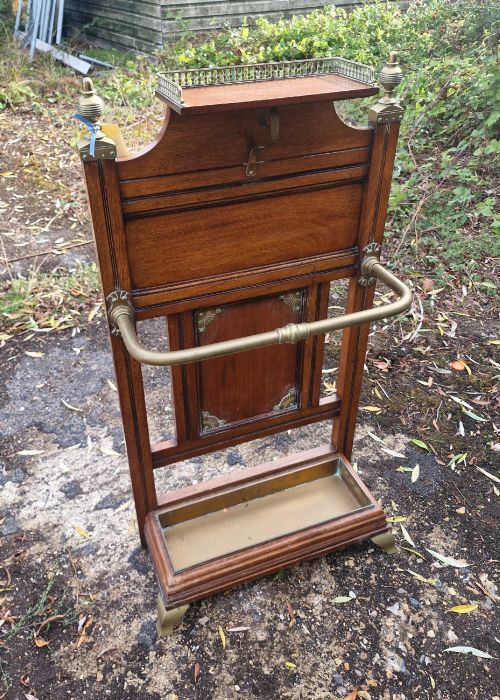
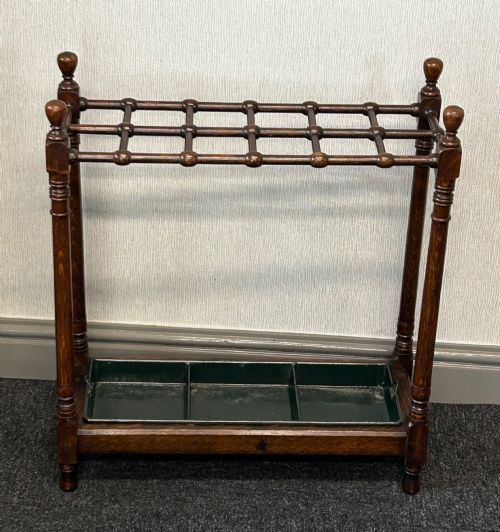
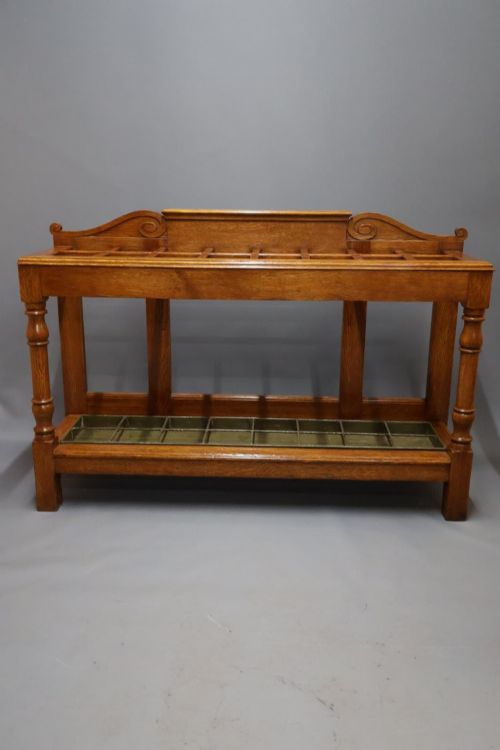
A wooden walking cane stand serves as a hall furnishing designed to hold walking sticks, canes and umbrellas. These pieces appear in forms ranging from simple barrel shapes to large country house hall racks.
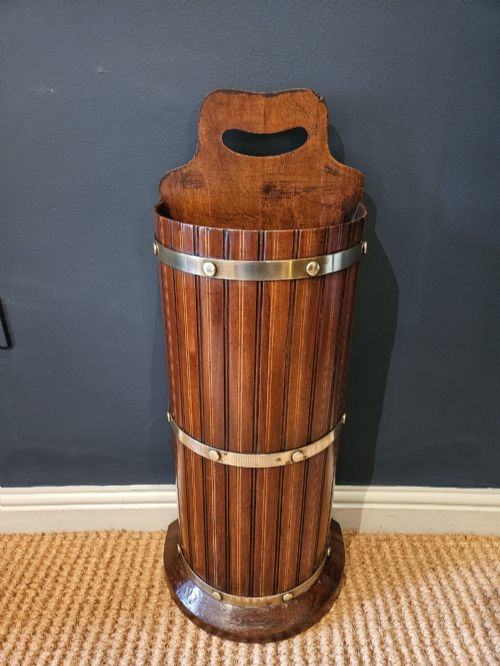
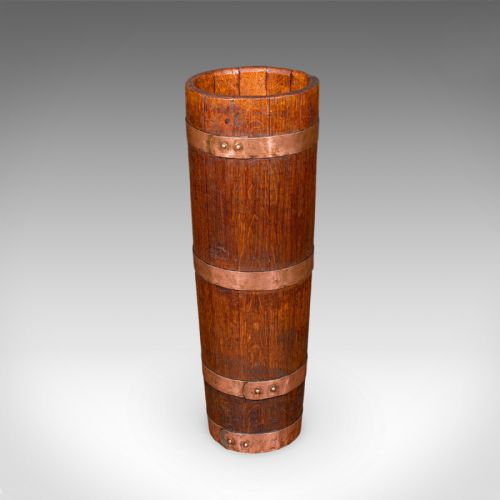
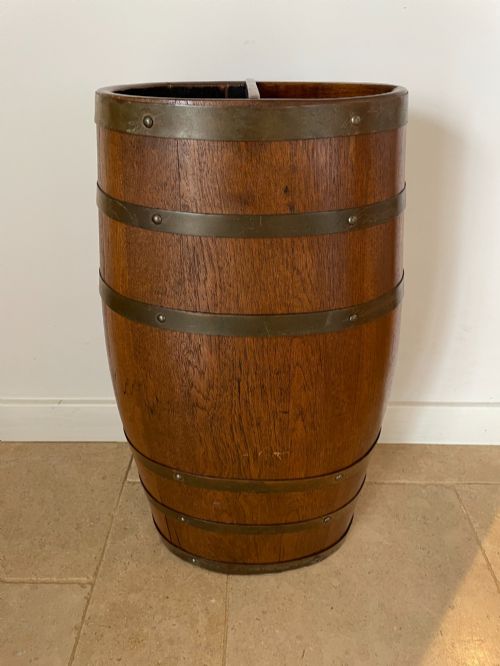
The version most likely to meet a buyer on this page is the Victorian oak or mahogany stick stand, frequently featuring brass banding or coopered construction. Examples date from the nineteenth century through the Edwardian era.
Such stands occupy hallways and vestibules, combining practical moisture retention with formal entranceway presentation. Regional variations include Scottish demi-lune hall stands and English country house designs.
Materials and construction
Carpenters constructed these stands predominantly in solid hardwoods such as oak, mahogany, walnut and maple. Coopered techniques, utilising wooden staves bound with brass or metal hoops, shape the barrel-style stands.
Makers incorporated functional hardware including zinc drip pans to catch water from wet umbrellas and walking sticks. Carved walnut, inlaid maple and pitch pine appear alongside Gothic revival and rustic vernacular styles.
Wooden Walking Cane Stand Retail Price Guide 2026
Typical asking prices for wooden walking cane stand among the pieces listed under this phrase on Sellingantiques today, from the lower quarter to the upper quarter. They describe what is for sale here now, not the wider market.
Materials paired with the timber include brass, zinc, and cast iron.
Gradations in quality
Quality separates through the integrity of the timber selection and the precision of the cooperage or joinery. Substantial brass banding and original zinc liners elevate the status of a barrel stand above basic domestic pieces.
Design complexity marks the higher tier, where architectural forms, demi-lune hall configurations and makers such as Heals or Shoolbred distinguish individual stands. Proportion and the retention of original surface patination dictate desirability.
Heals of London·Shoolbred
The Wooden Walking Cane Stand Glossary
- Coopered
- Constructed from curved wooden staves joined side by side, much like a barrel. This technique defines many traditional cylindrical stick stands.
- Demi-lune
- Half-moon or semicircular in plan. These stands fit flush against hallway walls to conserve space.
- Brass bound
- Fitted with external metal bands of brass that secure the wooden staves of barrel stands. The metal provides structural reinforcement and decorative contrast.
- Zinc liner
- A removable metal tray fitted to the base of the stand to catch water from wet umbrellas. Original liners indicate well-preserved domestic equipment.
- Hall rack
- A larger entranceway furnishing combining umbrella storage with hooks and mirrors. These pieces dominate grander domestic interiors.
Wooden Walking Cane Stand: Frequently Asked Questions
How do I clean a wooden cane stand?
Dust timber surfaces regularly with a dry cloth and apply beeswax periodically to maintain the polish. Avoid saturating the wood near the base where moisture from walking sticks accumulates.
Inspect the interior metal liner regularly and empty standing water to prevent dampness from affecting the surrounding wooden staves.
Where should I place my stick stand?
Position the stand in an entrance hall or boot room where guests arrive and depart. This placement mirrors its historical domestic function.
Keep the stand away from direct heat sources such as radiators to prevent the timber from drying out, cracking or warping over time.
Are these stands suitable for modern umbrellas?
Most antique stands accommodate modern umbrellas and walking sticks comfortably. However, wider golf umbrellas may exceed the diameter of older divisions or narrow barrel openings.
Check the internal divider counts and aperture sizes on specific models if you intend to store oversized modern items.
How do I identify a Victorian oak stand?
Look for dense, dark oak grain, traditional hand-cut joinery and heavy brass banding on barrel forms. Victorian examples often display robust proportions suited to nineteenth-century hallways.
Examine the base for a fitted metal drip pan and check the overall patination for signs of age and genuine use.