



Wooden Twin Bedstead
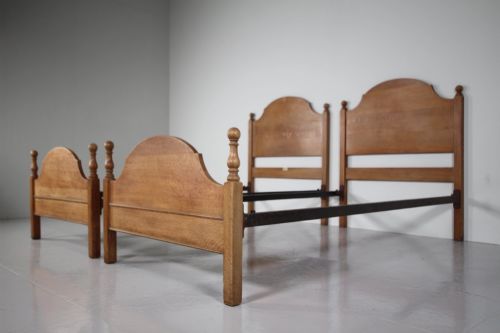
A wooden twin bedstead offers twin frames in oak, mahogany, and walnut, bringing period character and matched sleeping quarters to a bedroom.
Wooden Twin Bedstead
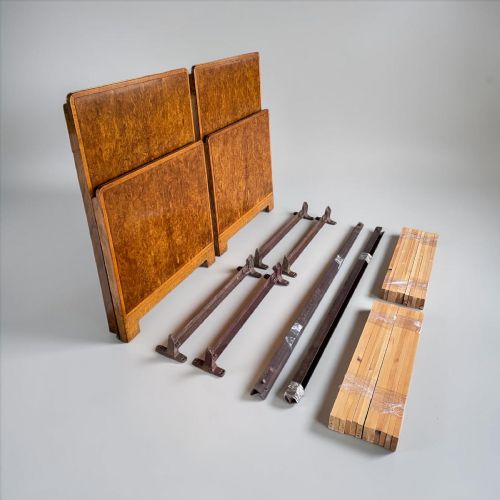
The selections span from the late nineteenth century into the mid-twentieth century, utilising woods like oak, mahogany, walnut, and fruitwood. Many examples incorporate headboards and footboards with inlaid satinwood, carved panels, or painted finishes.
Makers and workshops of the early twentieth century produced these twin frames alongside single items, often incorporating styles from French Rococo Revival to Gothic Revival and Queen Anne traditions. Pairs frequently include complementary bedside cabinets or feature labeled maker details.
Quality factors
Quality rests in the selection of figured timbers like burr walnut, fruitwood, and satinwood, alongside the precision of inlaid details and carved elements. Maker attribution, particularly original labels from firms like Heal's or pieces by Betty Joel and Oliver Morel, elevates a frame's standing.
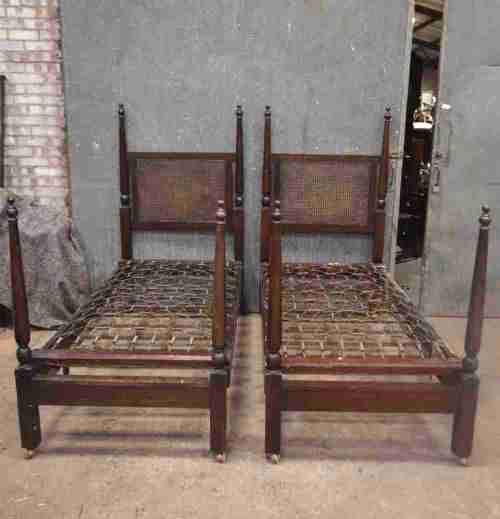
Construction integrity distinguishes standard production from superior workshop output, seen in robust joinery, intact bergere cane panels, and matching grain across paired headboards and footboards. Retaining original finished surfaces without excessive later intervention preserves the integrity of the piece.
Listings feature wooden twin bedsteads across eight distinct periods, from nineteenth-century pieces to 1940s designs.
Heals·Oliver Morel·Betty Joel·Heal & Son·Heals Edwardian
The Wooden Twin Bedstead Glossary
- Bergere
- A upholstered chair or bed panel featuring woven cane webbing. This technique appears on specific oak single frames.
- Corbeille
- A French bed style featuring a rounded, basket-like curved headboard and footboard. These painted wooden frames often date to the early twentieth century.
- Parquetry
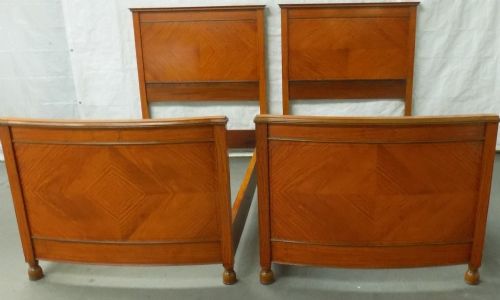
- Geometric mosaic woodwork utilised for decorative patterns on wooden surfaces. Fruitwood single beds frequently display this technique.
- Satinwood
- A durable, lustrous timber from tropical trees utilised for fine furniture inlay and stringing. Edwardian makers employed it for decorative borders on mahogany and walnut frames.
Wooden Twin Bedstead: Frequently Asked Questions
What is a wooden twin bedstead?
A wooden twin bedstead comprises a pair of matched single bed frames constructed from timber such as oak, mahogany, or walnut. They provide uniform sleeping quarters with coordinated headboards and footboards.
These pieces typically date from the late nineteenth century through the 1930s and frequently reflect periods like the Edwardian era or the Art Deco movement.
Are these beds standard modern sizes?
Older single beds often vary slightly from contemporary standard mattress dimensions. Many historical single and twin frames measure narrower or shorter than current manufactured mattresses.
Buyers should verify internal frame dimensions carefully before sourcing modern mattresses to ensure an appropriate fit within the wooden rails.
How do I identify an Edwardian wooden bed?
Edwardian wooden beds often feature light timbers such as mahogany or satinwood inlay, alongside Edwardian stylistic motifs. Documentation or maker labels from firms active in that era provide definitive confirmation.
Construction traits from this period include panelled headboards, occasional carved details, and proportions typical of early twentieth-century domestic architecture.
Can single beds be used as twin beds?
Pairs of antique single beds serve effectively as twin beds when placed in the same room. Many listings offer matched pairs specifically for this purpose.
Matching pairs share identical timber, finish, and decorative styling, creating a cohesive appearance across a guest bedroom or master suite.