





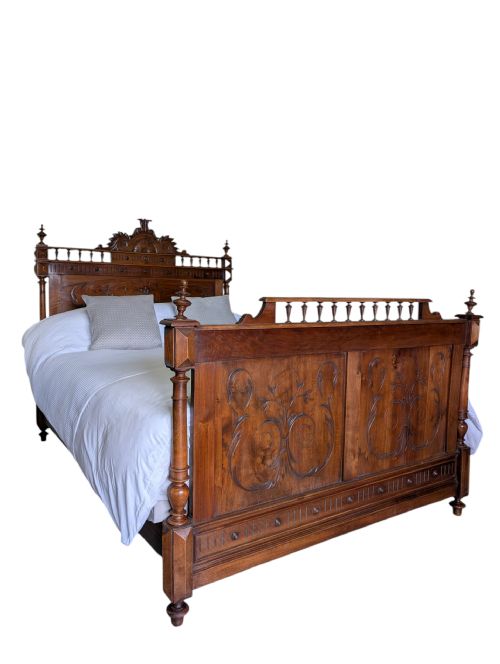


Brown Oak Bedstead
These brown oak bedsteads bring rich grain and heavy timber into the bedroom, offering substantial scale and centuries of period character.
Brown Oak Bedstead
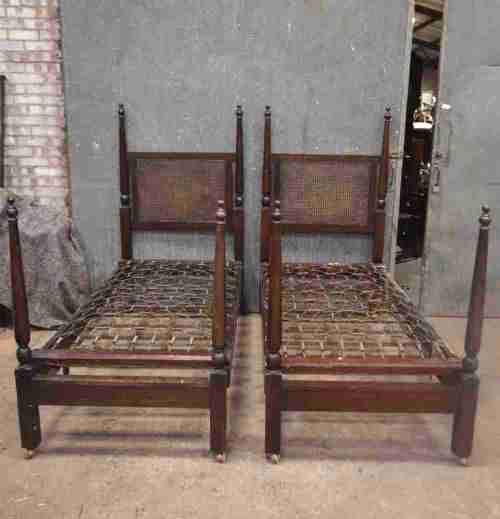
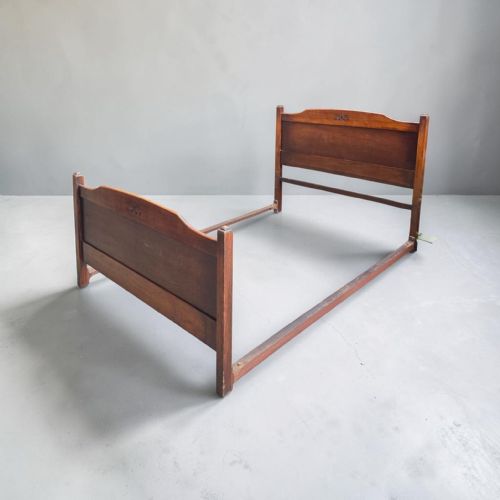
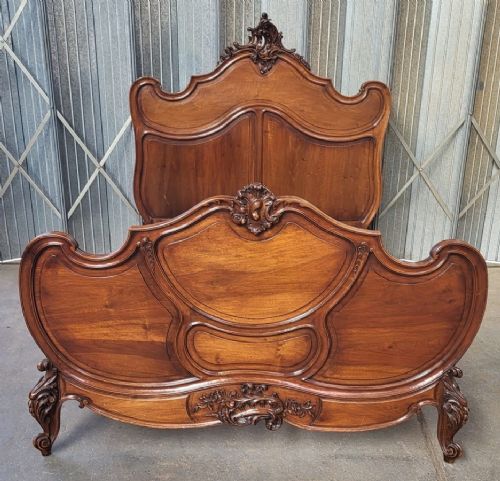
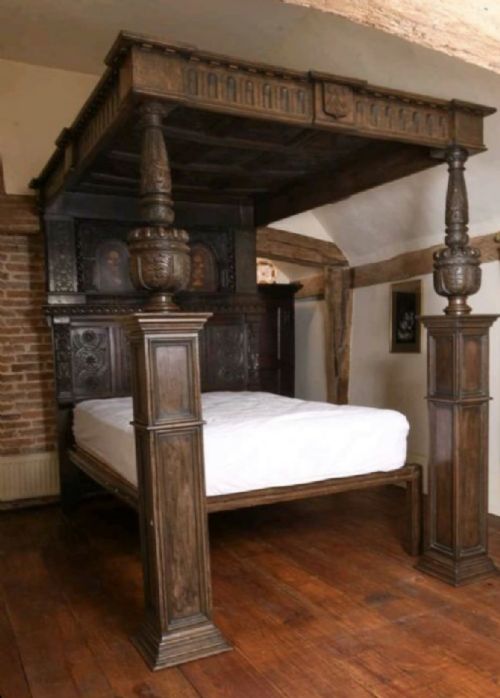
A brown oak bedstead takes many forms across the centuries, ranging from seventeenth-century four-poster tester beds to early twentieth-century single frames and panelled designs. Buyers searching for a brown oak bedstead encounter pieces spanning the seventeenth century through the Edwardian era and the nineteen-forties, constructed primarily in solid oak alongside occasional walnut, cane, and iron elements.
The most substantial examples draw upon seventeenth-century traditions, featuring tester frames and carved panels. Other variations include Arts and Crafts single wooden framed beds, French Louis XV styles, and colonial revival pieces, providing options from single beds to king-size dimensions.
Materials and construction
Construction relies heavily on solid oak timber, frequently enhanced with carved panels and robust framing techniques suited to four-poster and tester designs. Artisans utilised traditional joinery to build sturdy headboards, footboards, and posts capable of supporting large mattress sizes.
Secondary materials such as cane, iron, paint, and brass appear in specific styles, complementing the warm tones of the wood across French neoclassical, Gothic revival, and Arts and Crafts pieces.
Some four-poster beds require five feet of mattress space and a very tall ceiling to feel entirely at home.
Judging quality in brown oak bedsteads
Quality rests in the depth of the carving, the integrity of the solid timber, and the historical authenticity of the period elements. Pieces displaying crisp hand-carved panels and well-preserved structural joinery stand apart from simpler utility frames.
The sophistication of the design - whether an elaborate seventeenth-century tester or a clean-lined Arts and Crafts single bed - determines the visual impact and craftsmanship level of the piece.
The Brown Oak Bedstead Glossary
- Tester bed
- A bed featuring a canopy or tester supported by four posts above the frame. This structure creates a commanding presence in a bedroom.
- Bergere
- A type of chair or bed component featuring upholstered or panelled cane work. It brings a lighter texture to wooden furniture frames.
- Panelled bedstead
- A bed constructed with wooden panels set into a heavier frame. This technique adds architectural depth to headboards and footboards.
- Arts and Crafts
- A design movement prioritising traditional craftsmanship and simple forms. Pieces from this style focus on honest construction and visible wood grain.
Brown Oak Bedstead: Frequently Asked Questions
Will a vintage brown oak bedstead fit modern mattresses?
Many older frames accommodate standard contemporary sizes, though some nineteenth-century and earlier pieces were built for specific historical dimensions. It is essential to check the internal rail measurements against your mattress size before purchase.
Custom mattress makers can also supply bespoke bases or mattresses tailored to fit unconventional antique frame proportions without altering the original woodwork.
How do I care for a solid oak bed frame?
Maintain the timber by keeping the bed away from direct heat sources and sudden humidity changes that can cause the wood to split. Regular dusting with a soft, dry cloth preserves the natural finish.
A light application of traditional beeswax polish once or twice a year nourishes the grain and protects the surface without building up synthetic residues.
Are four-poster beds difficult to assemble?
Tester and four-poster frames utilise traditional interlocking joints, timber pegs, or heavy bolts rather than modern fixings. Assembly requires patience and usually two people to steady the heavy posts and tester canopy safely.
Keeping the original components organised during transit ensures the frame squares up correctly when erected in the room.
How can I tell a seventeenth-century bed from a later revival piece?
Early seventeenth-century examples exhibit authentic tool marks, pegged joinery, and heavy boarded tester roofs typical of the period. The patination on the oak develops a deep, dark lustre through centuries of handling and oxidation.
Revival pieces made in the nineteenth or twentieth centuries often show more uniform machine sawing or lighter internal framing, even when copying historical styles closely.