
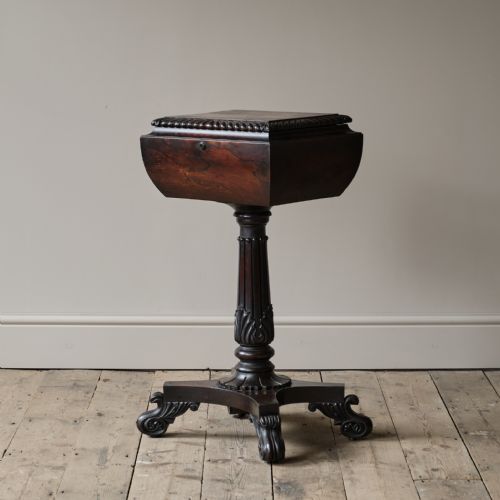


Wooden Teapoy on Stand
A wooden teapoy on stand is a compact tea chest raised on legs, offering elegant storage and a distinct historical presence in a room.
Wooden Teapoy on Stand
When you search for a wooden teapoy on stand, you encounter specialised pieces designed for storing tea leaves securely during the Georgian, Regency, Victorian, and William IV periods. These items combine a lidded box with a dedicated support structure, functioning historically as both a secure container and a refined piece of drawing room furniture.
The versions most commonly met on this page span the early nineteenth century through to the later Victorian era, taking forms such as sarcophagus-shaped boxes, tea stoves, and occasional tables. Materials range from standard mahogany and oak to richly figured rosewood, burr walnut, burr yew, and carved sandalwood.
Origins vary from English workshops, including pieces attributed or stamped by Gillows, to Anglo-Indian productions. Certain examples incorporate brass inlay or rest upon four carved feet, demonstrating the functional evolution of the form from a secure tea repository to a versatile decorative stand.
What varies in quality
The standard of timber selection largely dictates the quality of a wooden teapoy on stand, separating simple utility items from pieces featuring exceptional flame mahogany, burr walnut, or burr yew grain. Master craftsmanship is visible in the precision of brass inlay and the sharpness of hand-carved details on the feet and stand.
Attribution to known workshops such as Gillows elevates certain examples through documented maker marks or distinct structural styling. The integrity of the original interior compartments and the overall cohesiveness between the box and its supporting stand also influence the standing of the piece.
Listings feature woods including mahogany, rosewood, walnut, sandalwood, oak, and burr yew across the nineteenth century.
Gillows
The Wooden Teapoy on Stand Glossary
- Teapoy
- A small chest or box designed for holding loose tea leaves, typically mounted on a pedestal or stand. These containers often featured internal compartments and a secure lock.
- Sarcophagus
- A box shape characterised by a domed lid and flared or tapered sides, frequently utilised in Regency and Georgian furniture design. This profile gave tea chests a monumental appearance.
- Jardiniere
- An ornamental stand or receptacle intended to hold plants or flowers. Certain tea-related furniture forms share structural similarities with these decorative plant holders.
- Veneer
- A thin layer of figured wood applied over a secondary timber base to provide a decorative exterior surface. Craftsmen selected timbers like flame mahogany and burr walnut for this purpose.
Wooden Teapoy on Stand: Frequently Asked Questions
What was a wooden teapoy on stand used for?
These pieces served as secure storage containers for expensive tea leaves in domestic parlours during the Georgian and Victorian eras. The lidded boxes protected the contents from moisture and pilfering, while the stand kept the container at a convenient height.
Over time, as tea became more accessible, the function shifted towards general display or occasional use within the drawing room. Today, they serve as decorative accent tables with interior storage compartments.
How do I identify a Regency teapoy?
Regency examples often display classical architectural proportions, dark tropical hardwoods like rosewood or mahogany, and occasional brass inlay details. The stands frequently feature pillar supports on platform bases with carved feet.
Comparing the timber finish and hardware against documented pieces from the early nineteenth century helps confirm the period. Maker attribution marks, such as those associated with Gillows, also assist in dating.
Are all teapoys made of mahogany?
While mahogany is common across the listings, makers also utilised rosewood, walnut, oak, sandalwood, and burr yew. Exotic woods were chosen for their rich colour and distinctive grain patterns.
The choice of material often reflects the regional origin and the socioeconomic status of the original commissioner. Anglo-Indian pieces frequently feature sandalwood, whereas English Regency workshops favoured rosewood and mahogany.
How should I care for a vintage teapoy?
Maintain the timber by keeping the piece away from direct sunlight and fluctuating heat sources that might split the wood or dry out the veneer. Gentle dusting with a dry cloth preserves the finish without requiring harsh chemical polishes.
Inspect the internal compartments and hinges periodically to ensure the historical hardware remains stable. Avoid placing damp items on the surface unless the piece is a lined jardiniere variant.