


Wooden Tea Storage
Wooden tea storage pieces are period caddies and boxes crafted to preserve precious leaves, offering collectors tangible links to Georgian and Regency domestic rituals.
Wooden Tea Storage
When you search for wooden tea storage, you encounter functional receptacles designed to keep dried tea leaves secure and aromatic in centuries past. The domestic interior relied heavily on these containers during periods when tea was a luxury commodity requiring safekeeping under lock and key.
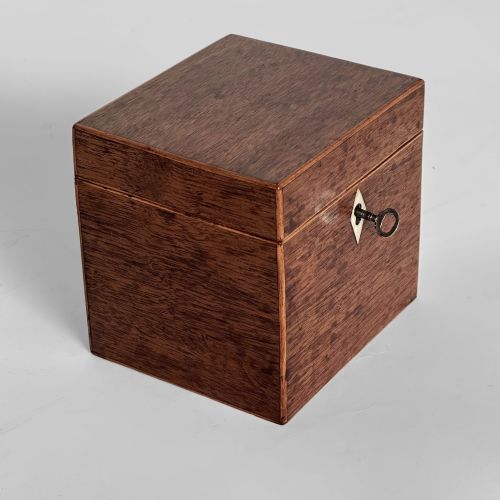
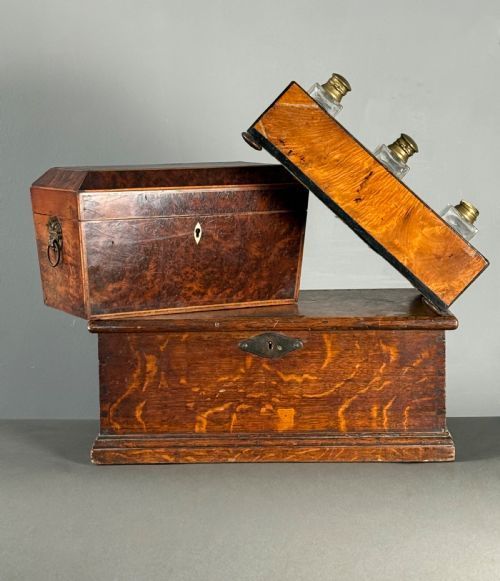
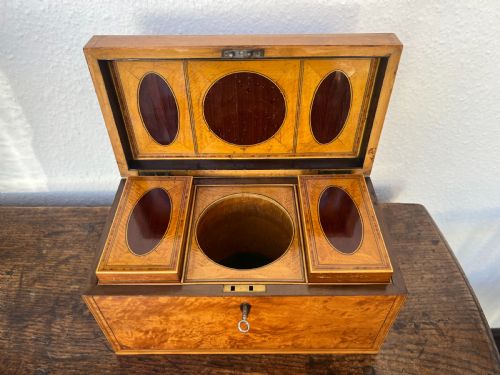
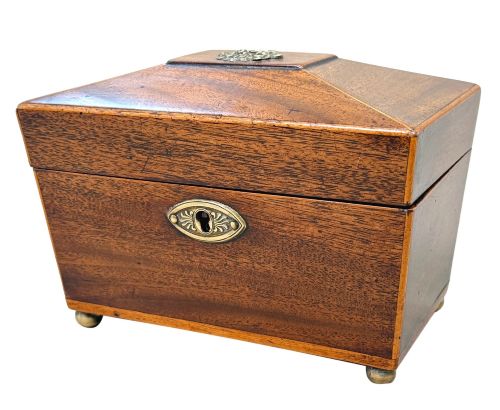
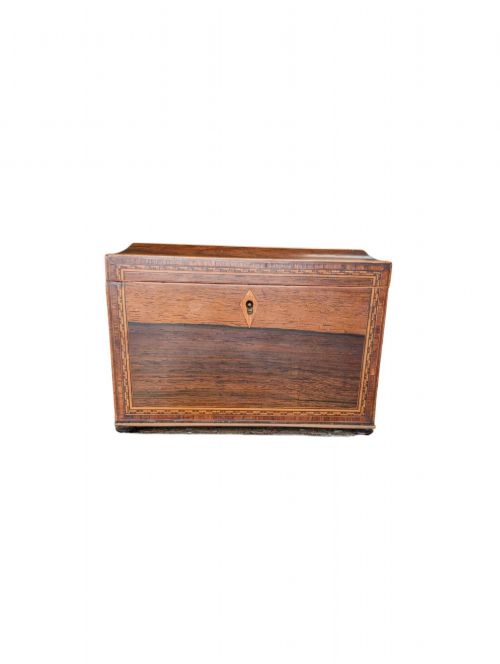
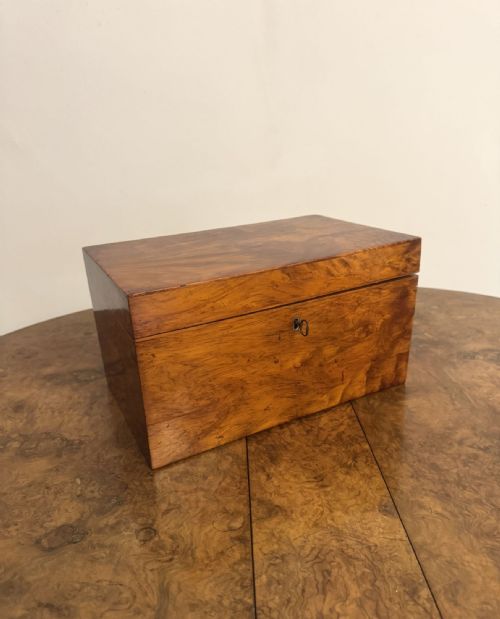
The most common examples on this page are tea caddies and decorative boxes originating from the eighteenth and nineteenth centuries. Makers shaped these pieces in rectangular, oval, sarcophagus, and cube forms, frequently incorporating internal compartments for distinct varieties of leaves alongside glass mixing bowls.
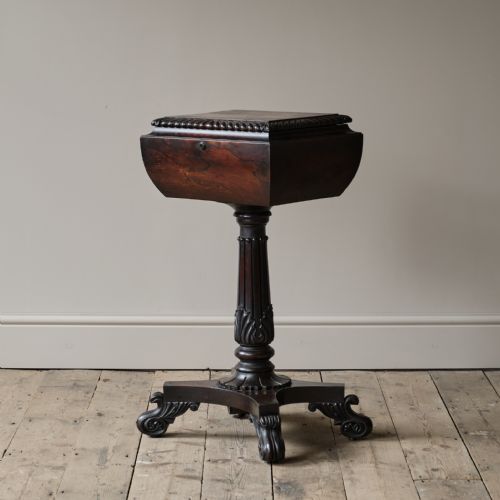
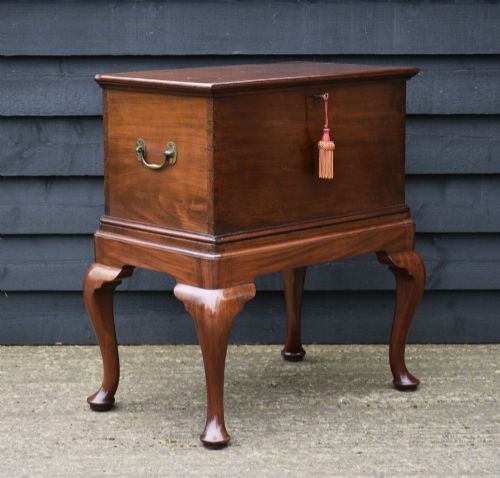
The materials and styles span Georgian, Regency, and Victorian eras, reflecting shifting tastes from plain mahogany timbers to intricate veneers. Alongside traditional caddies, you also find larger standalone teapoys and chests constructed to serve the formal parlour.
Construction and Materials
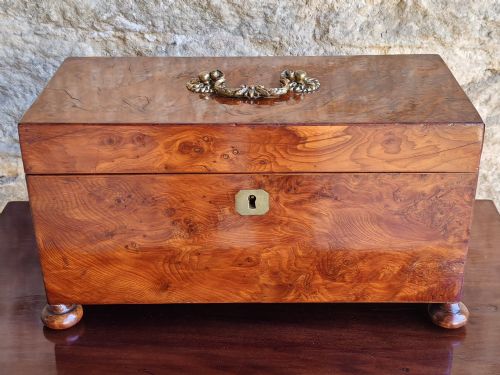
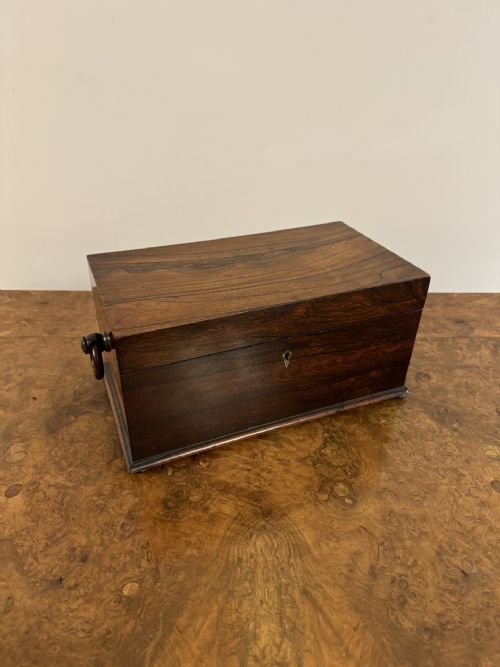
Cabinetmakers utilised dense hardwoods such as mahogany, rosewood, walnut, and satinwood as the primary structural body for these caddies. Timber selection governed both durability and aesthetic appeal, allowing workshops to plane smooth surfaces or showcase rich natural grain patterns like flame mahogany and burr yew.
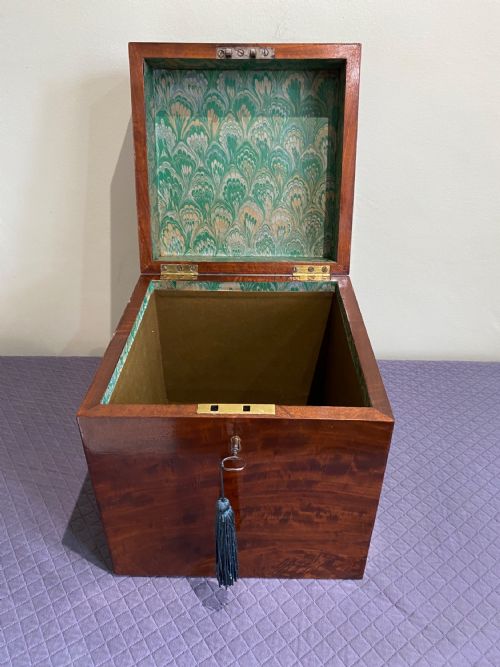
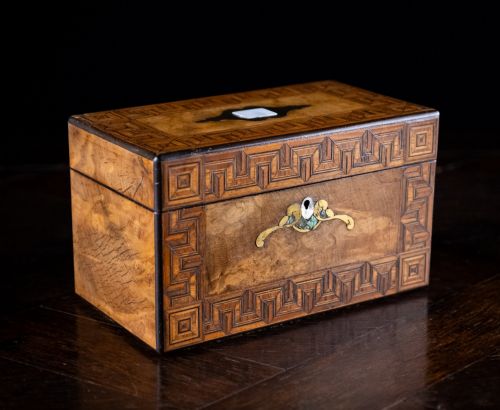
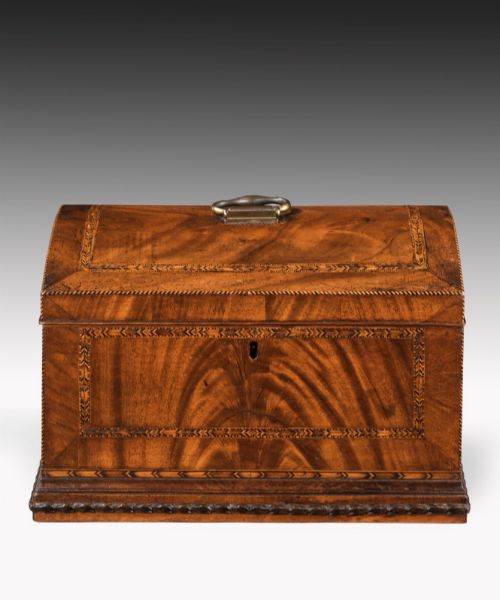
Decorative surface techniques relied on precision parquetry, marquetry, and contrasting string inlay using boxwood, ebony, brass, and mother-of-pearl. Craftsmen added structural hardware including brass lion mask handles, lockable mechanisms, and internal foil or paper linings to protect the stored contents.
Specialised regional methods emerged, such as Tunbridge Ware producing mosaic wood designs, while international trade introduced exotic woods like gonçalo alves and amboyna. Joinery ranged from simple dovetailed box construction to complex curved sarcophagus shaping requiring steam-bent panels.
Listings span the eighteenth and nineteenth centuries, demonstrating the evolution of tea storage from plain Georgian mahogany boxes to elaborate Regency sarcophagi.
Differentiating Quality
Quality rests upon the choice of timber and the precision of the cabinetmaker's hand. Superior examples display carefully selected burr or flame veneers that wrap continuously around the box sides, while lesser pieces rely on plain, unfigured planks.
The sophistication of internal fittings dictates distinction across the range. Top-tier items retain original cut glass bowls, mixing sticks, functioning locks with keys, and secret drawers, whereas basic boxes often lack original internal components or feature later replacements.
Inlay execution separates fine workshop output from standard production. Crisp, tight-fitting geometric parquetry and delicate bone or mother-of-pearl detailing indicate high-level craftsmanship compared to coarser, uneven surface decoration.
Tahan of Paris
The Wooden Tea Storage Glossary
- Teapoy
- A small stand or table featuring a lidded box on top, designed specifically for holding tea caddies and serving tea in the parlour.
- Sarcophagus
- A monumental coffin-shaped box design with a domed or peaked lid, popular during the Regency period for large tea caddies.
- Tunbridge Ware
- A type of decorative woodwork characterised by tiny mosaic tiles formed from differently coloured woods to create pictorial or geometric scenes.
- Marquetry
- The art of applying decorative pieces of veneer to a structural structure to form intricate pictures or ornamental patterns.
- Parquetry
- Geometric mosaic woodwork work used to create repeating patterns across the flat surfaces of boxes and tables.
- Caddy
- A small container or box historically used for storing tea leaves before the widespread standardisation of retail packaging.
Wooden Tea Storage: Frequently Asked Questions
What were wooden tea caddies used for?
These boxes stored expensive black and green tea leaves securely away from moisture and household pests. Because tea was heavily taxed and valuable, caddies were fitted with locks to prevent domestic servants from helping themselves.
Inside, the boxes often featured divided compartments for different tea varieties and a central glass bowl used for blending leaves before brewing.
How do I date an antique tea caddy?
Dating relies on observing the overall silhouette, secondary timbers, and decorative techniques used on the exterior. Georgian pieces tend to feature straight sides, oval shapes, and simpler mahogany or satinwood construction.
Regency examples frequently adopt the sarcophagus shape with brass paw feet and elaborate rosewood veneers, while later Victorian boxes often incorporate mother-of-pearl inlay and heavier hardware.
Did all tea caddies have glass bowls?
Not all caddies included bowls, but many Georgian and Regency examples featured a central recess designed to hold a glass mixing bowl or rinsing container. These bowls allowed the host to blend different grades of tea or wash spoons between servings.
Surviving original glass components are uncommon due to the fragile nature of the material over centuries of use.
How should I care for a wooden tea caddy?
Keep wooden caddies away from direct sunlight, central heating vents, and damp environments to prevent the timber from warping or veneers from lifting. Maintaining a stable indoor climate protects both the external polish and fragile internal paper or foil linings.
Dust gently with a dry, soft cloth and avoid applying modern household polishes or cleaning sprays to antique surfaces.
What is the difference between a tea caddy and a teapoy?
A tea caddy is a portable box designed to sit on a table, sideboard, or tea chest, holding modest quantities of loose leaves. A teapoy is a much larger, standalone piece of furniture featuring a box mounted on a pillar and claw foot or a small table base.
Teapoys often contained multiple internal caddies and mixing facilities for formal hospitality.