


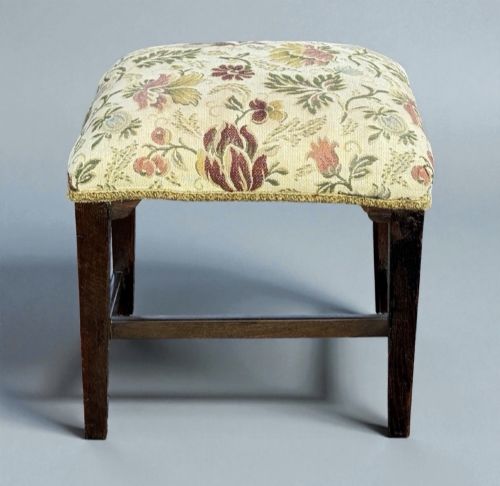


Wooden Tapestry Footstool
A wooden tapestry footstool brings tactile period texture to a fireside, combining solid timber frames with needlework tops.
Wooden Tapestry Footstool
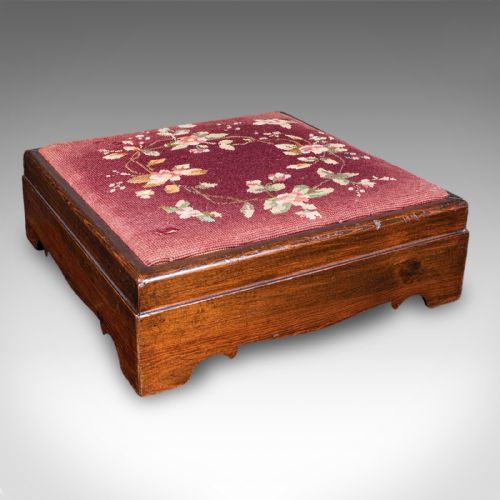
A wooden tapestry footstool is a low seating piece designed for supporting the feet, featuring a timber frame paired with a textile top. Buyers searching for a wooden tapestry footstool will find pieces spanning several centuries, though nineteenth-century examples dominate the selection.
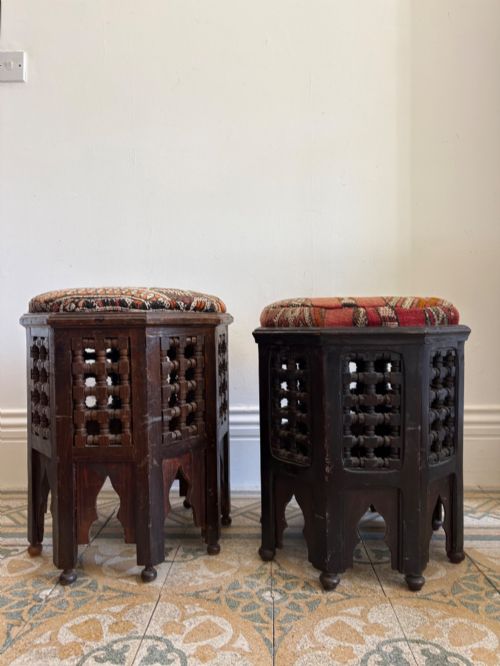
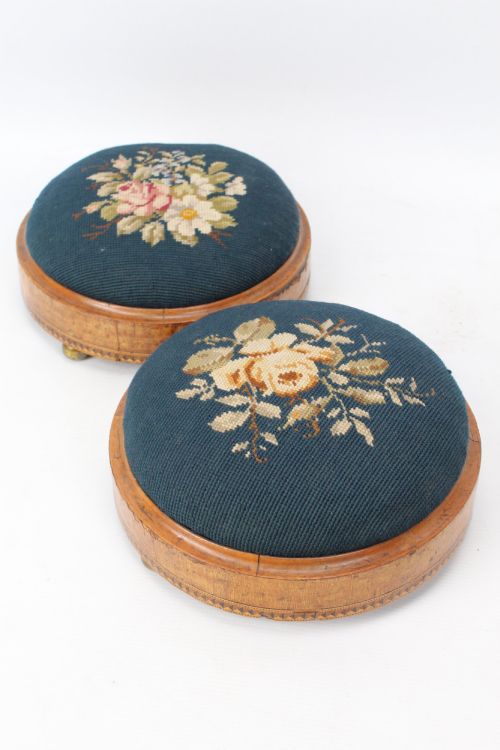
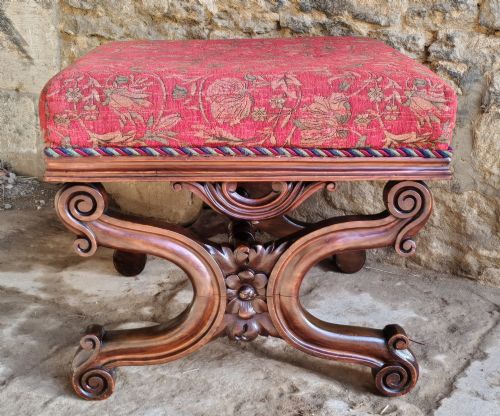
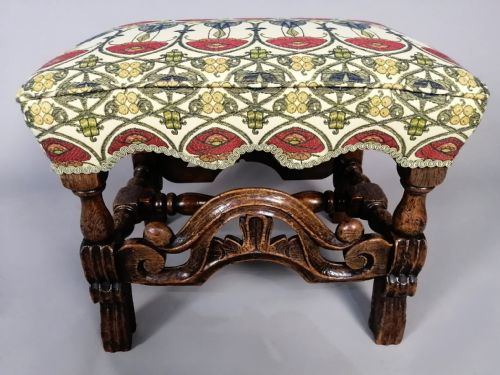
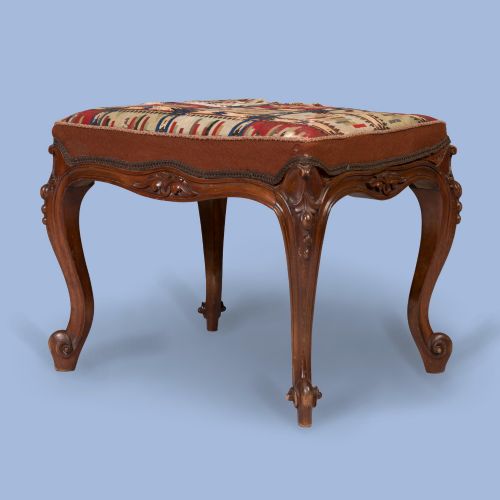
The materials and forms vary considerably across the selection, ranging from simple circular frames to elaborate carved window seats and x-frame designs. Walnut and mahogany appear frequently alongside oak and pitch pine, supporting wool needlework, kilim, and tapestry fabric seats.
Materials and construction
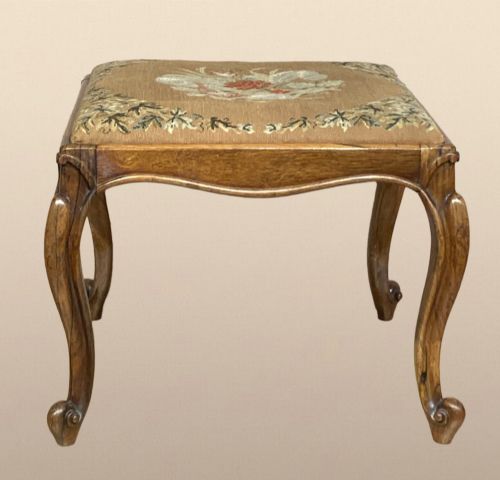
Frames rely on cabinet timbers such as walnut, mahogany, rosewood, and oak, shaped through turning, joining, and carving. Skilled cabinetmakers formed cabriole legs, x-frames, and turned supports using traditional joinery methods suited to each period style.
Upholstery techniques combined sturdy internal webbing and stuffing with durable textile covers. Wool needlepoint, tapestry fabric, and kilim were worked by hand or loom and secured over padding to create firm yet comfortable surfaces.
Wooden Tapestry Footstool Retail Price Guide 2026
Typical asking prices for wooden tapestry footstool among the pieces listed under this phrase on Sellingantiques today, from the lower quarter to the upper quarter. They describe what is for sale here now, not the wider market.
Listings feature walnut, mahogany, rosewood, and oak frames paired with wool tapestry, needlepoint, and kilim textiles.
Assessing craftsmanship and condition
Quality rests in the crispness of the timber carving and the integrity of the frame construction. Finer examples display thoughtful proportions, carefully selected timber grains, and stable joinery that withstands decades of use.
The needlework surface significantly influences the overall character of a piece. Tightly worked needlepoint with well-preserved wool colours and secure mounting elevates a footstool above simpler variants with replacement or worn textiles.
The Wooden Tapestry Footstool Glossary
- Tapestry
- A thick textile featuring worked designs, often used for upholstery on period seating. It provides both decorative pattern and durable surface texture.
- Cabriole leg
- A furniture leg that curves outward and then tapers inward, inspired by the shape of an animal's leg. This form appears frequently on walnut and mahogany stools.
- X-frame
- A structural design where intersecting members form an X shape to support the seat. This configuration offers distinct architectural strength and visual interest.
- Needlepoint
- Hand-stitched embroidery executed on an even-weave canvas ground. It forms the pictorial or geometric tops seen on many nineteenth-century examples.
- Tunbridge ware
- Small-scale woodwork decorated with tiny mosaic wood tiles forming geometric patterns. It occasionally accents the wooden frames of Victorian pieces.
Wooden Tapestry Footstool: Frequently Asked Questions
What periods do these footstools come from?
The selection spans multiple eras, with the majority originating from the nineteenth century and the Victorian period. Earlier examples date back to the eighteenth century, while Edwardian and later revival styles also feature.
Craftsmanship and decorative details shift across these periods, reflecting the shifting tastes of Georgian, Victorian, and revivalist cabinetmakers.
How were these stools used historically?
These low pieces served primarily beside firesides and in parlours to elevate feet off cold draughty floors. Some larger variants functioned as window seats or dressing table stools.
Certain specialised forms combined seating with internal storage compartments, functioning as ottomans or work boxes for textiles and sewing supplies.
How do I care for the tapestry top?
Preserving the textile top requires gentle brushing or careful vacuuming through a mesh screen to remove dust without pulling the wool fibres. Keeping the piece away from direct sunlight prevents the dyed threads from fading.
Leather or wood components around the textile benefit from occasional cleaning with appropriate furniture wax, avoiding moisture contact on the upholstery.
How can I tell the furniture styles apart?
Georgian and Queen Anne styles often showcase clean lines, cabriole legs, and understated walnut or mahogany frames. Victorian examples frequently employ heavier carved rosewood or walnut, sometimes incorporating intricate needlepoint or Tunbridge ware details.
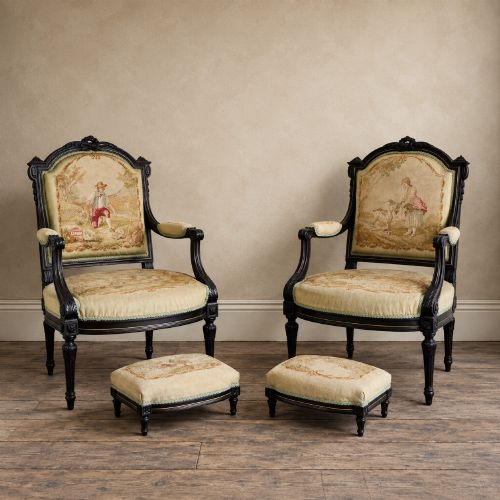
Revival pieces borrow heavily from earlier French and English aesthetics, pairing ebonised or polished beech frames with ornate tapestry seats.