

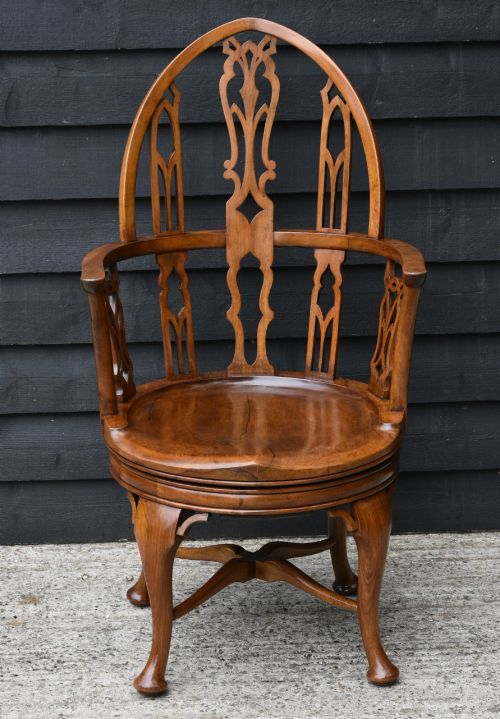
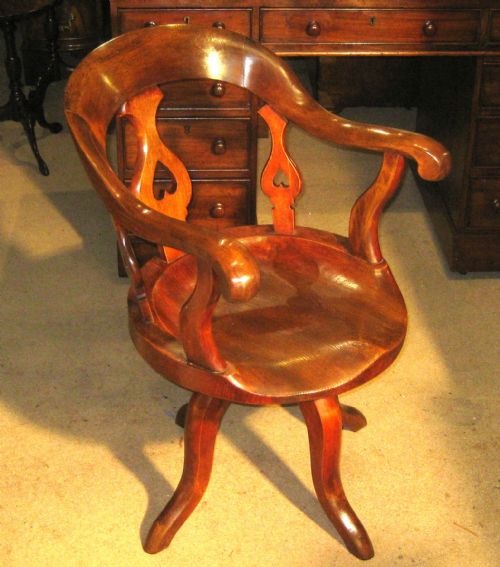
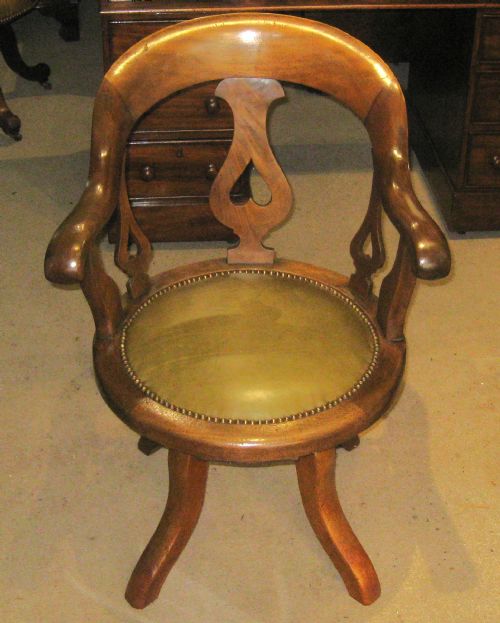
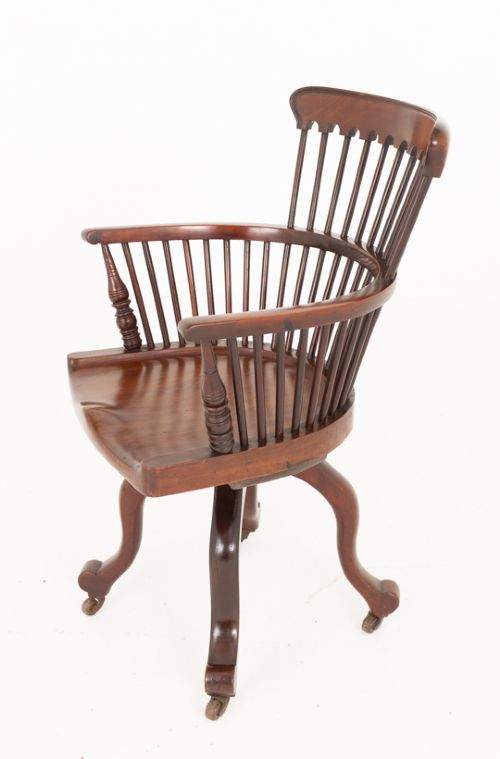

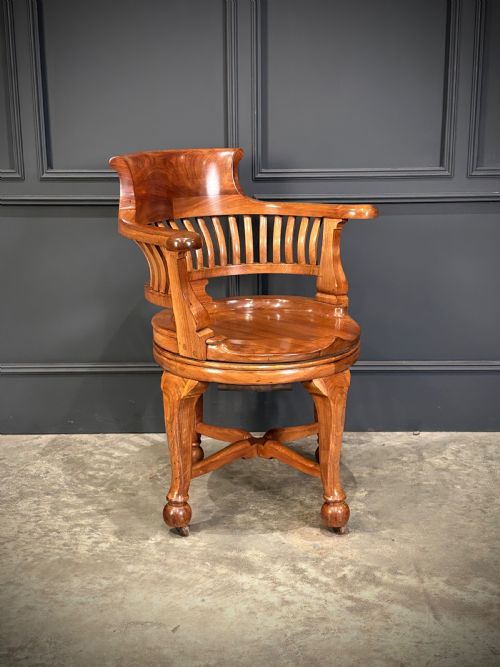
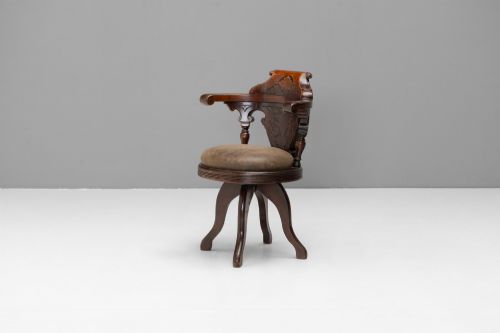
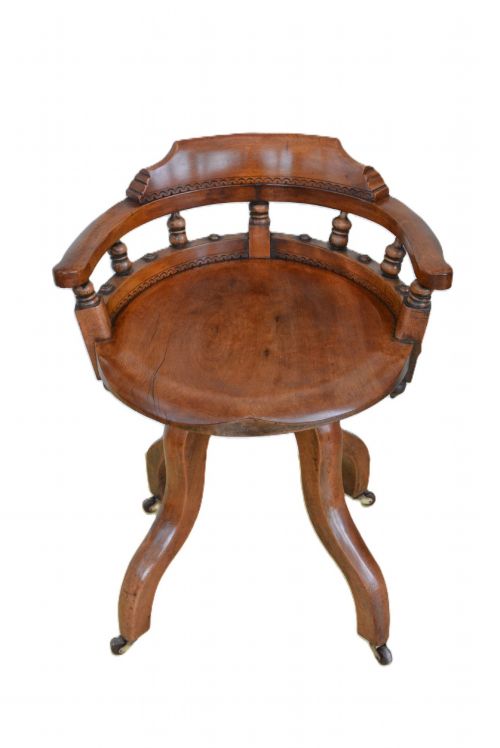


Wooden Swivel Armchair
A wooden swivel armchair is a working seat built for long hours at a desk, offering practical rotation and sturdy support.
Wooden Swivel Armchair
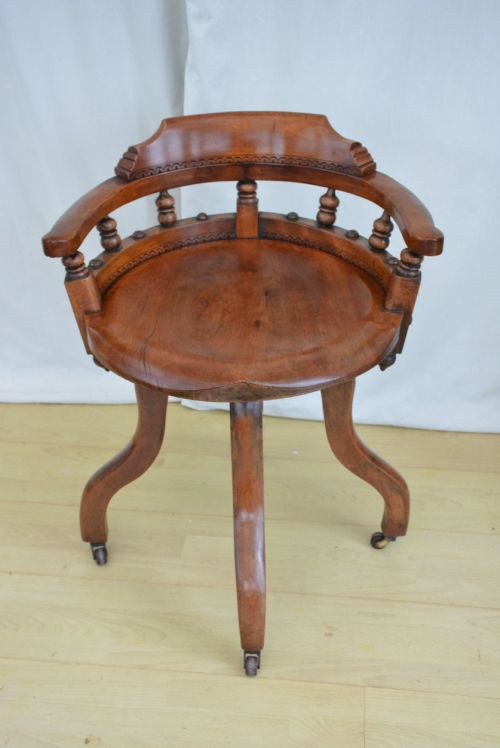
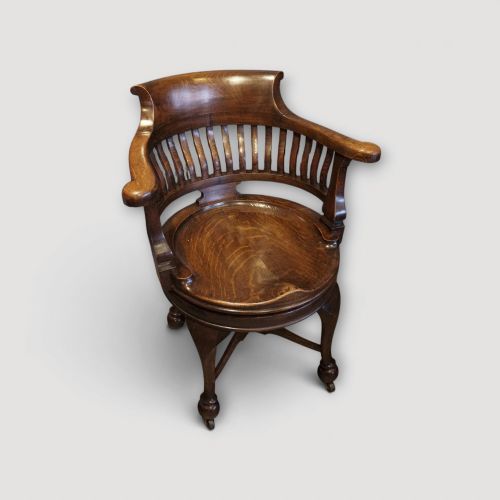
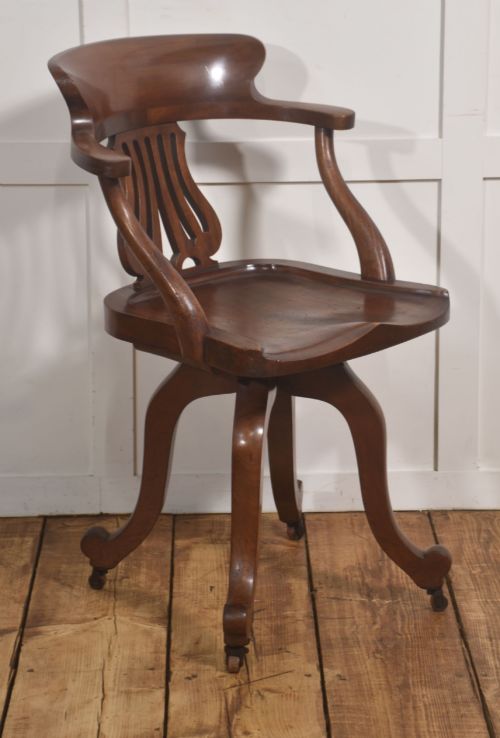
A wooden swivel armchair combines a pivoting base with a supportive desk seat, designed for functional placement in studies and offices. These pieces emerge primarily from the Victorian and Edwardian eras, spanning periods from the late nineteenth century into the early twentieth.
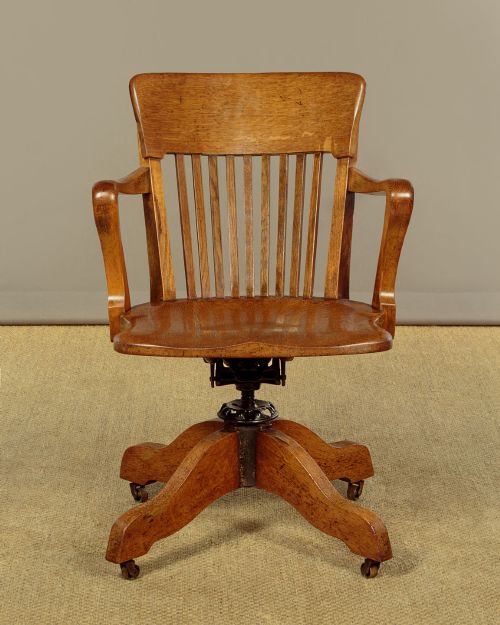
The most common examples encountered on this page are revolving desk chairs rendered in mahogany or oak. They often function as office seating, desk chairs, or library chairs with mechanical swivel and tilt actions.
Makers and designers of the period adapted these chairs for commercial and domestic workspaces, utilising robust timbers to withstand heavy daily use. The forms range from simple utilitarian office seats to more ornate Arts and Crafts or Aesthetic Movement iterations.
Materials and construction methods
Carpenters constructed these swivel seats using dense hardwoods such as mahogany, oak, walnut, beech, and ash to ensure structural integrity during rotation. Many examples incorporate cast iron and brass mechanisms beneath the seat to facilitate smooth swivelling and tilting.
Upholstery materials typically include leather or tan hide seats, alongside woven cane panels found in bergere versions. Joinery techniques relied on solid wood framing, turned spindles, and carved elements suited to Victorian and Edwardian tastes.
Wooden Swivel Armchair Retail Price Guide 2026
Typical asking prices for wooden swivel armchair among the pieces listed under this phrase on Sellingantiques today, from the lower quarter to the upper quarter. They describe what is for sale here now, not the wider market.
Listings feature oak, mahogany, walnut, beech, and ash, paired with leather, brass, and cast iron.
Distinctions in craftsmanship
The sophistication of the internal swivel mechanism and the complexity of the timber turning determine the tier of a piece. Finer examples display heavily carved details, choice grains of golden mahogany or walnut, and integrated tilt functions.
Simpler office models prioritize utility with plain wooden seats and sturdy beech or oak frames, whereas signed workshop pieces or those attributed to notable designers demonstrate superior joinery and refined proportions.
Edward William Godwin·Kendrick & Jefferson·Shoolbred
The Wooden Swivel Armchair Glossary
- Swivel
- A mechanism that allows the chair seat to rotate fully on its base. This movement is typically managed by a central iron spindle and wooden or metal spider undercarriage.
- Bergere
- A type of upholstered armchair with an enclosed wooden frame where the back and sides are panelled in woven cane. This technique lightens the visual weight of heavy oak or walnut frames.
- Aesthetic Movement
- A late nineteenth-century design style emphasising visual beauty over narrative or moral function. Pieces from this movement often feature simplified lines and thoughtful craftsmanship.
- Arts and Crafts
- A design movement valuing traditional handicraft, simple forms, and visible construction methods. Chairs from this tradition showcase honest materials like solid oak and exposed joinery.
- Tilt
- A mechanical function allowing the back of the desk chair to recline slightly against a tension spring. It provides ergonomic adjustment for the seated user.
Wooden Swivel Armchair: Frequently Asked Questions
How do I use a vintage swivel chair?
A wooden swivel armchair functions well at modern desks, providing height and rotation for office work.
Ensure the floor beneath the castors is protected, as older metal and wood mechanisms are heavy.
Are these chairs comfortable for daily work?
Many include contoured wooden seats or leather pads designed for prolonged sitting.
Ergonomics vary by period, with Edwardian tilt mechanisms offering greater flexibility than rigid Victorian models.
How do I date a wooden swivel armchair?
Dating relies on timber choice, hardware style, and stylistic markers such as Aesthetic Movement carving or Arts and Crafts simplicity.
Victorian pieces often use solid mahogany, while Edwardian versions frequently feature polished oak and beech.
What maintenance do swivel mechanisms need?
The iron and brass underpinnings benefit from occasional light lubrication to keep the rotation smooth.
Tightening visible screws and checking the central spindle preserves the structural health of the frame.