


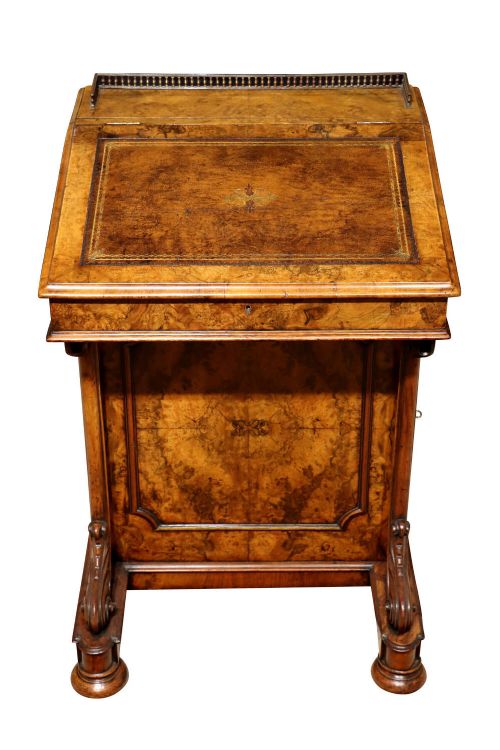


Wooden Slant Top Desk
A wooden slant top desk is a writing surface hinged to slope upward, offering enclosed storage for papers and correspondence.
Wooden Slant Top Desk
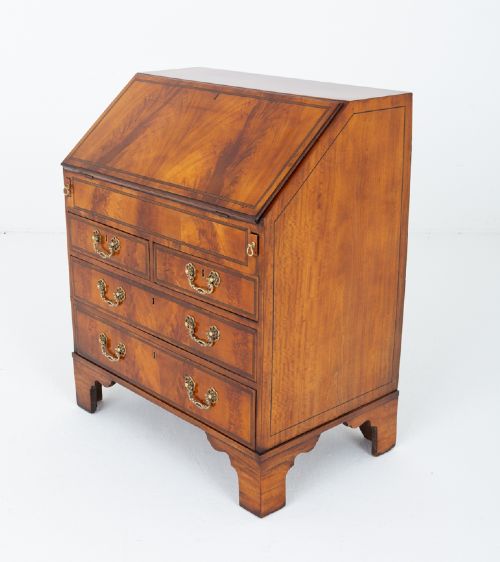
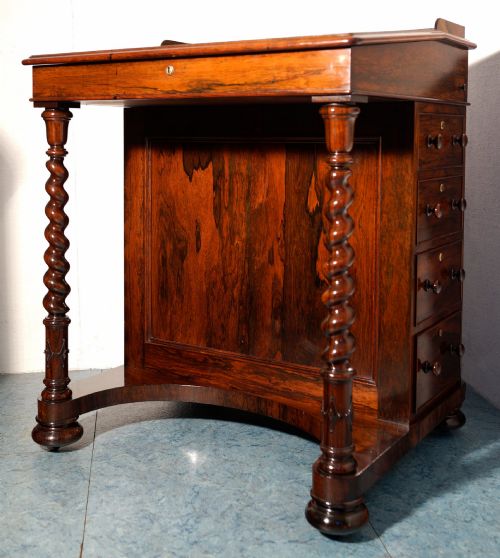
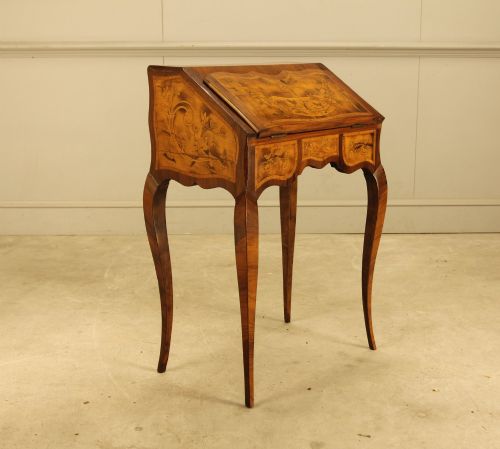
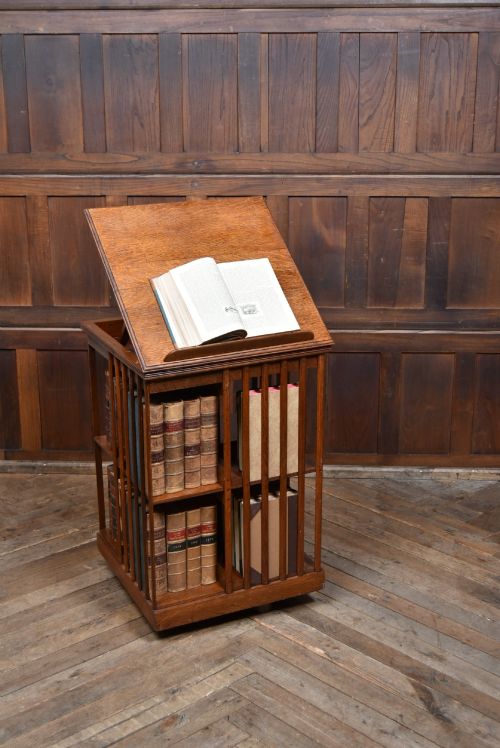
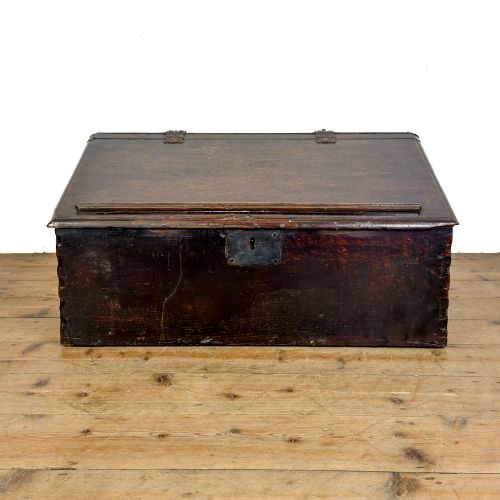
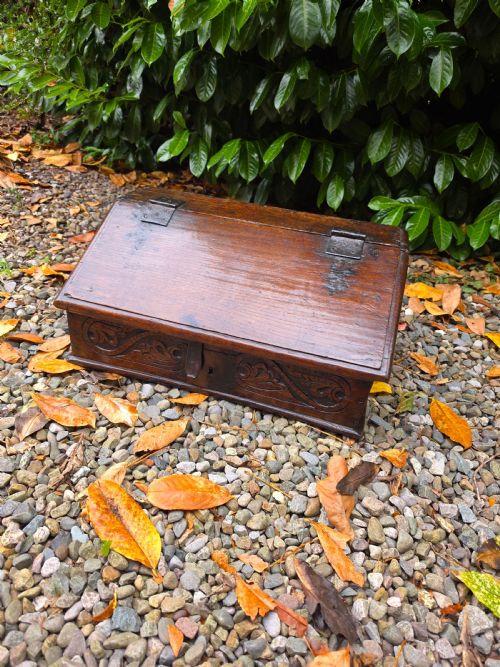
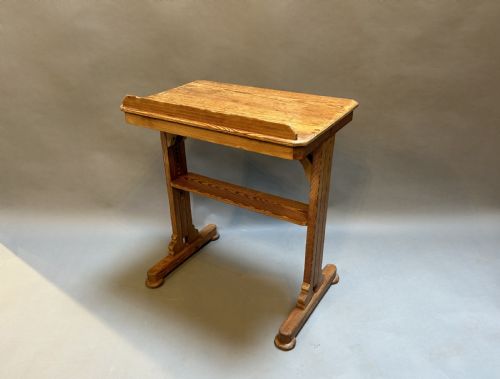
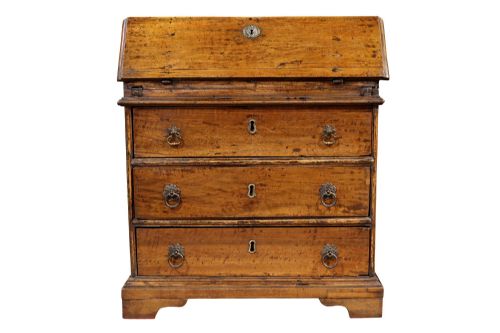
When you search for a wooden slant top desk, you encounter a variety of forms designed for storage and writing, spanning centuries of cabinet making. The pieces listed range from compact early Bible boxes and Davenport desks to substantial Georgian and Victorian bureaux.
The most common examples on this page are walnut, mahogany, and oak bureaux or Davenports dating from the eighteenth and nineteenth centuries. These pieces combine a sloping writing flap with internal pigeonholes, drawers, or compartmentalised storage below.
Materials and Technique
Cabinet makers utilised structural timbers such as oak, mahogany, and walnut, often applying decorative veneers including burr walnut, satinwood, and olivewood to the writing surfaces and facades. Solid timber construction forms the carcass, while secondary woods line the interior drawers.
Brass handles, escutcheons, leather writing inserts, and original ironwork provide both functional operation and decorative contrast against the polished wood grains. Joinery methods reflect the period of origin, from early pegged joints in seventeenth and eighteenth-century boxes to nineteenth-century dovetailed drawer construction.
Listings feature oak, mahogany, walnut, and pine across eighteenth-century and nineteenth-century periods.
Assessment of Quality
The standard of a wooden slant top desk depends heavily on the choice of timber figurations and the precision of the internal fittings, such as secret drawers and satinwood pigeonholes. Finer pieces display carefully matched veneers and superior secondary woods.
Original hardware, including brass locks, hinges, and ironwork, elevates a piece significantly compared to replaced components. The crispness of carved details, marquetry work, and the structural integrity of the sloping lid hinges distinguish superior examples.
The Wooden Slant Top Desk Glossary
- Bureau
- A desk with a sloping hinged lid that covers a compartment for papers, usually resting on a chest of drawers. This form evolved from early portable writing boxes into freestanding furniture.
- Davenport
- A compact pedestal desk featuring a sloping top and drawers opening to one side. It gained popularity during the nineteenth century for use in smaller reception rooms.
- Bible Box
- A small wooden box with a slanted lid, originally used to hold family Bibles and writing materials. These early pieces date back to the seventeenth and eighteenth centuries.
- Marquetry
- Decorative veneer work arranged in intricate patterns using various coloured woods and other materials. Italian and English makers applied this technique to surface panels.
- Pigeonhole
- A small, open compartment within a desk interior used for sorting letters and documents. These compartments are frequently concealed behind small internal doors.
Wooden Slant Top Desk: Frequently Asked Questions
What is a Davenport desk?
A Davenport is a compact writing desk featuring a sloping, hinged writing surface and a pedestal of drawers opening to the side. They were widely produced during the Victorian era.
Many examples include a small compartment on top for stationery and inkwells, making them suitable for parlor or bedroom use.
How do I use a slant top desk?
The sloping lid lifts or lowers to provide a firm writing angle while concealing ink, quills, and correspondence underneath. Opening the flap grants access to internal drawers and letter slots.
Documents and writing tools store securely inside when the lid is closed and locked.
How do I date a wooden bureau?
Dating relies on construction methods, timber choices, and hardware styles. Eighteenth-century pieces often feature oak linings and hand-cut dovetails.
Later nineteenth-century examples display machine-sawn elements, different veneer selections, and distinct decorative carving styles typical of the Victorian and Edwardian periods.
What is the difference between a bureau and a Davenport?
A bureau typically rests upon a chest of drawers or frame, featuring a wide sloping flap that opens forward. A Davenport is much smaller and incorporates drawers down one lateral side.
Bureaux offer greater storage capacity for ledgers and books, whereas Davenports serve as intimate writing furniture.