






Wooden Shield Mount
A wooden shield mount holds taxidermy trophies, horns, and plaques, bringing traditional British and Highland lodge character into a room.
Wooden Shield Mount
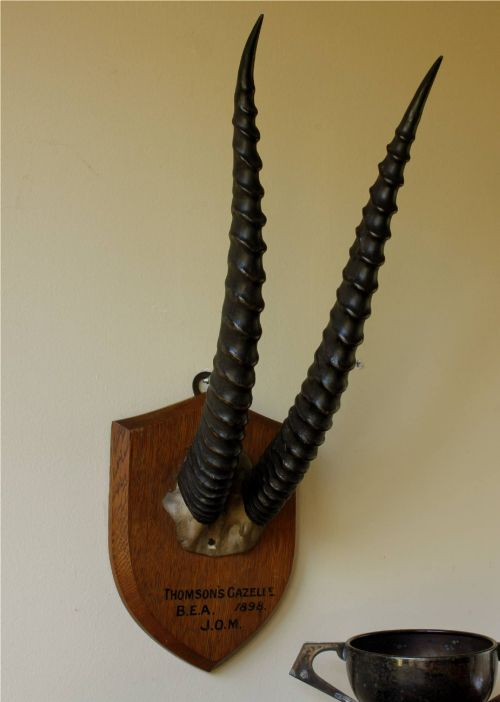
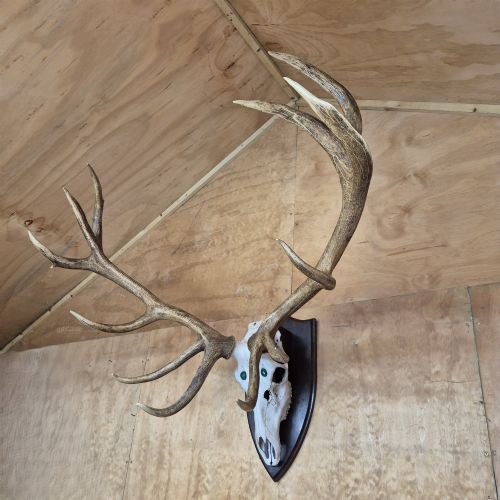
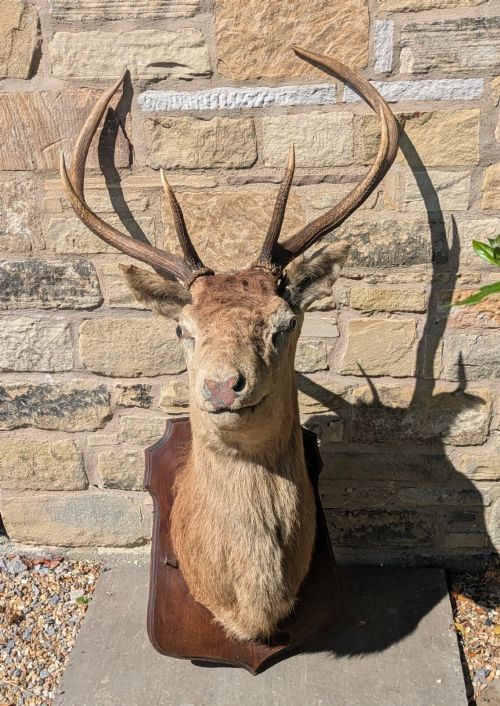
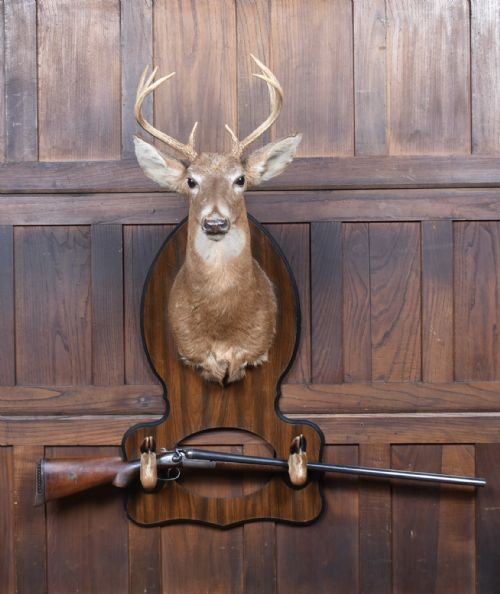
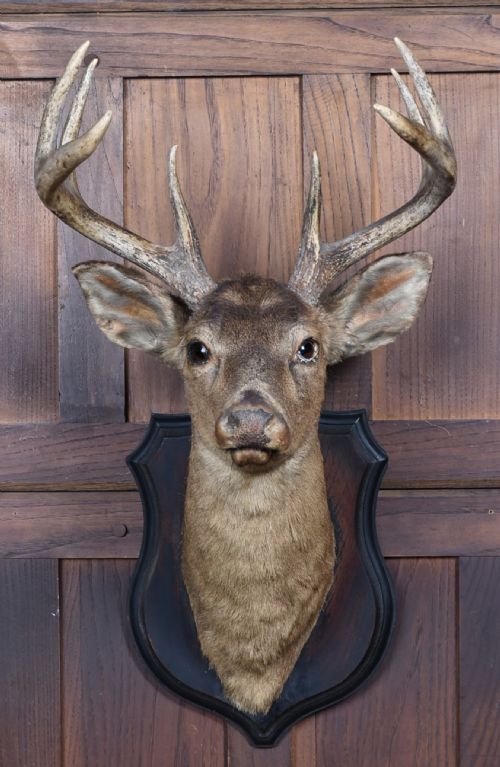
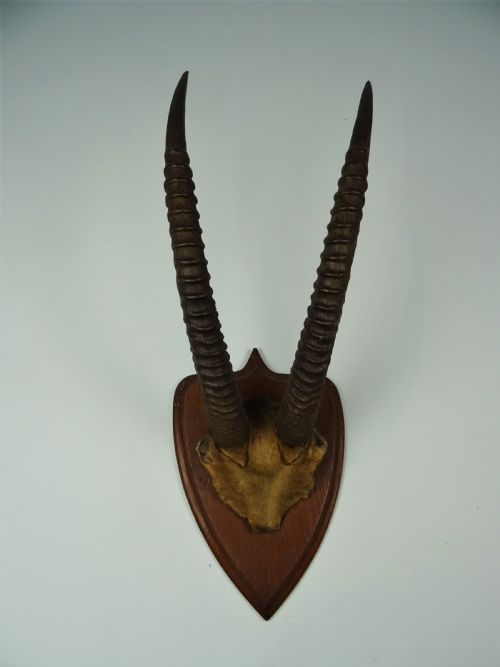
A wooden shield mount serves as a sturdy timber backing for taxidermy trophies, horns, and decorative plaques, originating predominantly from Victorian, Edwardian, and early twentieth-century periods. These pieces include stags' heads, gazelle horns, and fox masks fastened directly to carved timber boards designed to hang upon walls. Buyers searching for a wooden shield mount encounter various British and Highland lodge forms, from simple oak boards holding antlers to hotel reception key boards and decorative plaques.
The most common examples on this page combine carved oak shields with mounted deer antlers, red stags, and springbok or sable horns. Makers utilised the natural grain of the wood to frame the taxidermy, frequently incorporating silver mounts, inscriptions, or shields for presentation purposes. These items reflect traditional British country sports and Highland traditions, functioning as wall decor or functional key racks.
Materials and construction methods
Makers constructed the backing boards primarily from solid oak and other varieties of wood, shaping them into traditional pointed shield silhouettes or circular plaques. Carpenters carved and polished the timber to highlight the grain before securing the taxidermy specimens directly to the centre of the board. Silver plating and applied silver shields often embellished the wooden edges or provided space for engraved presentation details.
Taxidermy elements such as red deer antlers, stags' heads, and antelope horns were prepared using period preservation techniques and fastened securely to withstand wall mounting. Hide, bone, horn, and glass components completed the mounts, with some items incorporating taxidermy hides and natural materials. Silversmiths and taxidermists collaborated to produce pieces that combined durable cabinetry with preserved animal trophies.
Dairy Maid, a noted fox hound from the Victorian era, gazes down from a mount alongside traditional stags and springboks.
Assessing quality in mounts and shields
Quality rests in the carving work of the wooden shield and the taxidermy skill applied to the trophy mounted upon it. Finer pieces display deeply carved oak grain, balanced antler spreads, and expert taxidermy preservation that retains the natural expression and posture of the animal. Pieces associated with notable taxidermists command greater attention due to the precision of the mounting technique and anatomical accuracy.
The integration between the timber shield and the mounted trophy dictates the overall finish of the piece. Superior examples feature well-fitted silver mounts, secure fixings, and timber that has aged gracefully without splitting. Lesser pieces show basic carpentry and simpler preservation work, lacking the detailed carving or silver embellishments found on top-tier items.
Peter Spicer and Sons·Edward Gerrard and Sons·John Grinsell and Sons
The Wooden Shield Mount Glossary
- Shield mount
- A wooden board shaped like a heraldic shield used to display taxidermy trophies and antlers on a wall. These boards provide a stable backing for heavy specimens.
- Taxidermy mask
- The head and neck portion of an animal, such as a fox, preserved and mounted for display. These are frequently fixed to wooden shields as hunting trophies.
- Silver plate
- A thin layer of silver applied to a base metal, commonly found on the shields, bowls, and hardware associated with these pieces. It adds a reflective finish to the timber framing.
- Antlers
- The bony growths shed and regrown by deer annually, utilised extensively in taxidermy wall mounts. They are measured by points to describe their size and maturity.
Wooden Shield Mount: Frequently Asked Questions
How do I hang a wooden shield mount safely?
These pieces require sturdy wall fixings because the combination of solid timber and taxidermy horns creates significant weight. Use heavy-duty picture hooks or screws anchored directly into wall studs to support the mount securely.
Ensure the hanging wire or integrated bracket on the back of the shield matches the weight distribution of the specific trophy. Check the wall material before installation to select appropriate fixings for plaster, brick, or wood-panelled surfaces.
What periods do these mounted trophies come from?
The listings span the Victorian and Edwardian eras through to the early twentieth century, including pieces dated from the 1880s to the 1950s. Traditional British and Highland lodge pieces dominate these decades.
Victorian and Edwardian examples often feature detailed oak carving and silver presentation plaques, while later pieces from the 1920s and 1930s maintain similar craft standards using traditional taxidermy methods.
How should I clean taxidermy mounted on wood?
Dust the taxidermy gently using a soft, dry brush or a feather duster to remove surface particles without damaging the hair or horns. Avoid using water or liquid cleaners directly on the preserved animal specimens.
For the wooden shield, a dry cloth keeps the polished oak clean. Avoid harsh chemical polishes that might seep into the taxidermy hide or alter the aged surface of the timber.
What materials are typically used in these pieces?
Solid oak and other woods form the primary backing boards, shaped into shields, boxes, or key boards. These are frequently accented with silver plating, glass, and hardware.
The mounted elements consist of animal horns, antlers, bone, and taxidermy hides from deer, antelopes, foxes, and other game species collected during the nineteenth and twentieth centuries.