




Wooden Serving Stand
A wooden serving stand brings functional hospitality into a room, offering practical tiers or removable trays designed for social entertaining.
Wooden Serving Stand
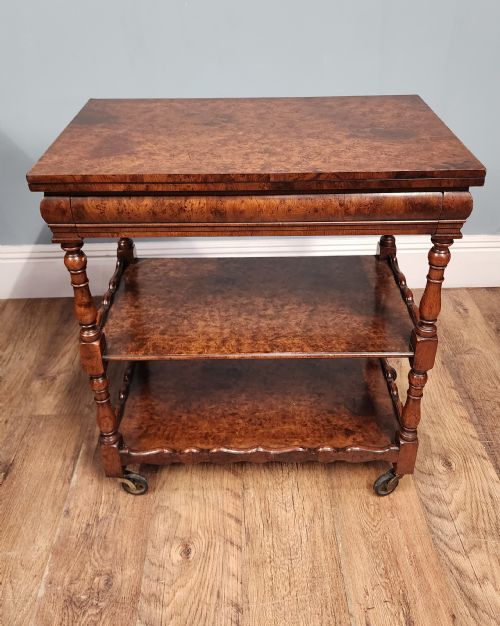
A wooden serving stand encompasses diverse serving furniture intended for food, drink, and display. When examining these listings, a buyer encounters practical items such as butler's trays on folding stands, tiered dumb waiters, and revolving lazy susans.
The selections span multiple historical periods, stretching from the eighteenth century through the Victorian era and into the early twentieth century. English country examples sit alongside Anglo-Indian and Japanese pieces, reflecting broad geographic origins.
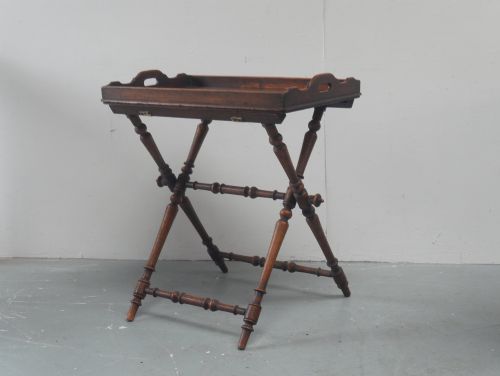
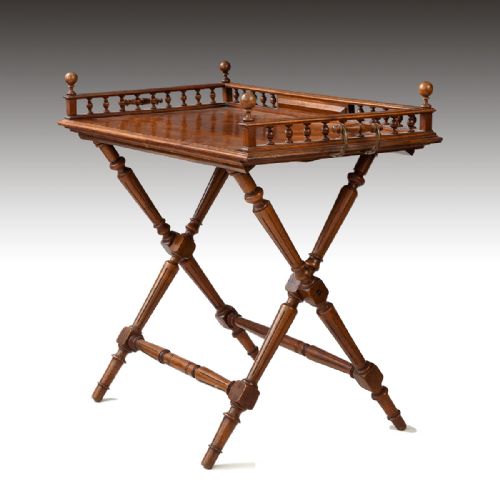
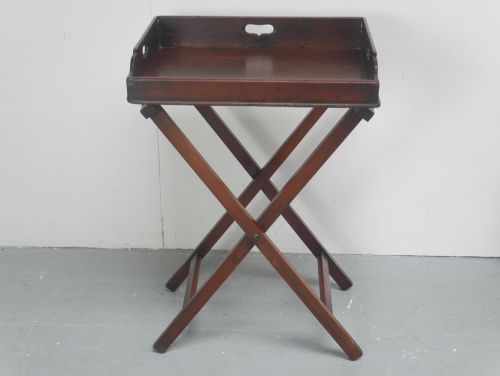
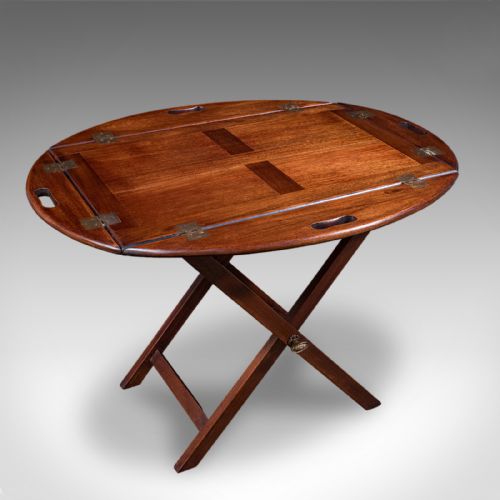
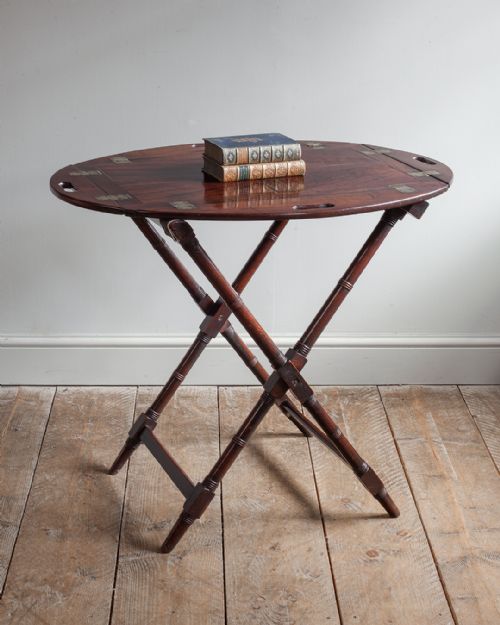
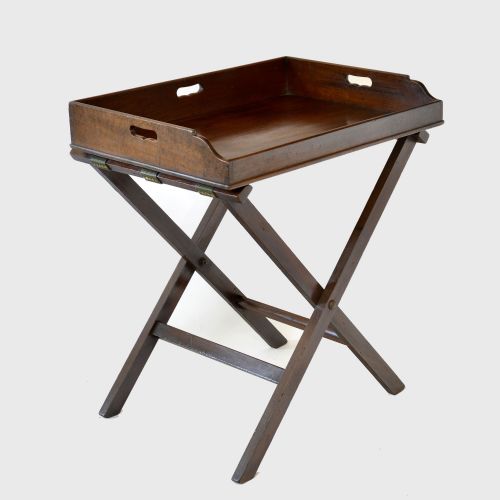
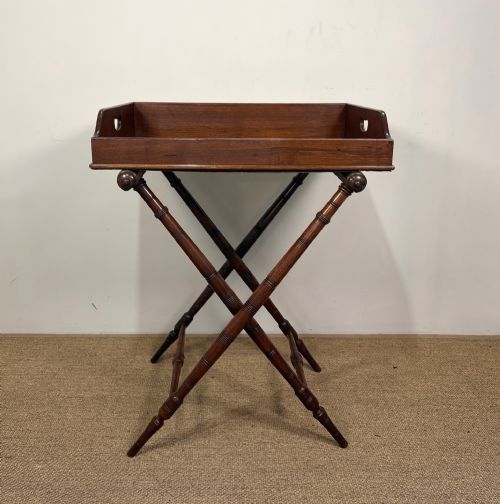
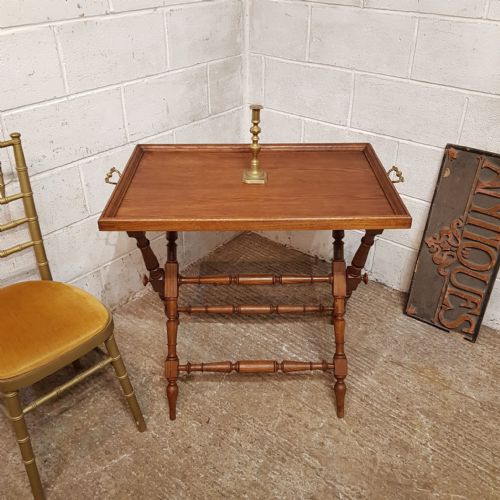
Butler's trays dominate the available selection, frequently paired with dedicated folding wooden stands. These versatile items functioned originally for portable service before transitioning into permanent domestic tables.
Materials and Construction
Cabinet makers utilised dense hardwoods such as mahogany, oak, walnut, and teak to construct durable frames capable of holding heavy serving pieces. Brass hinges, handles, and brackets frequently reinforced folding mechanisms and drop-flap edges.
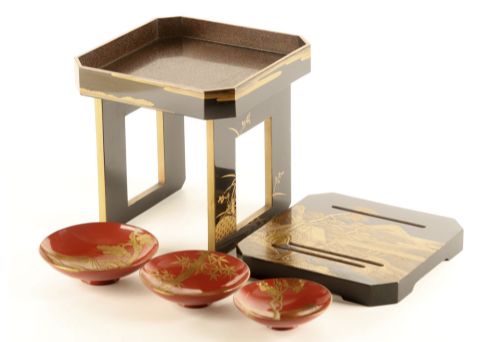
Surface treatments included polished wood finishes that highlighted natural grain patterns, alongside occasional decorative applications of lacquer and gold leaf. Carved ornamentation appeared on Victorian and regional examples, adding texture to edges and supports.
One unexpected survivor crossed oceans from a Swedish castle before landing on the current market.
Distinguishing Quality
The standard of craftsmanship depends heavily on the selection of timber and the precision of the joinery. Superior examples demonstrate thoughtful grain matching across removable trays and sturdy, well-balanced supporting stands that fold smoothly without binding.
Subtleties in carving and the retention of original hardware distinguish workshop output. Pieces retaining matching original stands hold greater integrity than married sets where trays and bases were united later.
The Wooden Serving Stand Glossary
- Butler's tray
- A shallow wooden tray with hinged or fixed sides, designed to lift off a folding stand for carrying service items. These trays formed an essential part of nineteenth-century domestic hospitality.
- Dumb waiter
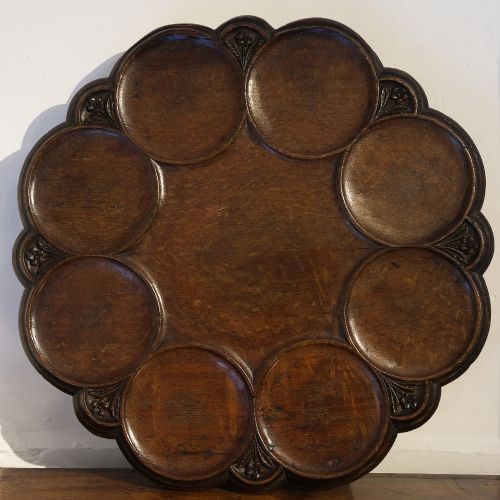
- A tiered freestanding stand with multiple rotating or fixed circular shelves used for holding dishes during meals. They allowed diners to serve themselves without constant servant attendance.
- Lazy susan
- A revolving tray placed on a table or stand to allow easy sharing of food dishes. Early versions utilised solid woods such as oak and mahogany.
- Drop-flap
- Hinged tray sides that fold down flat when not in use. This mechanism allowed servants to transport the tray more easily through tight corridors.
Wooden Serving Stand: Frequently Asked Questions
What is a wooden serving stand used for?
These pieces function as portable or stationary surfaces for serving drinks, food, and afternoon tea in domestic spaces.
Today, buyers frequently utilise them as side tables, cocktail stations, or display surfaces in living rooms and dining areas.
How do I date a wooden serving stand?
Dating relies on identifying timber choices, construction techniques, and hardware styles specific to periods like the Georgian or Victorian eras.
Hand-cut dovetails, original brass folding mechanisms, and secondary woods offer clear physical clues to a piece's age.
Are butler trays and stands original pairs?
Many surviving trays and stands were separated over generations, leading dealers to reunite compatible pieces from the same period.
Checking wood species, wear patterns, and fit helps determine whether a tray and its folding stand started life together.
How do I care for antique serving stands?
Maintenance requires keeping wooden surfaces away from direct heat sources and excessive moisture to prevent timber warping or cracking.
Regular application of appropriate furniture wax preserves the finish without building up heavy residues over time.