
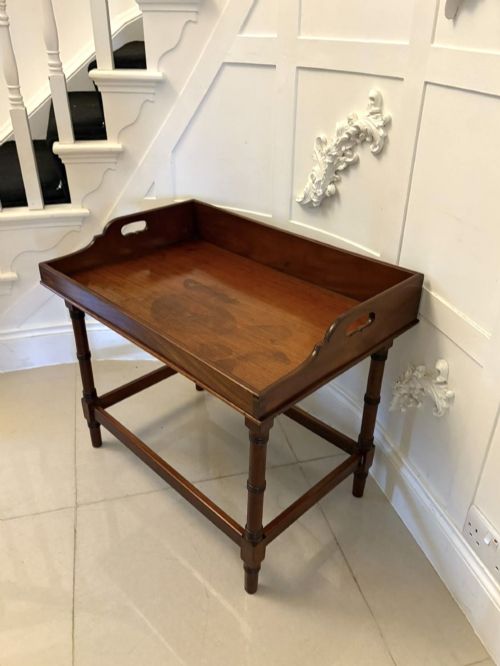
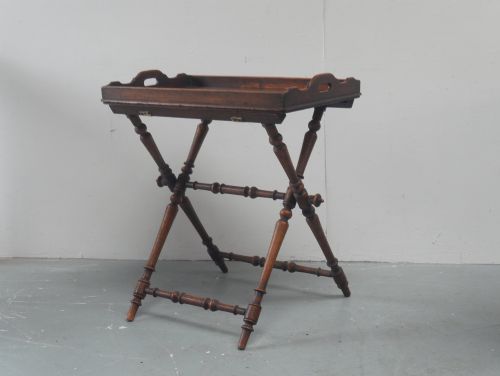
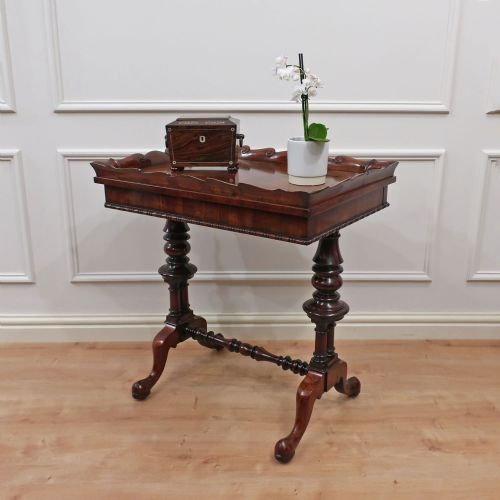
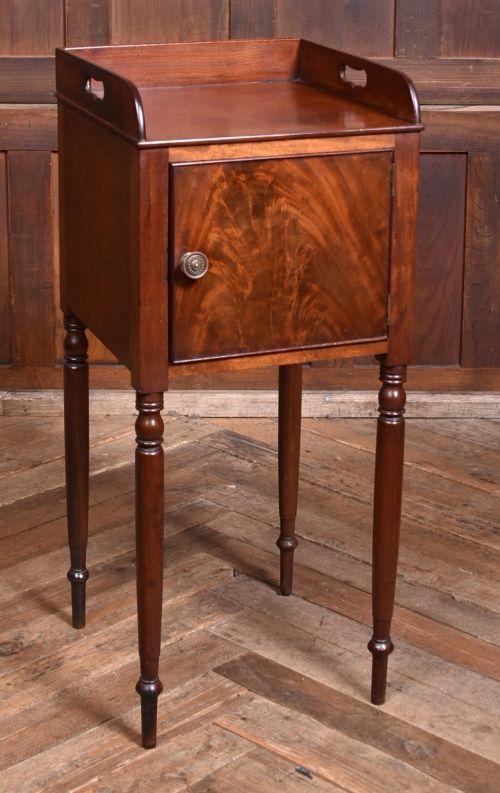

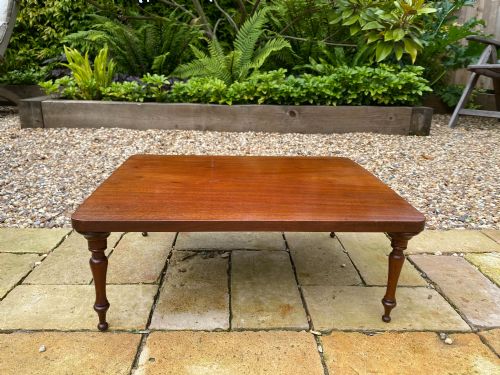


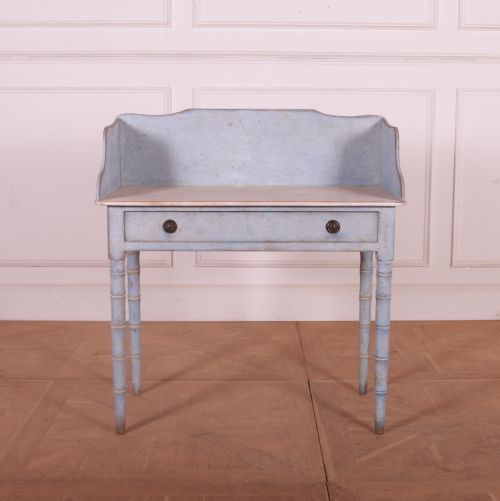

Turned Leg Tray Table
These turned leg tray table designs combine practical portable service surfaces with sturdy timber frames.
Turned Leg Tray Table
A turned leg tray table pairs a raised rim top with solid supports, spanning forms from side tables to bedside cabinets.
You will encounter mahogany and oak pieces spanning periods from the seventeenth century through the Georgian, Regency, and Victorian eras.
The inventory includes specialised variations like bed trays, pot cupboards, and butlers trays on stands alongside conventional lamp and side tables.
How they were made
Cabinet makers utilised solid mahogany and oak timbers, frequently enhanced with flame mahogany veneer and satinwood inlay.
Metal fittings such as brass hardware complete the construction of these tables and cabinets.
Listings span centuries of British cabinet making, featuring mahogany and oak across Georgian, Regency, and Victorian periods.
What varies in quality
Distinctions in quality rest upon the selection of timber figures, such as flame mahogany veneer, and the precision of satinwood inlay work.
The sophistication of the turning on the legs and the integration of functional elements like tray tops and pot cupboards define the standard of execution.
Gillows
The Turned Leg Tray Table Glossary
- Tray top
- A tabletop featuring a raised surrounding rim designed to prevent items from rolling off. This practical feature defines many serving and lamp tables.
- Pot cupboard
- A small bedside cabinet originally built to house a chamber pot. These enclosed pieces often feature turned legs and panelled doors.
- Butlers tray
- A removable rectangular tray with hinged or cutout sides for carrying items, typically mounted on a folding stand. They appear in oak and mahogany.
- Flame mahogany veneer
- A decorative wood slicing displaying a distinctive swirling flame pattern. It is applied to primary surfaces for visual depth.
Turned Leg Tray Table: Frequently Asked Questions
What is a turned leg tray table?
A turned leg tray table is a portable or stationary surface featuring a raised edge and lathe-turned wooden supports. These pieces function as side tables, lamp tables, or bed trays.
They bridge the gap between decorative furniture and utilitarian service items, appearing across Georgian, Regency, and Victorian periods.
How were butlers trays used?
Butlers trays served for transporting food, drinks, or silver between rooms before being placed onto a folding wooden stand. The raised edges kept items secure during transit.
Today, they function well as flexible coffee tables or side surfaces in living spaces.
How do I identify a Regency period table?
Regency tables often showcase classical proportions, dark mahogany timbers, and refined brass details. Turned legs from this era typically reflect neoclassical design influences.
Makers such as Gillows represent the high standard of cabinet work produced during this time.
What is the difference between a pot cupboard and a side table?
A pot cupboard is an enclosed cabinet designed to store a chamber pot, usually featuring a door and sometimes a tray top. A side table remains an open frame surface.
Both forms frequently utilise turned legs and similar timber construction.