


Wooden Secretaire Chest
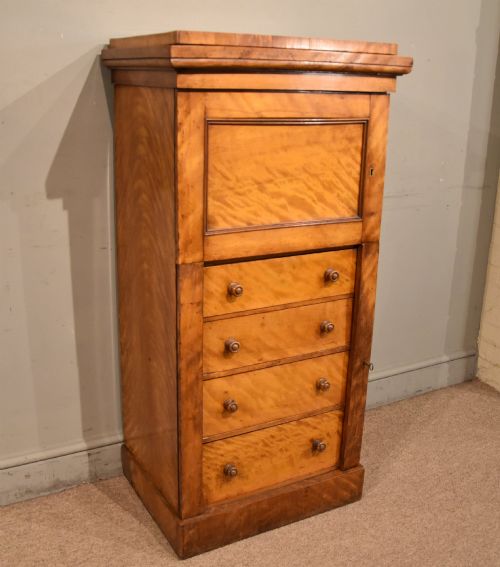
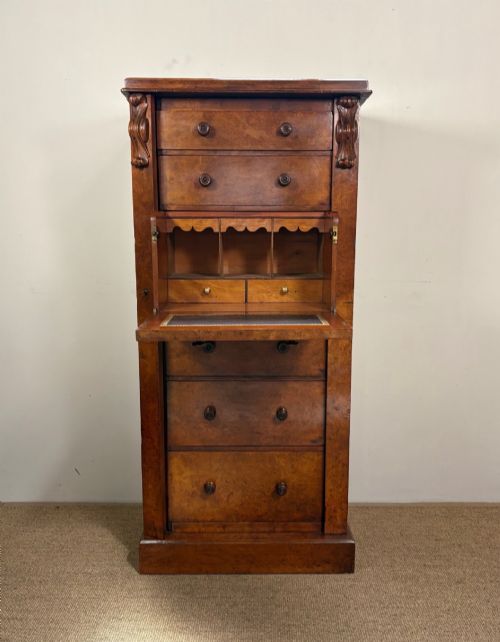
A wooden secretaire chest combines practical drawer storage with a fitted writing drawer, offering a clever workspace that conceals itself when closed.
Wooden Secretaire Chest
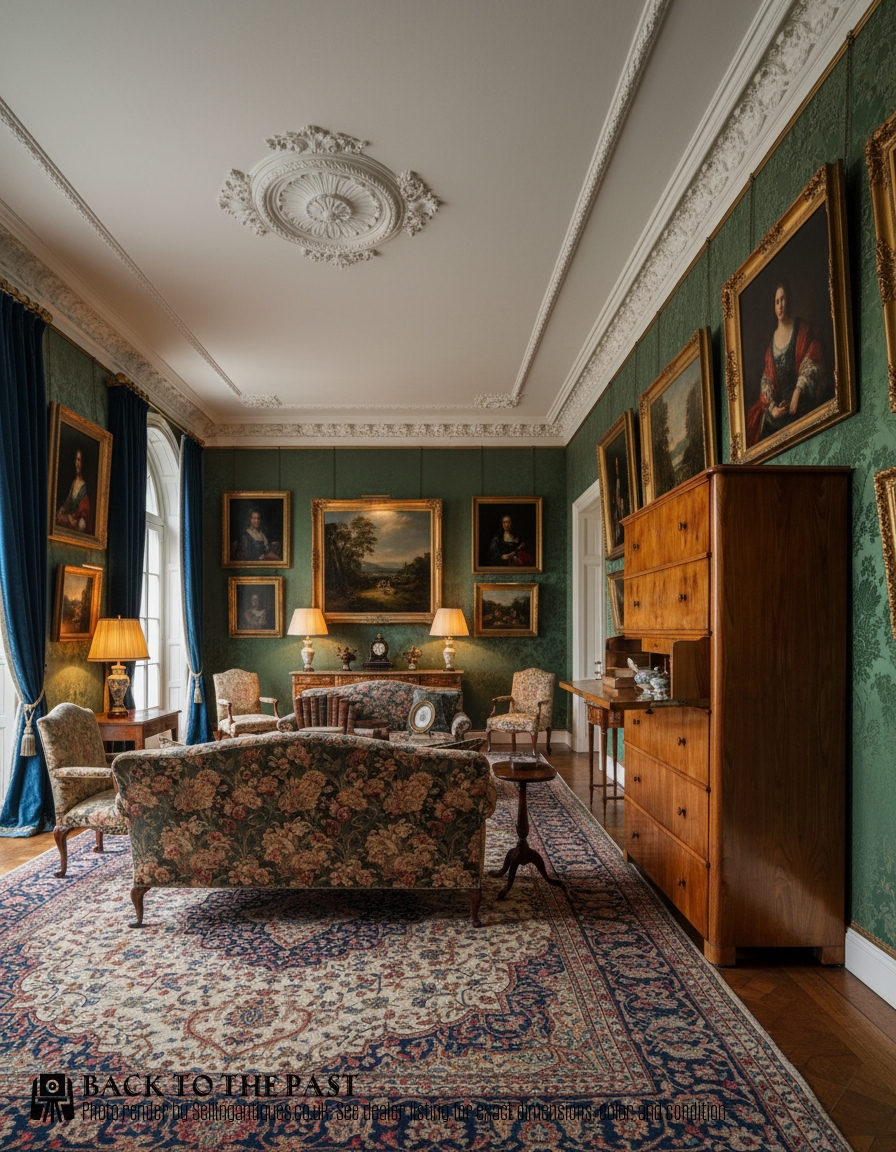
When you search for a wooden secretaire chest, you encounter a hybrid form designed for both storage and correspondence. These pieces double as chests of drawers and desks, providing a drop-down or sliding writing surface.
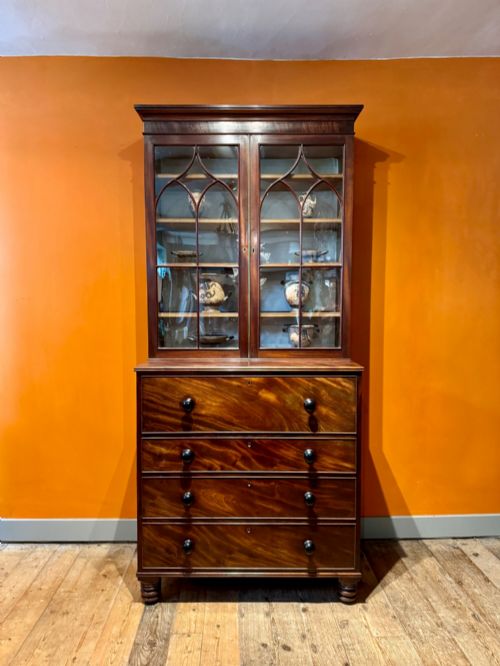
The selections span multiple eras including the Georgian, Regency, and Victorian periods, alongside specific styles such as Victorian military campaign and Swedish Biedermeier. Forms range from tall Wellington chests to larger bookcase combinations and campaign boxes.
You are most likely to meet mahogany examples from the Georgian and Victorian eras on this page, alongside occasional pieces in walnut, satin birch, camphor wood, elm, and pine.
Materials and construction
Cabinet makers utilised dense hardwoods such as mahogany and walnut for their primary surfaces, often pairing them with secondary woods like pine for internal drawer construction. Timber selection governed both the structural integrity and the visual grain pattern.
Metal hardware played a crucial role, particularly in military campaign versions where brass corners and flush handles protected the edges during travel. Leather inserts frequently lined the drop-down writing surfaces to provide a smooth plane for ink and paper.
Interior compartments incorporated secret drawers and small pigeonholes constructed with precise joinery. The fold-down flaps required sturdy hinges and internal support brackets to bear the weight of writing.
The documented styles range from Georgian and Regency to Victorian country, Anglo-Chinese, and Swedish Biedermeier.
Markers of quality
Quality rests upon the selection of timber figures and the crispness of the internal stationary compartments. Superior pieces display carefully matched veneers and secondary woods chosen for their stability rather than hidden economy.
The complexity of the interior mechanism dictates distinction. Finer secretaire drawers operate smoothly on well-fitted runners, revealing pigeonholes and concealed compartments that demonstrate thoughtful carpentry rather than simple box construction.
Hardware integration marks the difference between standard and exceptional examples. Flush brass mounts, original wooden knobs, and well-fitted locks show a higher level of workshop execution.
The Wooden Secretaire Chest Glossary
- Secretaire
- A piece of furniture containing a built-in writing drawer with a fold-down front. This drop-front reveals an interior fitted with small drawers and pigeonholes.
- Wellington chest
- A tall, narrow chest of drawers secured by a single locking side-flap that fastens over the drawer edges. This specific vertical form originated in the nineteenth century.
- Campaign chest
- Portable furniture made in sections with recessed brass handles and corner brackets designed for travel. These pieces split apart for ease of transport during military deployment.
- Biedermeier
- A Central European style from the first half of the nineteenth century emphasising clean lines and minimalist domestic comfort. It relies on the natural grain of woods like birch rather than heavy carving.
- Pigeonhole
- A small, open compartment within a desk interior used for sorting letters and papers. These compartments sit above the main writing surface.
Wooden Secretaire Chest: Frequently Asked Questions
How do I date a wooden secretaire chest?
Dating relies on examining the timber, construction methods, and overall style of the piece. Georgian and Regency examples often feature solid mahogany and refined bracket feet, while Victorian versions may use walnut or satin birch.
Internal details also help, as machine-cut dovetails point towards later nineteenth or twentieth-century production. Hand-cut joints and original brass hardware or wooden knobs generally indicate earlier origins.
Where were campaign secretaire chests used?
Campaign secretaire chests were built for British military officers on active service overseas. Their sectional design allowed servants to pack and transport the furniture easily on horseback or wagons.
Recessed brass handles and reinforced corners prevented the wood from splitting during rough journeys. Today, these functional design traits give the chests a distinct industrial aesthetic suited to studies and living spaces.
How do I maintain the leather writing surface?
The leather insert on the drop-down writing flap requires gentle cleaning with a slightly damp cloth rather than harsh chemical cleaners. Conditioning balm keeps the leather supple and prevents cracking over time.
Avoid placing damp glasses or unsealed ink bottles directly onto the leather surface. Keeping the room at a stable humidity also protects both the leather and the surrounding wooden carcass from warping.