



Antique Elm Bureau
An antique elm bureau brings together the tough, swirling grain of native timber and the clever internal compartments of a traditional writing cabinet.
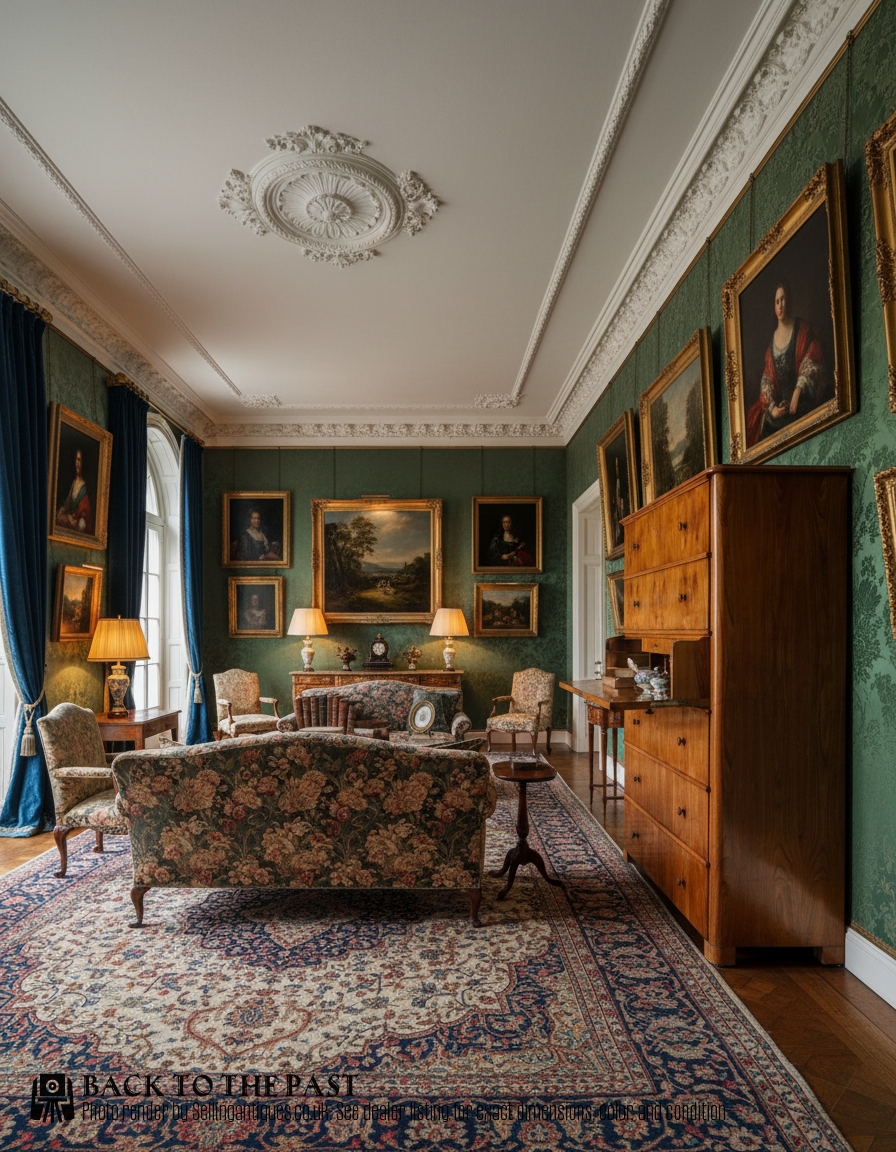
Antique Elm Bureau
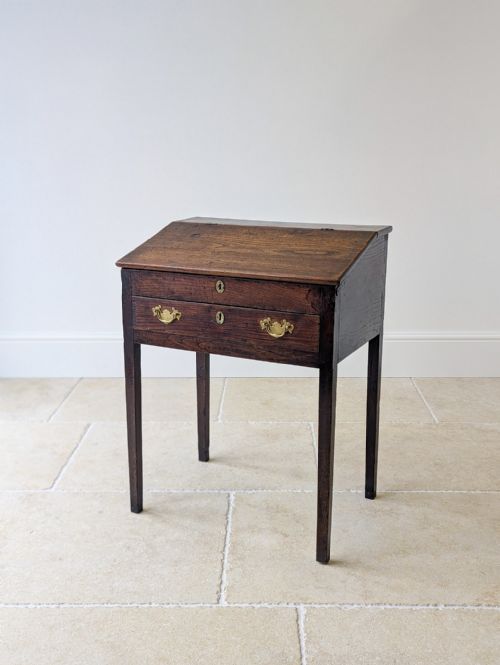
When you search for an antique elm bureau, you are looking at practical writing furniture built from resilient native wood rather than imported mahogany or satinwood. These pieces range from compact tabletop boxes and clerks' desks to full-sized writing cabinets with fitted interiors and fall fronts.
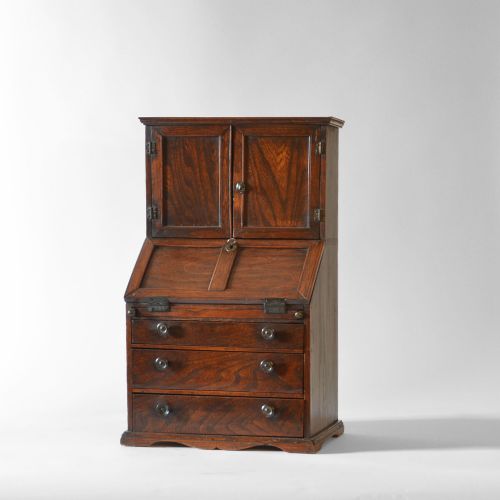
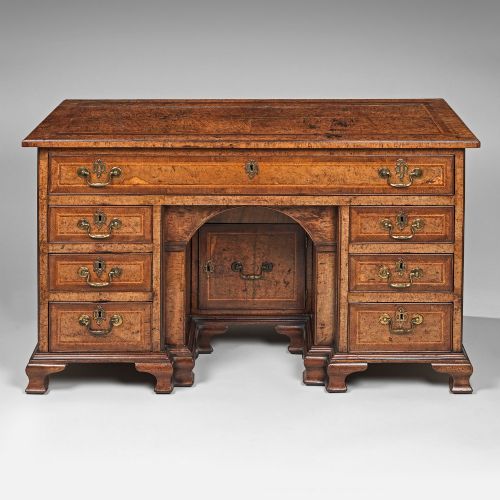
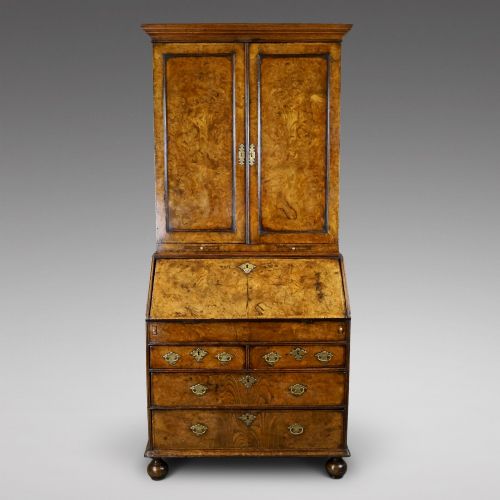
The versions you are most likely to meet on this page span several distinct eras, notably the eighteenth century and the Georgian period, alongside later revivals. They include standard slope-front writing chests as well as more ambitious formats like bureau bookcases and kneehole desks.
Many examples make particular use of burr elm, showcasing the mottled, knotty patterns that form naturally within the tree. Others combine the primary elm timber with secondary woods such as oak and walnut, reflecting the workshop practices of their respective centuries.
How they were made
Cabinetmakers built these carcases using solid elm and burr elm veneers applied to foundational timbers like oak or walnut. Elm is notoriously tough and prone to twisting as it dries, which required skilled joinery to stabilize large surfaces like fall fronts and chest tops.
Hardware played a functional and structural role, with brass handles, escutcheons, and hinges securing drawers and fall-front mechanisms. Interiors typically housed small pigeonholes, secret compartments, and sliding wells constructed with light secondary woods.
Antique Elm Bureau Retail Price Guide 2026
Typical asking prices for elm bureau among the pieces listed under this phrase on Sellingantiques today, from the lower quarter to the upper quarter. They describe what is for sale here now, not the wider market.
Secret compartments hidden inside pigeonhole assemblies remind us that seventeenth-century letter writers valued absolute privacy above all else.
What varies in quality
Quality rests primarily on the selection of the timber and the ambition of the interior layout. A bureau featuring highly figured burr elm across the fall front and drawer faces sits higher in the range than a piece built from plain, straight-grained stock.
The sophistication of the fitted interior also separates standard utility pieces from finer commissions. Drawers with tight dovetailing, well-turned pigeonhole arcades, and intact secret compartments indicate a higher tier of craftsmanship.
The Antique Elm Bureau Glossary
- Bureau
- A writing desk featuring a sloping hinged lid that opens to reveal a fitted interior of pigeonholes and small drawers. This form became popular during the seventeenth century and remained a staple of domestic study.
- Burr Elm
- A specialised growth formation in the elm tree that produces highly decorative, swirling patterns of grain. Cabinetmakers sliced this wood into veneers to adorn the exterior surfaces of finer desks and cabinets.
- Fall Front
- The hinged writing flap of a bureau that drops down to a horizontal position for writing. When closed, it conceals the inner compartments and locks securely into the carcase.
- Kneehole Desk
- A compact writing table featuring a central recess for the user's legs, flanked by pedestals of small drawers. George II examples often combine this format with burr elm veneers.
- Bureau Bookcase
- A tall piece of furniture combining a lower writing bureau with an upper shelved cabinet enclosed by doors. These larger formats offer substantial storage for both documents and books.
Antique Elm Bureau: Frequently Asked Questions
What is an antique elm bureau?
An antique elm bureau is a traditional writing cabinet featuring a sloping fall-front lid that opens to reveal internal compartments. These pieces were designed for correspondence and household administration.
They utilise native elm or burr elm timber, which offers a distinctive wild grain pattern quite different from standard imported cabinet woods.
How do I date an elm bureau?
Dating relies on examining construction methods, hardware styles, and timber preparation. Earlier pieces from the seventeenth and eighteenth centuries often feature hand-cut dovetails and solid board backs.
Later revivals from the nineteenth and twentieth centuries employ machine-sawn elements and different secondary woods. Comparing the overall proportions to established period styles provides further confirmation.
How were these desks used?
These desks served as private workstations for managing household accounts, writing letters, and storing important documents. The interior pigeonholes and small drawers kept stationery and inkwells organised.
Closing and locking the fall front secured the contents away from dust and prying eyes when the writing task was finished.
How do I care for burr elm furniture?
Burr elm furniture requires stable indoor humidity and protection from direct sunlight to prevent the timber from drying out or splitting. Gentle dusting with a dry cloth keeps the surface clean.
Occasional application of appropriate wax polish helps maintain the lustre of the wood without building up heavy residues.