

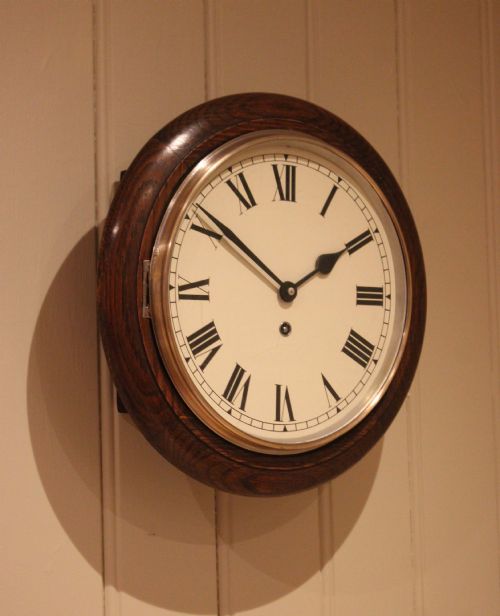
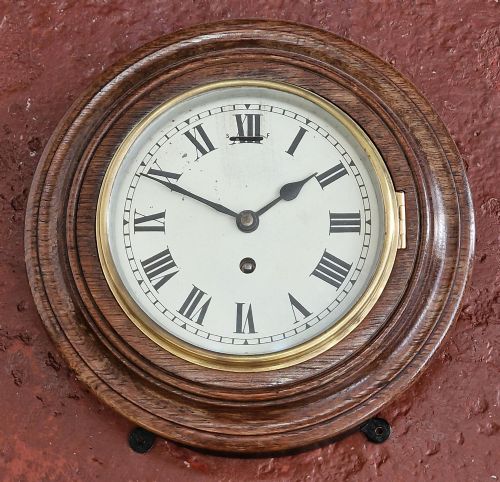
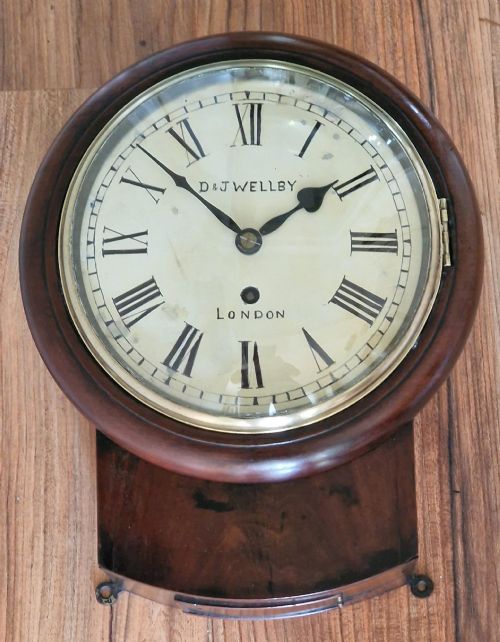
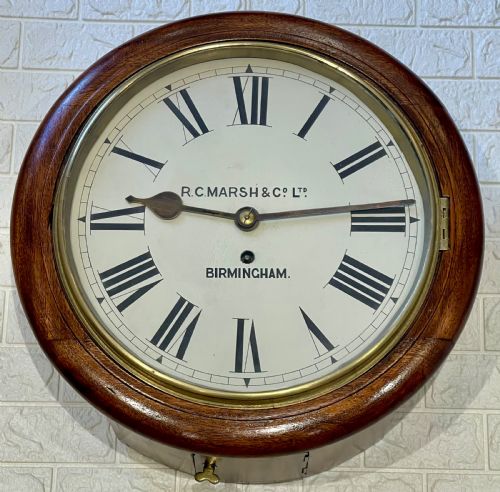

Wooden School Clock
When you want a wooden school clock, you are looking at practical timepieces that hung in classrooms and public spaces across Britain.
Wooden School Clock
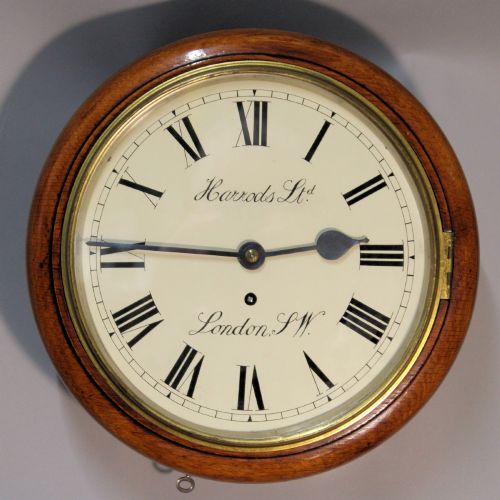
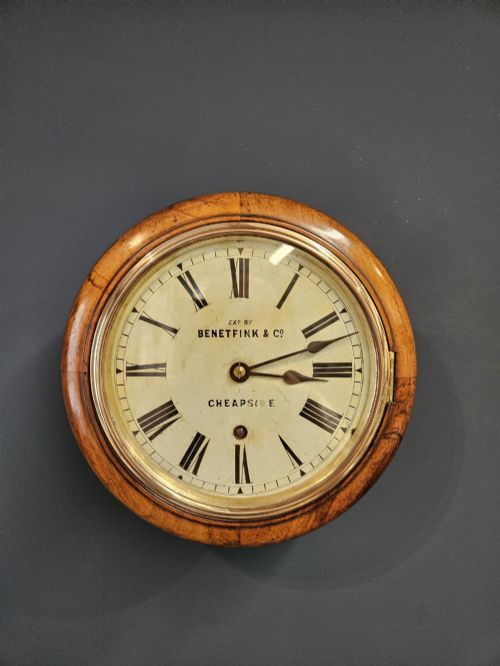
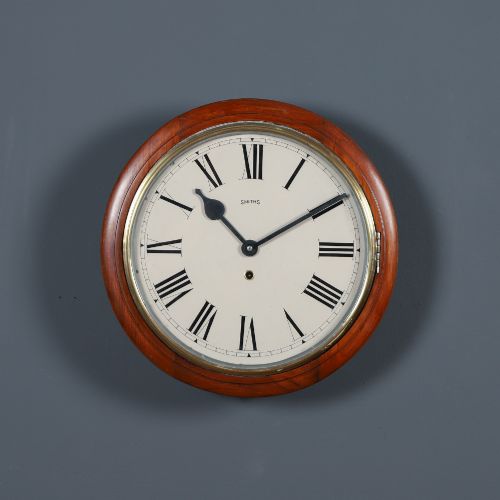
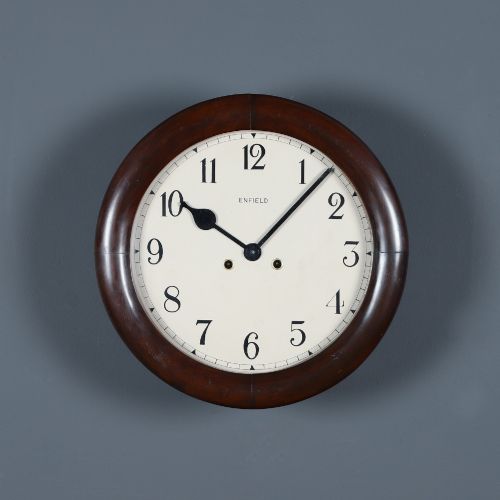
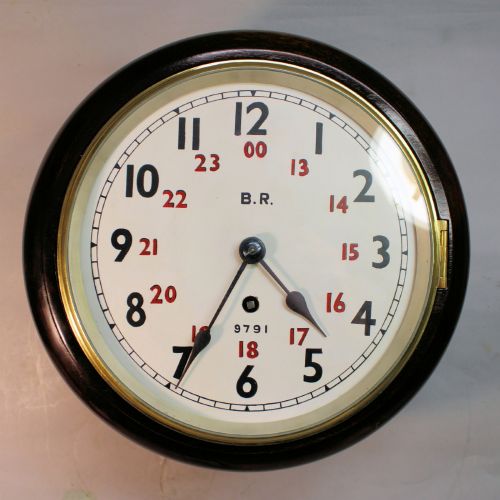
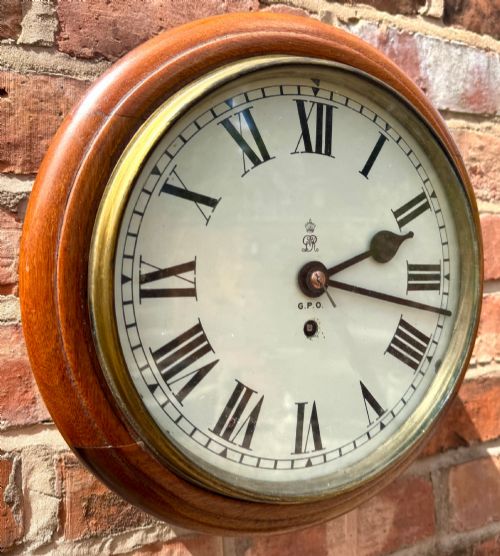
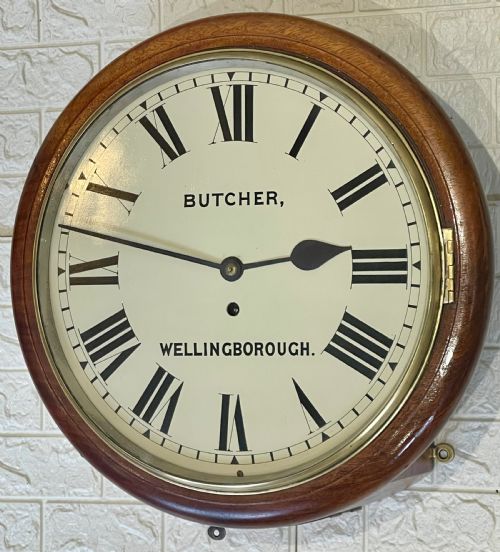
A wooden school clock is a sturdy round dial timepiece designed for clear legibility in large rooms. These clocks often share lineage with railway, post office and station dials.
You will most commonly meet mahogany or oak cased examples dating from the Victorian and Edwardian periods, alongside later twentieth century models. Dial sizes range from small domestic versions to large wall-mounted installations.
The form prioritises function, featuring bold numerals behind glass and a simple timber surround that withstands daily institutional use.
How They Were Made
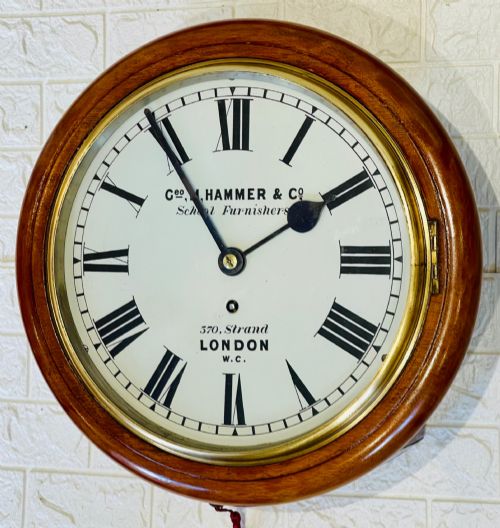
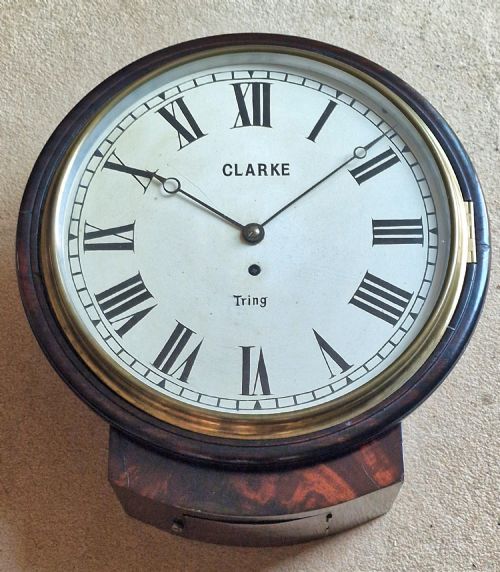
Cabinets are constructed from solid hardwoods such as mahogany, oak and beech, shaped into round or drop-dial silhouettes. Brass bezels enclose the glass face, protecting the paper, metal or wooden dials within.
Movements rely on chain-driven fusee mechanisms to maintain even tension as the mainspring unwinds, ensuring reliable timekeeping. Enamel and painted metal dials carry the numerals, paired with dark metal hands.
Wooden School Clock Retail Price Guide 2026
Typical asking prices for wooden school clock among the pieces listed under this phrase on Sellingantiques today, from the lower quarter to the upper quarter. They describe what is for sale here now, not the wider market.
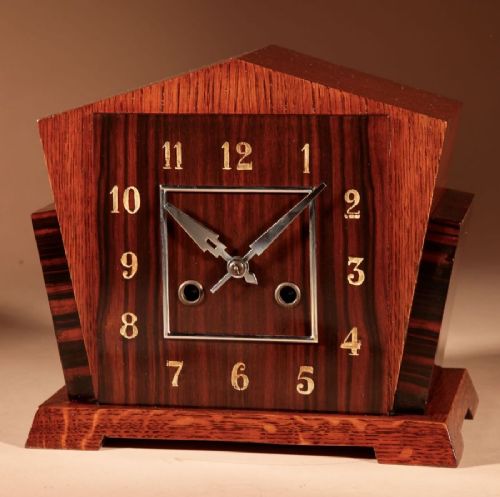
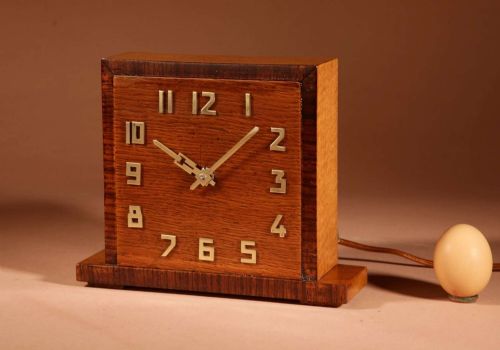
The selection spans the nineteenth and twentieth centuries, incorporating Victorian, Edwardian and Art Deco Amsterdam School designs.
What Varies in Quality
The sophistication of the movement largely dictates the standard of the piece, particularly the precision and finishing of the fusee mechanism. Heavy brass plates and cleanly cut gear teeth indicate superior clockmaking workshops.
Cabinet construction also separates standard utility pieces from finer examples, seen in the selection of figured timber veneers, clean joinery and well-fitted glazed brass doors.
George Clarke Tring·D and J Wellby·Anglo Swiss Watch Co·Francis Perigal·Osborn of Kingsbridge
The Wooden School Clock Glossary
- Fusee
- A conical pulley used in clock movements to equalise the power of the mainspring as it runs down. This mechanism ensures consistent torque and more accurate timekeeping.
- Drop dial
- A wall clock case featuring a rounded dial top attached to a lower trunk or box that houses the pendulum. This proportion allows space for a longer pendulum swing.
- Dial
- The face of the clock where numerals are displayed. These can be made from painted iron, brass, wood or enamel.
- Bezel
- The metal ring, often hinged and glazed, that holds the protective glass over the dial face. It allows easy access to the hands for time setting.
Wooden School Clock: Frequently Asked Questions
How do I wind a fusee wall clock?
You insert the winding key into the small hole on the dial face and turn it gently clockwise until it stops. Take care not to overwind the mechanism.
Ensure you support the key evenly to avoid putting lateral pressure on the delicate arbor and surrounding dial surface.
Why do some have a side door?
The side or bottom access door allows the owner to reach inside the wooden case to start the pendulum or adjust the regulating nut. It also provides access to the pinning that secures the movement to the backboard.
Keeping this enclosure tight protects the brass movement from dust and atmospheric moisture in busy rooms.
Are railway clocks and school clocks the same?
They share identical utilitarian round-dial formats, robust movements and dark timber cases built for public visibility. Many manufacturers supplied identical designs to both railway companies and educational authorities.
Any distinction usually comes from station name markings or specific government department stamps on the dial or timber case.
Where should I hang a heavy dial clock?
You must mount a heavy timber wall clock directly into a solid brick wall or locate a strong structural wall stud using appropriate fixings. The weight of the hardwood case and brass movement requires secure wall anchorage.
Hang the clock at a comfortable viewing height where the pendulum can swing freely without obstruction from the lower case.