

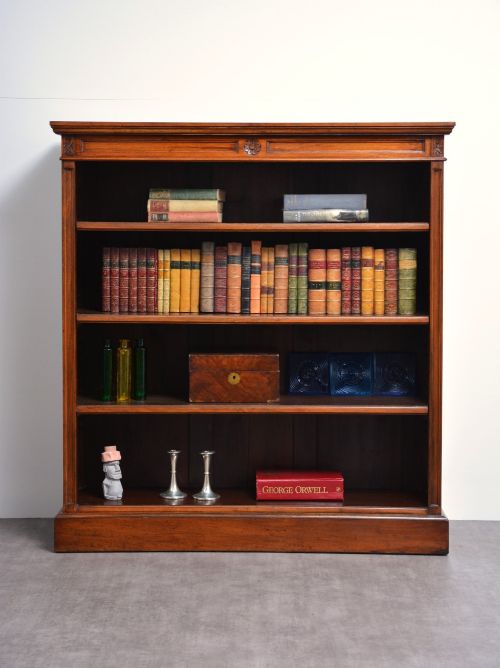
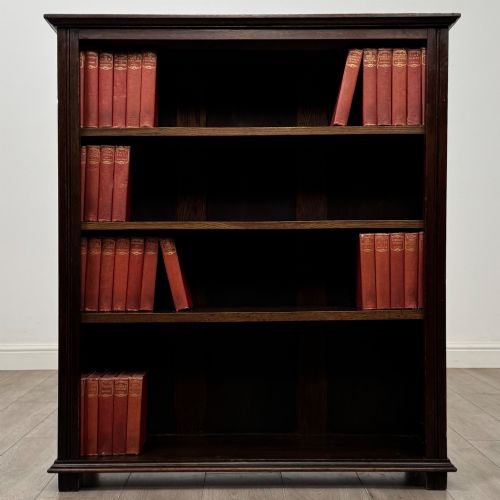
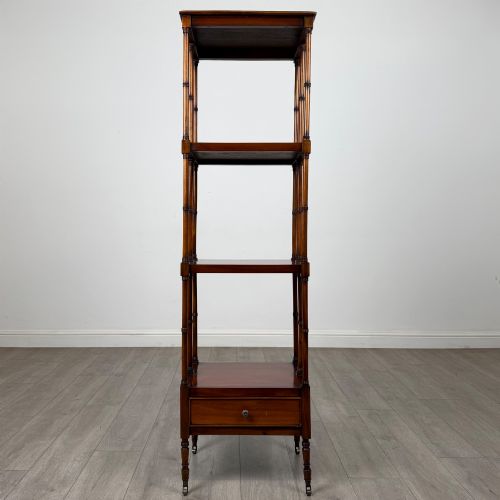
Wooden Open Bookcase
A wooden open bookcase brings warmth and easy access to a room, offering exposed shelving for everyday reading and display.
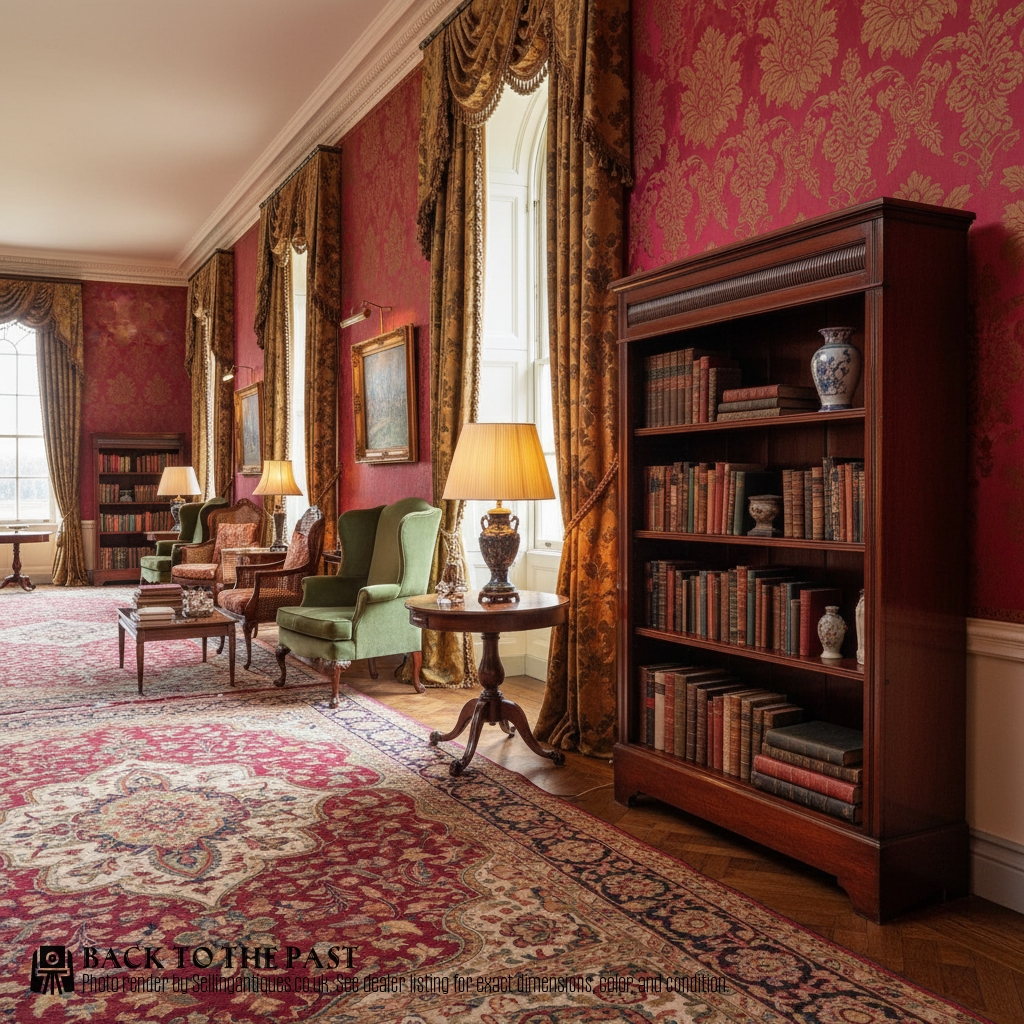
Wooden Open Bookcase
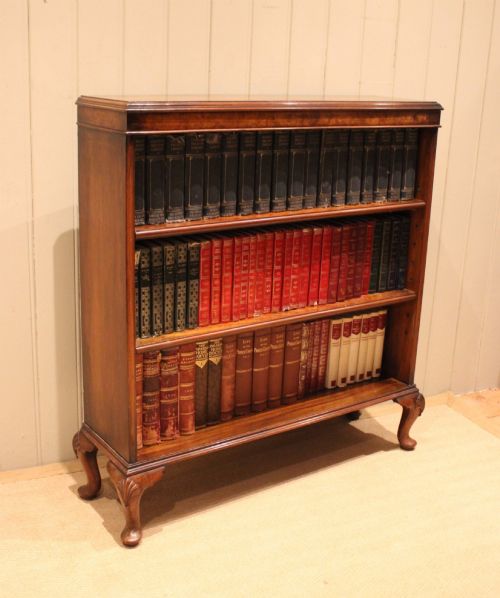
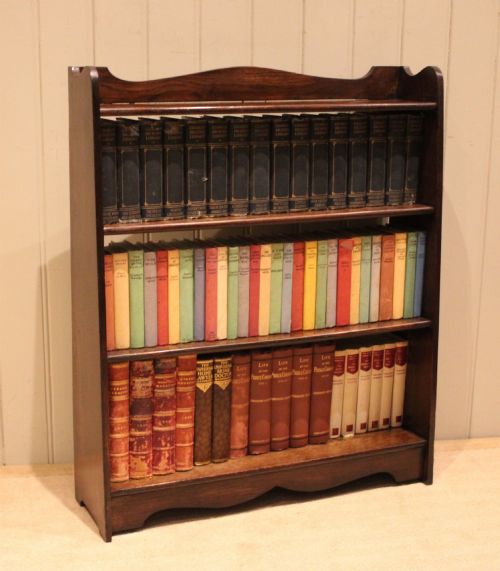
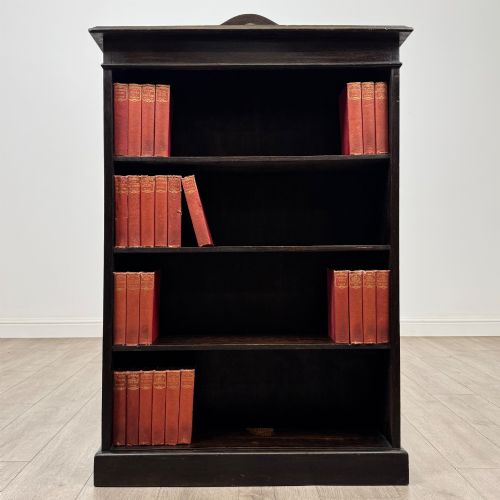
A wooden open bookcase provides accessible shelving for books and decorative objects without the barrier of glass or solid doors. The selection spans periods from the nineteenth century through the Edwardian era and into the Art Deco decades.
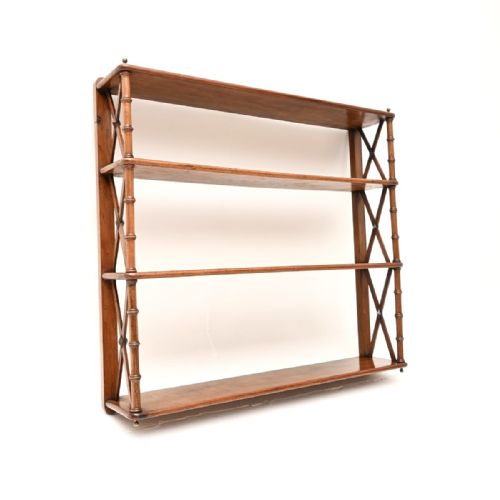
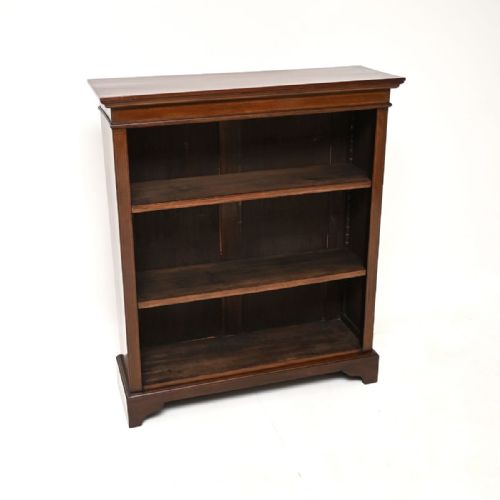
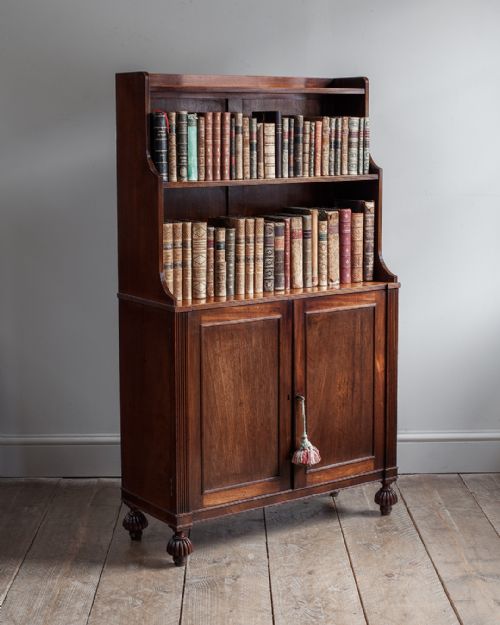
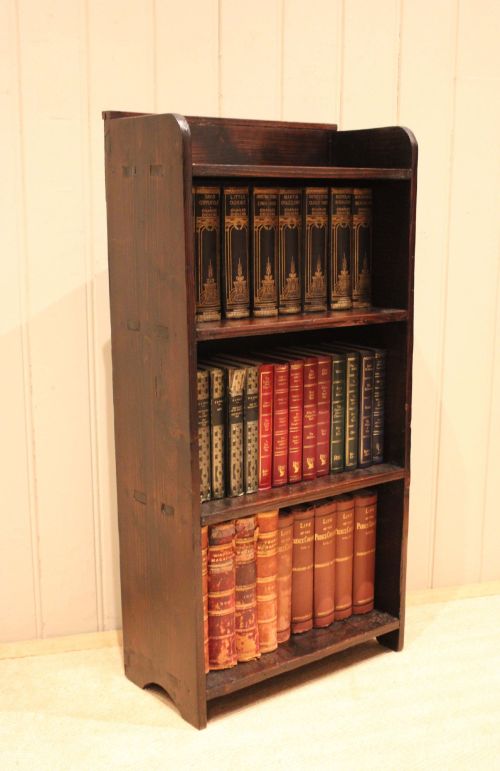
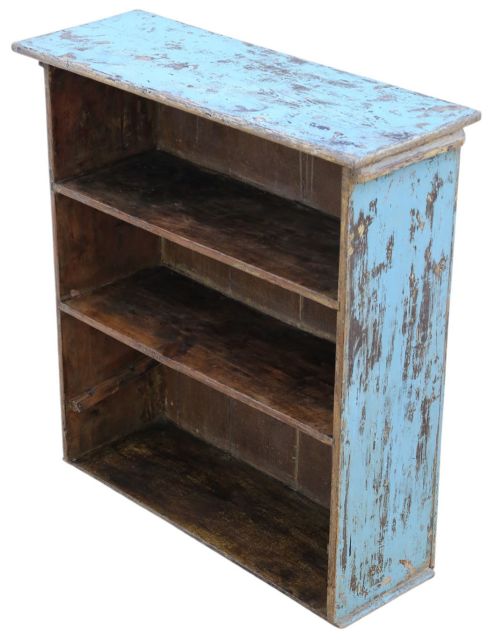
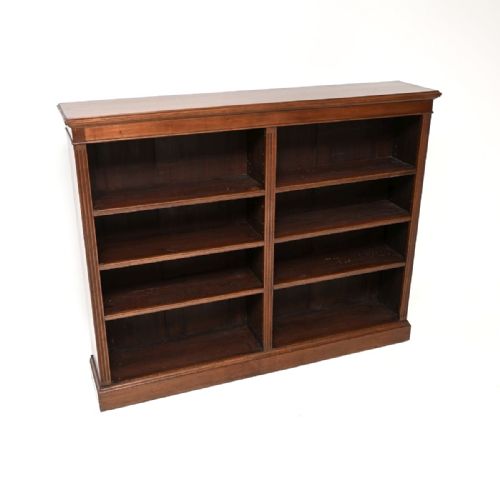
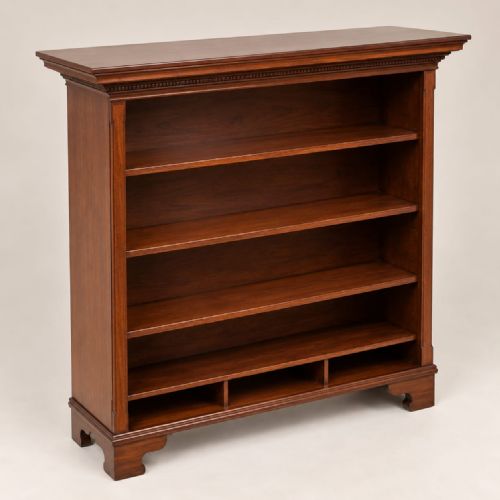
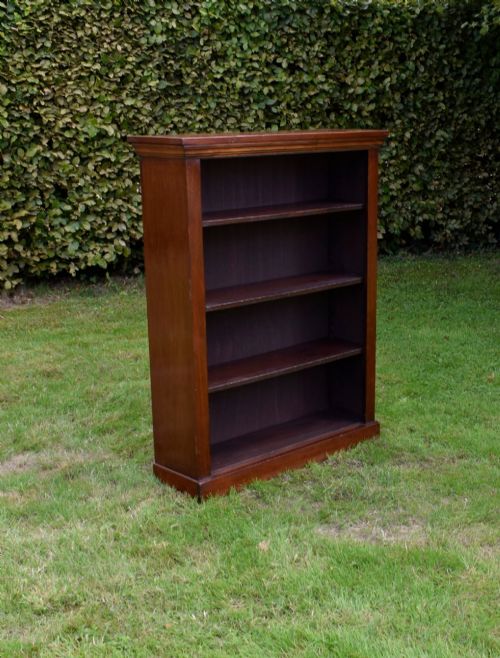
Most pieces encountered on this page date from the Victorian and Edwardian periods, constructed in oak or mahogany. Forms range from compact wall-mounted units and small rustic items to large library bookcases and waterfall designs.
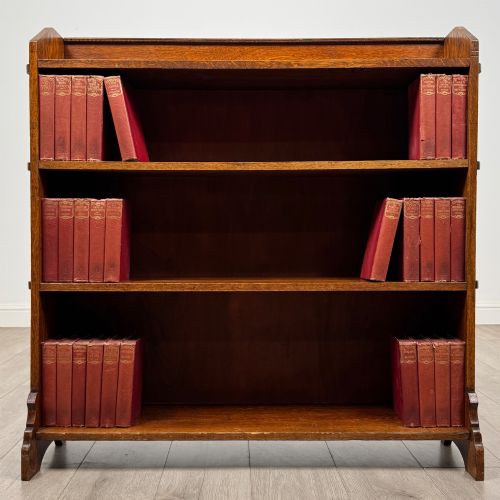
Makers and workshops of the nineteenth and early twentieth centuries produced these items in various regional styles, including Arts and Crafts and rustic country traditions.
Materials and Construction
Cabinet makers relied primarily on solid hardwoods such as oak, mahogany, and walnut, alongside pine for simpler or country pieces. Finer examples utilise burr walnut, flame mahogany, or satin birch veneers to create striking surface patterns.
Construction techniques include adjustable wooden shelving supported by peg systems and brass hardware on castors for mobility. Decorative flourishes involve inlaid contrasting timbers, brass or ormolu mounts, and carved detailing on uprights and cornices.
Some nineteenth-century walnut bookcases hide their heavy volumes on ormolu-mounted shelves that have outlasted empires.
Judging Quality
Quality rests in the selection of timber figures, such as the richness of flame mahogany or the depth of burr walnut grain. Superior pieces show precise joinery in the shelving supports and frame construction rather than plain stapled or nailed joints.
Proportion and balance dictate the aesthetic success of a piece, where slim profiles and well-scaled cornices elevate standard utility furniture into considered cabinet work.
Johnstone and Jeanes·Heals
The Wooden Open Bookcase Glossary
- Waterfall bookcase
- A set of open shelves that steps back progressively from bottom to top, creating a tiered profile resembling cascading water. These often appear in mahogany or walnut.
- Adjustable shelves
- Shelves that can be moved to different heights using internal rack and pinion strips, wooden pegs, or brass support studs.
- Ormolu
- Gilded bronze mounts applied as decorative ornaments to furniture, frequently seen on nineteenth-century walnut pieces.
- Burr walnut
- A prized wood veneer taken from the gnarled growths of a walnut tree, exhibiting intricate, swirling patterns.
- Inlay
- The technique of embedding contrasting strips of wood or metal into the primary surface timber to create geometric or floral motifs.
Wooden Open Bookcase: Frequently Asked Questions
Where should I place an open bookcase?
These units suit living rooms, studies, and hallways where quick access to books is desired. Keep them away from direct sunlight and damp walls to protect the timber.
Ensure the floor is level so the bookcase stands stable against the wall, particularly for taller library editions.
How do I adjust the shelves?
Most period bookcases with adjustable shelves utilise wooden support pegs, metal studs, or traditional ratchets set into the interior sides. Simply lift the shelf to clear the supports and reposition them into the alternative slots.
Take care when shifting heavy oak or mahogany shelves to avoid marking the interior veneer.
How do I care for antique wood?
Dust the timber regularly with a soft, dry cloth to prevent dirt accumulation in the grain and carvings. Feed the polished surface occasionally with a traditional beeswax to maintain the moisture and lustre of the wood.
Avoid liquid cleaners and silicone sprays, which can penetrate open grain and damage historical finishes.
How do I date a wooden bookcase?
Examine the timber species, construction methods, and secondary woods used for the back panels and interior supports. Victorian and Edwardian pieces often display distinct machine-sawn marks, brass fixtures, or inlaid decoration characteristic of their era.
Stylistic cues such as Arts and Crafts simplicity or Art Deco geometry also help narrow down the decade of manufacture.