
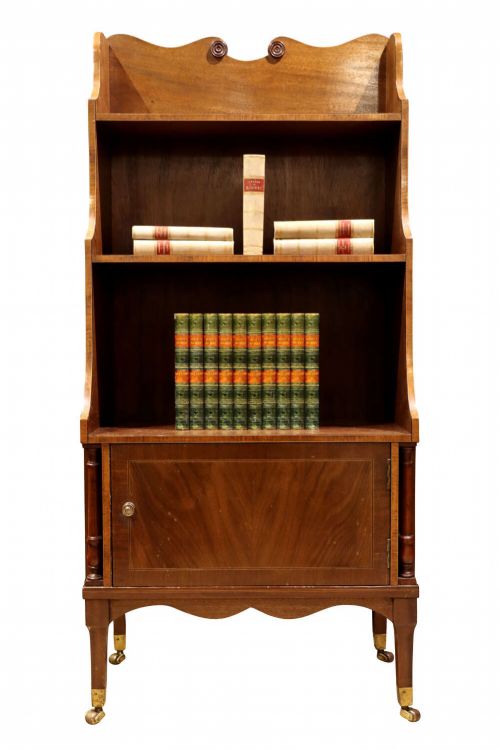


Victorian Waterfall Bookcase
A victorian waterfall bookcase brings stepped, graduated shelving to a room, offering practical display space with distinctive tiered proportions.
Victorian Waterfall Bookcase
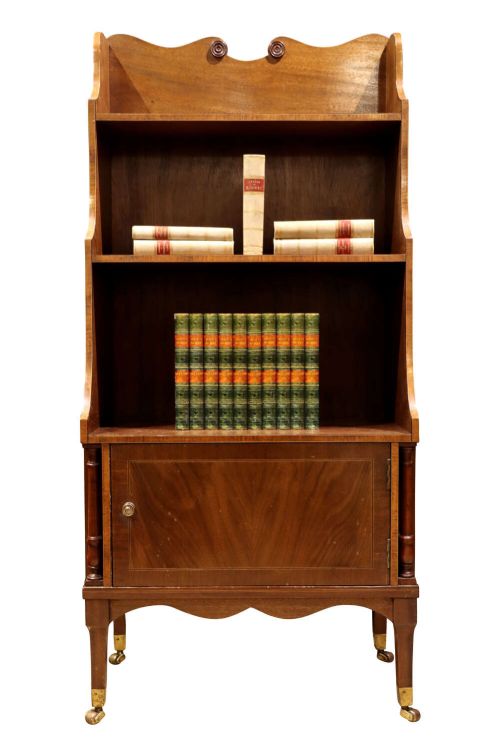
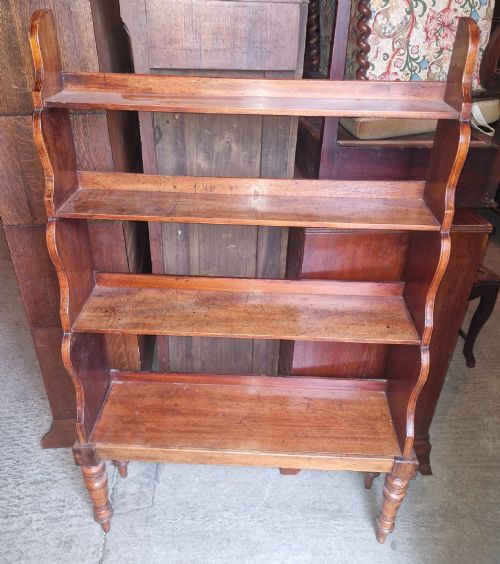
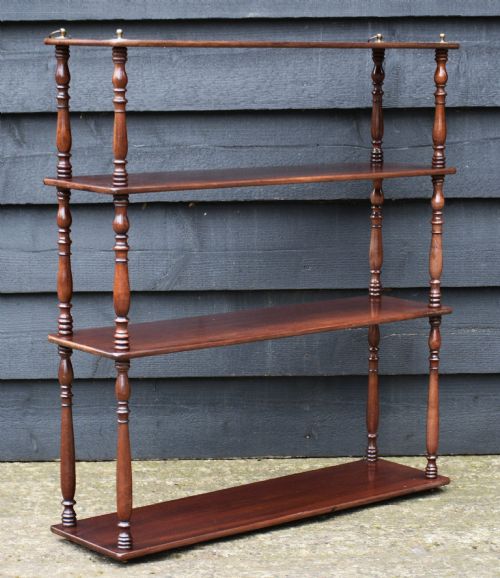
A victorian waterfall bookcase takes its name from the receding tiers of shelves that step back from bottom to top, mimicking the fall of water. These pieces appear in freestanding formats, low open forms, or wall-hanging versions designed for books and small ornaments.
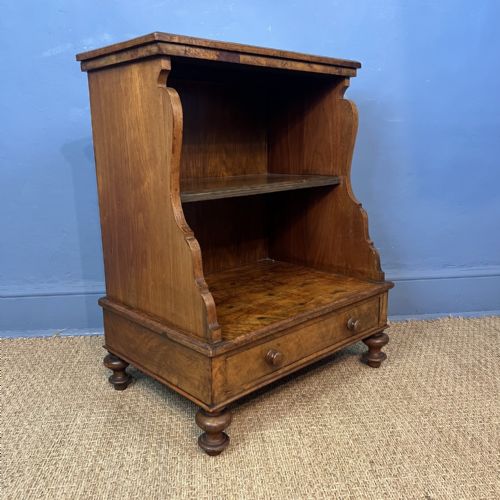
Most examples found on this page date from the nineteenth century and the Victorian era, utilising rich timbers like mahogany, rosewood, and walnut. Makers built them with varying tier counts, often incorporating enclosed cabinets or drawers beneath the open shelves.
The form suits studies, parlours, and drawing rooms, providing accessible display surfaces across differing heights. Pieces range from simple pine and oak utility items to elaborate inlaid examples with brass castors and fret-cut details.
How they were made
Cabinet makers constructed these bookcases using solid timbers and decorative veneers such as flame mahogany, burr walnut, and rosewood applied to stable secondary woods. Structural joins relied on traditional cabinet-making methods, while secondary elements like pine and elm served for internal linings and backing boards.
Finishing touches often included brass castors for mobility on larger freestanding floor units, alongside fine inlay work and carved details. Some variants utilised painted surfaces or gilded highlights to suit specific decorative tastes of the period.
Listings feature pieces spanning the nineteenth century, the Victorian era, and the Edwardian period, utilising mahogany, rosewood, oak, walnut, and pine.
What varies in quality
Quality in a victorian waterfall bookcase rests primarily on the choice of timber and the sophistication of the veneer matching. Dense, highly figured grains such as burr walnut and flame mahogany indicate higher status pieces commissioned for principal rooms.
Construction refinement also separates standard utility pieces from finer works. The presence of delicate fret-cutting, fine inlay, original brass castors, and well-proportioned graduated tier heights distinguishes master workshop production from simpler provincial output.
The Victorian Waterfall Bookcase Glossary
- Waterfall bookcase
- A set of open shelves stepped back progressively from the lowest tier to the highest. This cascading arrangement keeps books and objects easily visible.
- Flame mahogany
- Timber cut from the fork of the mahogany tree to produce a distinct flickering flame pattern. Cabinet makers reserved this highly decorative veneer for prominent display surfaces.
- Etagere
- A piece of furniture consisting of a set of open shelves for displaying ornaments. These units often share similar tiered proportions with wall-hanging shelving.
- Brass castors
- Small swivelling wheels attached to furniture legs to aid movement. They appear on heavier freestanding cabinets and large bookcase bases.
Victorian Waterfall Bookcase: Frequently Asked Questions
What is a waterfall bookcase?
A waterfall bookcase is a shelving unit where each tier steps back progressively from the wide base up to the narrow top.
This graduated design allows books and decorative items on every shelf to remain clearly visible from a standing position.
Were these bookcases made to hang on walls?
Many smaller nineteenth-century examples were constructed specifically as wall-hanging shelves to save floor space in domestic rooms.
Larger versions were built as heavy freestanding cabinets, sometimes incorporating enclosed cupboards or drawers beneath the open tiers.
What woods were commonly used?
Mahogany, walnut, and rosewood dominate the finer examples from this period, often enhanced with striking veneers like flame mahogany or burr walnut.
Simpler utility versions appeared in pine, oak, elm, or fruitwood for less formal household settings.