



Wooden Nesting Coffee Tables
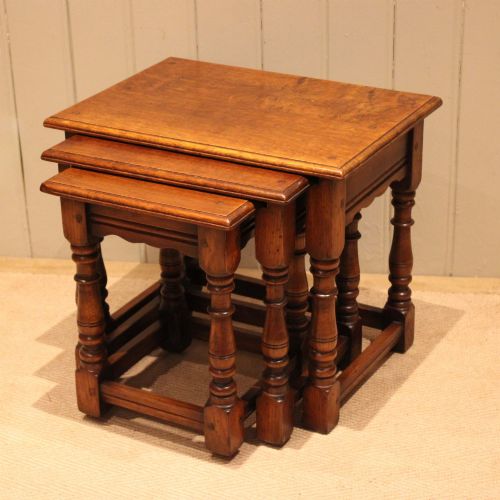
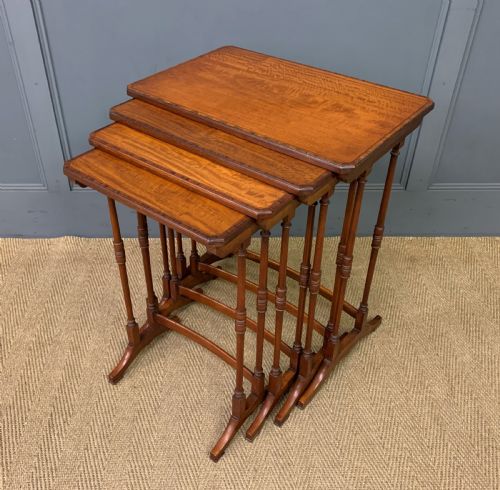
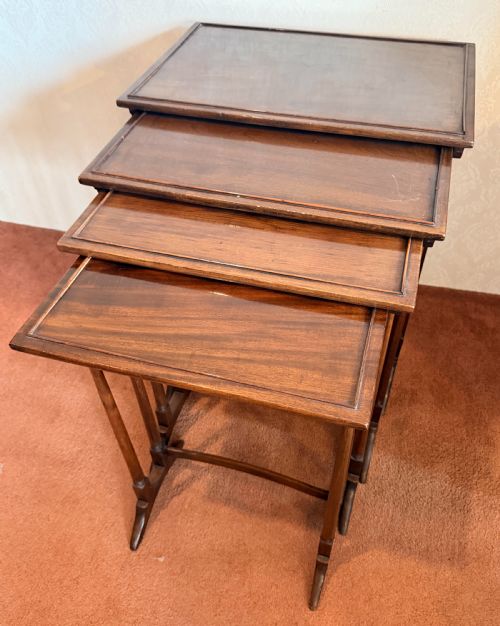
These wooden nesting coffee tables combine practical surface space with compact storage, offering multiple surfaces that slide neatly away when not in use.
Wooden Nesting Coffee Tables
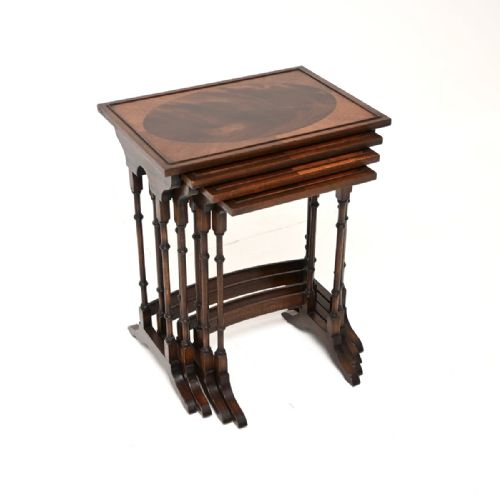
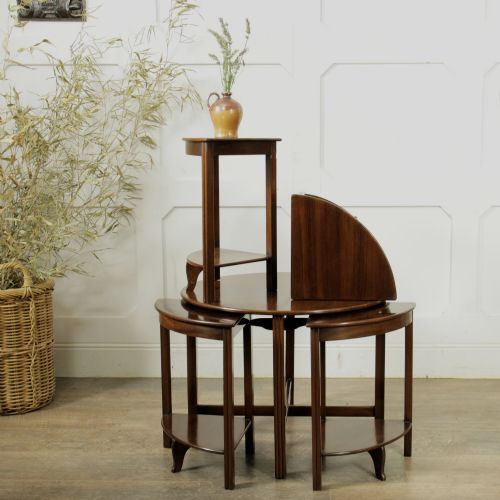
Wooden nesting coffee tables appear in various configurations, most commonly as sets of three or four graduated surfaces designed to stack together. Buyers searching for wooden nesting coffee tables encounter pieces spanning from the nineteenth century through the Edwardian period and into the Art Deco era.
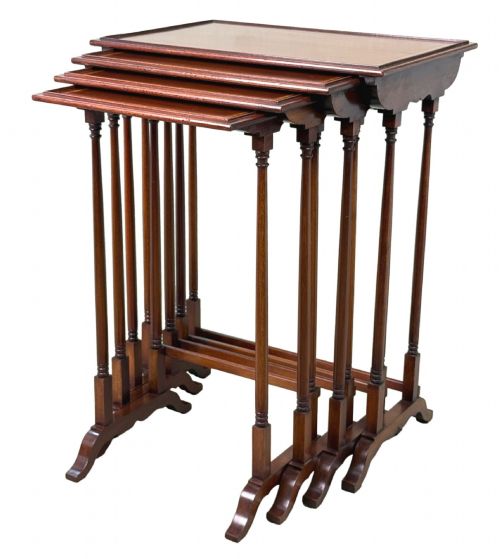
Sets range from circular and oval formats to traditional rectangular quartetto arrangements. Origin styles encompass Edwardian satinwood pieces, Victorian mahogany designs, and Chinese Export or oriental hardwood examples.
Materials and Construction
Craftsmen built these tables using solid timbers and decorative veneers, predominantly selecting mahogany, walnut, satinwood, oak, and rosewood. Inlay work frequently incorporates boxwood lines and marquetry details to enhance the surface appearance.
Structural methods involve jointed legs and graduated frames that allow smaller tables to slide precisely beneath the larger primary surface. Specialised examples feature carved details, embossed leather top panels, or specialised oriental hardwood construction.
Materials recorded across the available pieces include mahogany, walnut, satinwood, oak, rosewood, and oriental hardwood.
Evaluating Build and Detail
Quality separates through the selection of figured timber veneers and the precision of the joinery that allows smooth stacking. Superior examples maintain structural stability across all tiers without looseness in the leg joints.
Refinement shows in the crispness of inlaid satinwood stringing, carved decorative motifs, and the overall balance of proportion when the tables sit individually or nested together.
Heal's·Gillows
The Wooden Nesting Coffee Tables Glossary
- Quartetto
- A set of four nesting tables designed to slide neatly beneath one another. This term appears frequently in nineteenth-century and Edwardian furniture descriptions.
- Satinwood
- A durable, lustrous timber originating from tropical trees, prized for its pale yellow colour and smooth finish. It is often utilised for decorative banding and inlaid table tops.
- Marquetry
- The art of applying pieces of veneer to a structure to form decorative patterns and pictures. Examples include intricate floral motifs found on specialised regional pieces.
- Chinoiserie
- European imitation of Chinese and East Asian artistic traditions, often featuring painted or carved oriental scenes. This style appears on decorative occasional tables from the early twentieth century.
- Inlay
- A technique where contrasting materials are inserted into recesses within a solid wood base to create patterns. Boxwood and satinwood are typical materials utilised for this detailing.
Wooden Nesting Coffee Tables: Frequently Asked Questions
How do I use nesting tables?
These tables provide flexible surface space that can be expanded when entertaining guests and collapsed into a single footprint when floor space is required.
Individual tables serve as convenient spots for drinks or books around a room before returning neatly to their stacked position.
What is a quartetto table set?
A quartetto set consists of four graduated tables engineered to slide precisely one beneath another in a cascading stack.
This format gained significant popularity during the Victorian and Edwardian periods as a space-saving solution for drawing rooms.
How do I identify Edwardian nesting tables?
Edwardian examples often feature light timbers such as satinwood, delicate tapered legs, and subtle string inlay work. Their construction reflects the lighter, more graceful aesthetic popular around the turn of the twentieth century.
Earlier Victorian versions typically utilise heavier solid mahogany or rosewood with more robust proportions.
Are these tables sturdy enough for daily use?
Well-constructed antique nesting tables offer reliable everyday utility, provided the joints remain tight and stable. The smaller underlying tables are built to support moderate weight such as cups and reading materials.
Care should be taken when moving individual tiers to maintain the alignment of the supporting frames.