


Wooden Music Stool
A wooden music stool provides a sturdy and adjustable seat for the keyboard player, bringing period character to any music room.
Wooden Music Stool
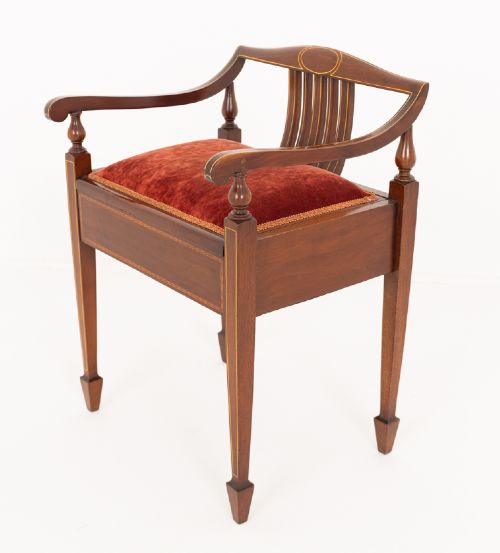
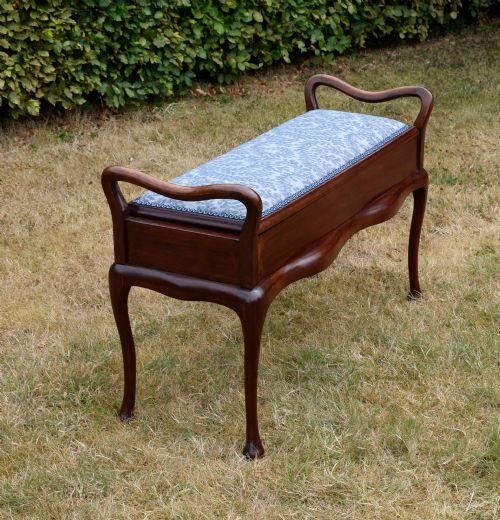
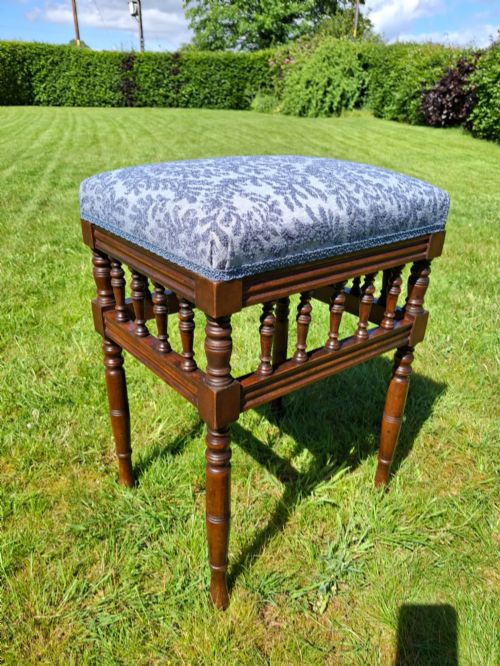
A wooden music stool is primarily designed for use at a piano or instrument, offering various forms such as single seats, duet lengths, and music chairs with backs. The selection spans periods from the nineteenth century into the early twentieth century, taking shape as Victorian, Edwardian, and Regency examples.
Buyers frequently encounter mahogany and walnut variants, alongside specific revivals like Sheraton Revival and Queen Anne Revival. Forms range from revolving or rise and fall mechanisms to pedestal bases and unusual late Victorian designs.
These pieces function both as practical seating and as decorative furniture, often appearing alongside related forms such as dressing table stools and chairs.
How they were made
Carpenters utilised timbers including mahogany, walnut, oak, rosewood, and ebonised hardwoods, often shaping them with carved details or inlays. Construction frequently incorporated adjustable height mechanisms in brass and metal to suit the player.
Upholstery forms an essential component of many pieces, utilising fabrics and velvet to pad the seats. Revival styles demonstrate traditional cabinet-making skills adapted to Victorian, Edwardian, and Art Deco aesthetics.
Some Victorian piano stools let you spin the seat around until you are dizzy just to change the height.
What varies in quality
The sophistication of the timber work and the complexity of the carving determine the standing of an individual piece. Finer examples display meticulous attention to detail in their pedestal supports or inlaid decoration.
The execution and smooth operation of the adjustable height mechanism separate standard production from superior examples. The choice of primary timber, from plain oak to figured mahogany and walnut, also influences the overall presence of the stool.
Gillows
The Wooden Music Stool Glossary
- Rise and fall
- A mechanical system allowing the seat height to be adjusted by turning the top or using a screw mechanism. This feature is commonly found on piano stools from the nineteenth century.
- Duet stool
- A wider seating form designed to accommodate two players simultaneously at a piano. These often feature upholstered tops and mahogany or walnut frames.
- Sheraton Revival
- A late nineteenth and early twentieth century design movement drawing inspiration from eighteenth-century neoclassical furniture. Pieces in this style frequently display delicate mahogany frames and inlay.
- Pedestal stool
- A seating form supported by a central column rather than four legs, often rising from a carved wooden base. These are frequently associated with Victorian piano stools.
- Ebonised
- Wood treated with a finish to imitate ebony, creating a dark, uniform appearance. This technique appears on nineteenth-century aesthetic movement pieces.
Wooden Music Stool: Frequently Asked Questions
What is a wooden music stool?
A wooden music stool is a specialised seat designed for musicians playing pianos or other instruments, often featuring adjustable height mechanisms.
They appear in various timber forms such as mahogany, walnut, and oak across different periods including the Victorian and Edwardian eras.
How do I adjust the height?
Many period music stools utilise a revolving screw mechanism that raises or lowers the upholstered seat when turned.
Others employ rise and fall systems built into the wooden frame to achieve the desired seating position.
What is a duet piano stool?
A duet piano stool is an extended version of the standard seat, built wider to accommodate two people playing together.
These pieces often date from the Victorian and Edwardian periods and are frequently constructed from mahogany.