


Wooden Lay Figure
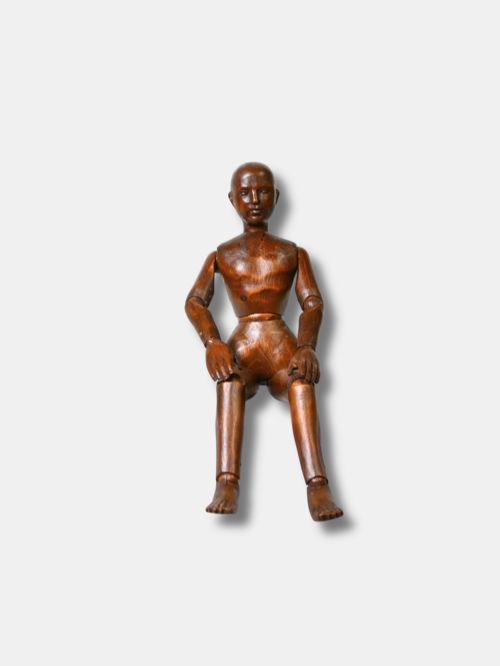
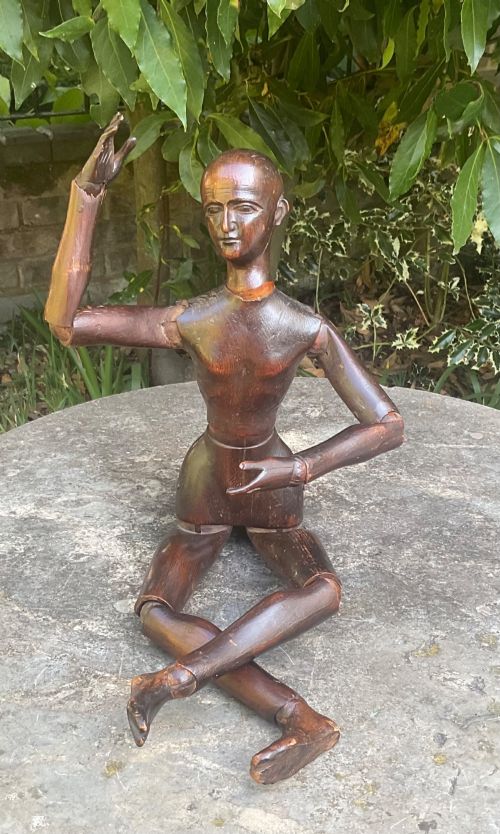
A wooden lay figure is an articulated model used by artists, and these pieces bring sculptural presence and historic studio character to a room.
Wooden Lay Figure
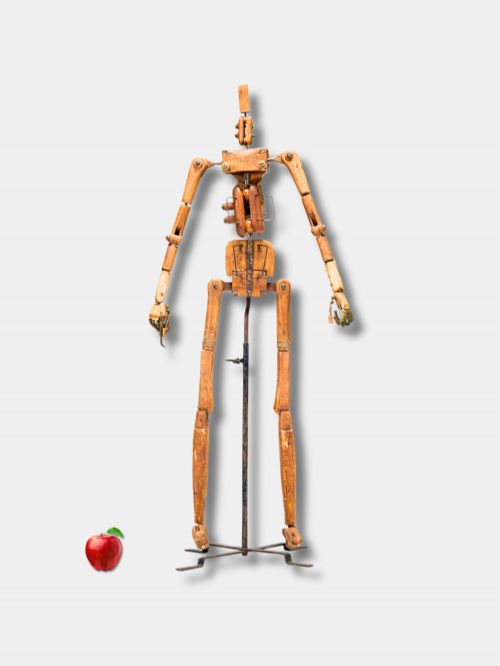
When you search for a wooden lay figure, you are looking at articulated studio models that range from desktop artist pieces to life-size figures on stands. These objects include French and German examples alongside forms connected to millinery use as hat blocks and shop display.
The versions you are most likely to meet on this page date from the nineteenth century and the early twentieth century, though older French examples and Edo period pieces from the Bini people also appear. They function equally as sculptures, decorative objects, and historical models originating from European and international workshops.
How They Were Made
These figures rely primarily on carved wood and hardwood, shaped by hand to create flexible, fully articulated joints that mimic the human form. Metal, iron, and brass components often secure the joints and internal structure, allowing the limbs and torso to hold poses.
Some nineteenth-century figures moonlighted as hat blocks, meaning your sculpture might have spent its youth holding someone's Sunday best.
What Varies in Quality
Quality rests in the articulation and the depth of the carving, distinguishing simple display blocks from fully articulated studio models with smoothly functioning joints. Superior pieces show careful anatomical proportion in the limbs, hands, and torso.
The integrity of the original wood, the presence of an integrated stand, and the refinement of the facial carving set the better examples apart. Simpler millinery heads and rigid shop mannequins offer a different form of presence compared to fully mobile artist models.
Francois-pierre Guillois
The Wooden Lay Figure Glossary
- Articulated
- Jointed to allow movement and posing. This mechanism permits the figure to hold specific gestures for drawing and painting.
- Lay figure
- An artificial human figure with movable joints used by artists. They serve as models for drapery, lighting, and anatomy.
- Millinery head
- A block shaped for making or displaying hats. These often double as sculptural wooden heads without full body articulation.
- Mannequin
- A dummy used for fitting or displaying garments. In historical contexts, these can be made of wood, terracotta, or papier-mache.
- Edo
- Referring to the people or period associated with Nigerian carving traditions. Pieces from this origin bring distinct regional styles to the form.
Wooden Lay Figure: Frequently Asked Questions
What is a wooden lay figure?
A wooden lay figure is an articulated model carved to represent the human form, utilised historically by artists to study drapery, posture, and light.
Today, they are collected as decorative sculptures and historical studio objects that bring character to interiors.
How were they used in studios?
Artists posed these figures to hold complex positions for long periods, substituting for live models when painting clothing or difficult perspectives.
They allowed painters and sculptors to control lighting and shadow accurately across carved wooden limbs.
How do I style one at home?
These figures sit well on tables, desks, or dedicated stands where their articulated limbs can be arranged into natural or striking poses.
They pair naturally with other studio artefacts, books, and collections of natural history or sculpture.
How do I tell periods apart?
Nineteenth-century examples often display traditional European proportions and pegged wooden joints, while twentieth-century versions can incorporate alternative materials like terracotta.
Earlier pieces from the eighteenth century or specific regional traditions show distinct hand-carving techniques and material choices.