




Articulated Wooden Figure
When you handle an articulated wooden figure, you hold a functional studio tool that once helped painters map the fall of fabric and light.
Articulated Wooden Figure
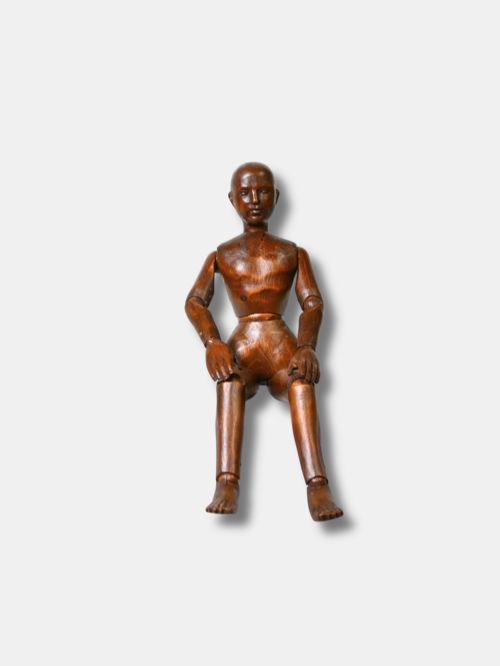
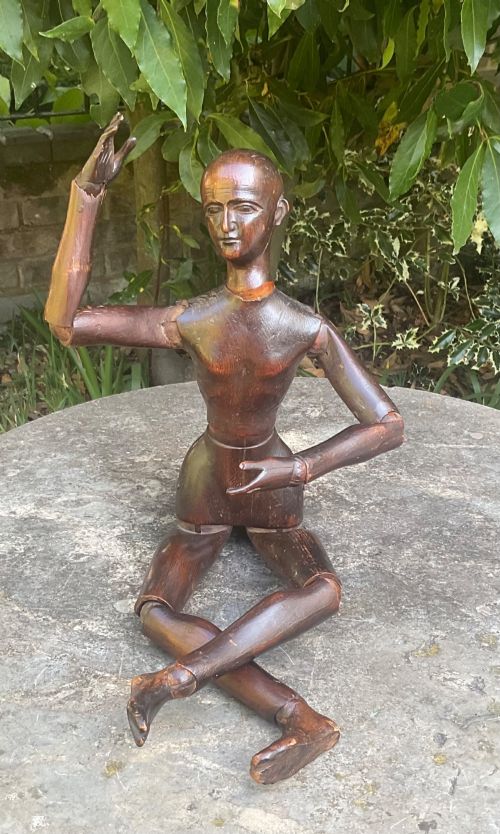
An articulated wooden figure serves as a studio model for capturing the human form, appearing in various sizes from tabletop versions to life-size examples. The most common form on this page is the artist lay figure, alongside folk art figures, marionettes, and processional figures.
The objects span multiple periods, from eighteenth-century French origins through nineteenth-century European and Victorian examples, up to early twentieth-century pieces. Alongside studio mannequins, the selection includes regional items such as Edo carved wood figures and English jigger dolls.
Materials and construction
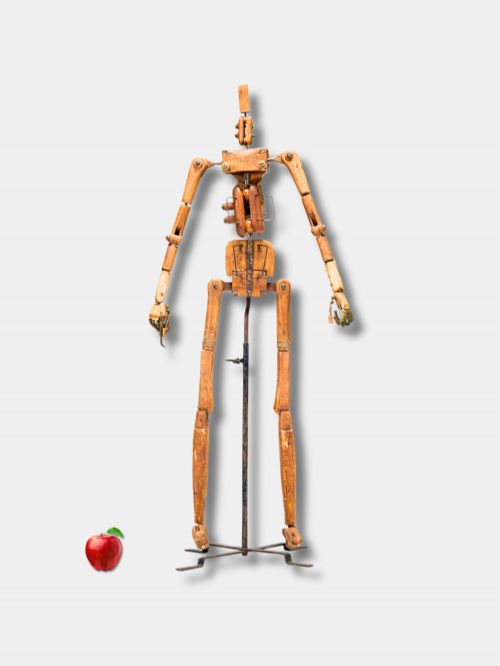
Certain examples incorporate supplementary textiles, such as silk, alongside iron supports or stands to keep the mannequins upright during use.
An early twentieth-century wooden mouse wearing painted details shares space with life-size studio figures.
Distinguishing quality
Quality rests in the precision of the carving and the complexity of the internal jointing, which determines how fluidly the limbs hold a pose. Pieces with well-proportioned anatomical framing and intact mechanical connections command greater attention.
The preservation of original surface paint and the presence of maker attribution or specific regional styling further separate standard workshop productions from exceptional studio examples.
Francois-pierre Guillois
The Articulated Wooden Figure Glossary
- Lay figure
- A jointed wooden mannequin utilised by artists to study drapery and posture. These objects allow painters and sculptors to maintain consistent lighting and form over extended periods.
- Jigger doll
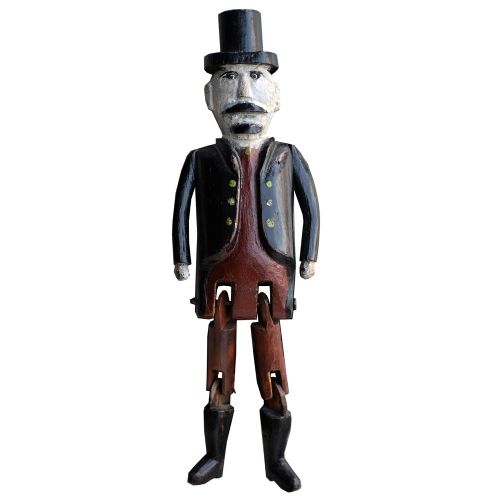
- A mechanical folk art toy featuring articulated limbs that dance or jerk when manipulated on a flat board. English and American examples from the early twentieth century often display painted attire like top hats.
- Santos figure
- A carved wooden devotional sculpture, frequently articulated for processional use in religious ceremonies. Italian examples showcase detailed hand carving and traditional painted finishes.
- Edo
- A period of Japanese history, though evidence here also connects the term to specific regional carvers such as the Bini people. These pieces demonstrate distinct cultural wood-carving traditions.
- Mannequin
- A larger display form used in studios or shop windows. Early twentieth-century versions employ wood or alternative materials to model garments.
Articulated Wooden Figure: Frequently Asked Questions
What is an articulated wooden figure?
An articulated wooden figure is a jointed mannequin created for artists to study posture, anatomy, and drapery. These objects replicate the range of human movement through pegged or pinned wooden joints.
Studio examples range from tabletop models to life-size pieces, whilst related forms include folk art toys and processional figures.
How were lay figures used?
Artists positioned these wooden mannequins in specific poses to sketch complex folds in clothing and observe how light falls across limbs. This eliminated the need for a live model during preliminary studies.
Painters and sculptors relied on them to maintain consistent geometry over days or weeks of studio work.
How do I date a wooden figure?
Dating relies on stylistic markers, construction methods, and the type of joints used within the torso and limbs. Eighteenth- and nineteenth-century French examples exhibit distinct carving techniques compared to early twentieth-century pieces.
Materials such as iron hardware, brass pins, and the application of early paint layers also help establish the period of manufacture.
Are all these figures for artists?
Not every piece served a strict studio purpose, as the category includes folk art jigger dolls, marionettes, and religious processional figures. While lay figures were strictly tools for painters, other items functioned as toys or devotional objects.
Each variation retains articulated wooden construction but serves a different cultural or domestic role.