
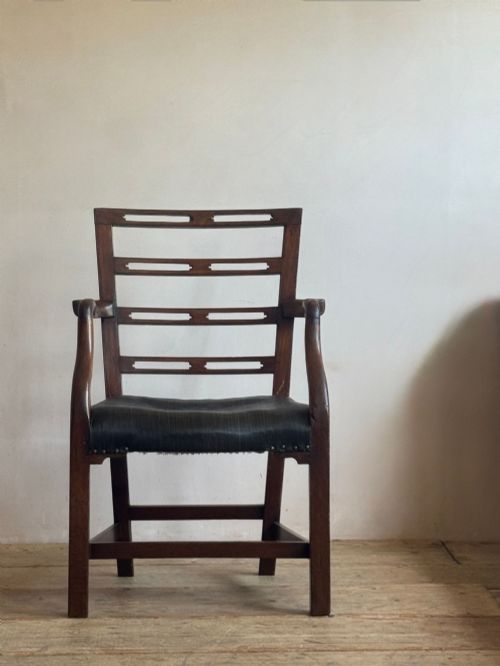
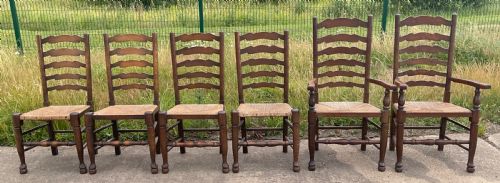
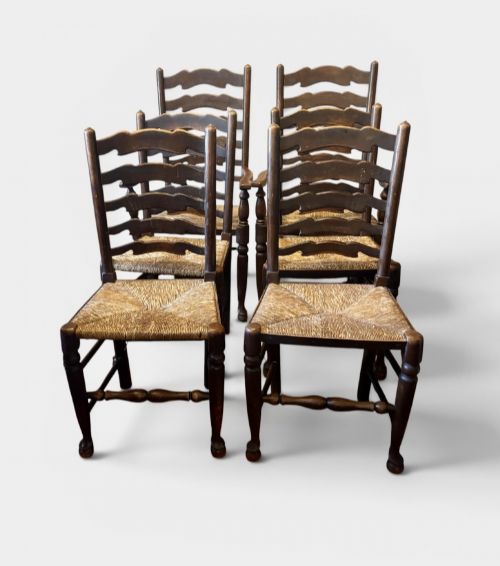


Wooden Ladderback Dining Chairs
Wooden ladderback dining chairs bring tactile warmth to a room through traditional regional framing and woven seating.
Wooden Ladderback Dining Chairs
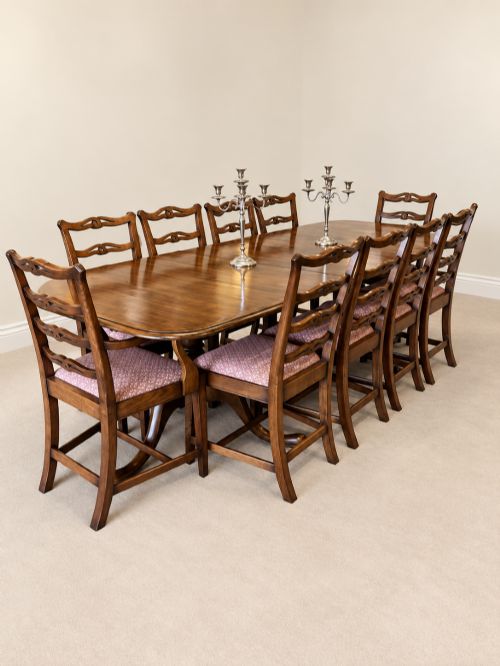
When you search for wooden ladderback dining chairs, you encounter practical vernacular seating shaped by regional British, Irish, and French traditions. These chairs combine horizontal back rails with upright supports, offering straightforward comfort for daily dining.
The most common versions on this page originate from the eighteenth and nineteenth centuries, alongside early twentieth-century revivals. You will find sets and individual pieces constructed in oak, ash, elm, and mahogany, often fitted with rush or woven seats.
How they were made
Cabinetmakers and country joiners turned and shaped local timbers such as oak, ash, beech, and elm for the frames and legs. These woods provided the necessary strength for slender uprights and curved ladder rails.
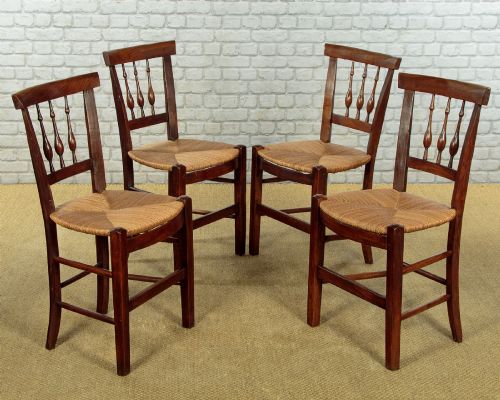
Seats were frequently woven from natural rush or cord to create a resilient, flexible surface. Individual components were joined using traditional pegged mortise and tenon joints to withstand decades of regular use.
Listings feature oak, ash, elm, and mahogany frames paired with traditional woven rush seating.
What varies in quality
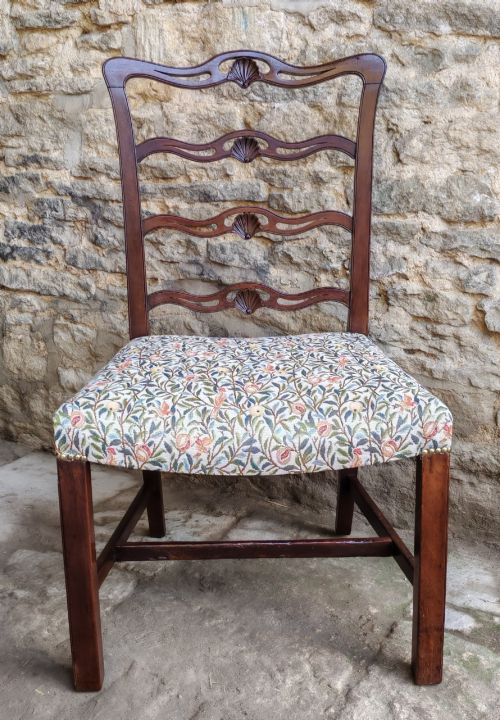
The refinement of the timber and the turning of the spindles distinguish simpler vernacular pieces from formal parlour examples. Early mahogany versions exhibit precise carving on the crest rails, whereas regional ash and elm chairs rely on clean proportions and balanced rung placement.
The integrity of the rush seating and the tightness of the frame joints determine the durability of the chair. Original surface patination and matching sets elevate the desirability of these domestic furnishings.
Dicon Nance St.Ives Studio·Lawrence Neal
The Wooden Ladderback Dining Chairs Glossary
- Ladderback
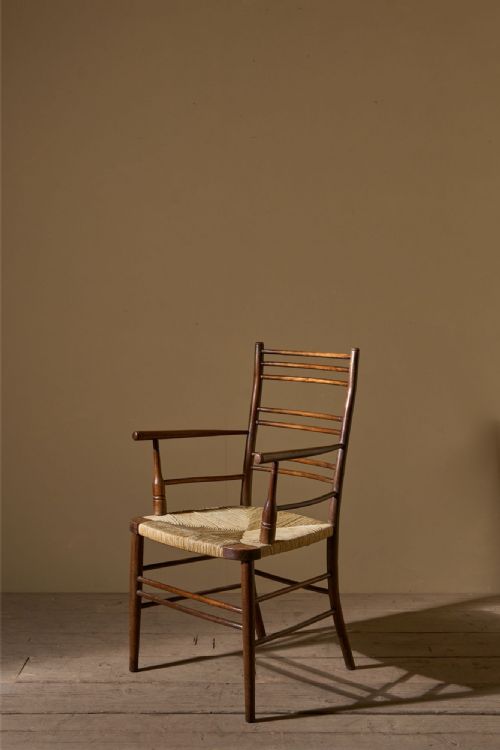
- A chair back formed of horizontal slats or rails positioned between two upright posts. This traditional construction provides sturdy lumbar support.
- Rush
- Dried marsh grass twisted into cords and hand-woven to form durable chair seats. It offers a flexible and tactile sitting surface.
- Carver
- An armchair, typically designed with arms to match a set of smaller side chairs. These were traditionally reserved for the head of the table.
- Vernacular
- Everyday furniture designed by regional makers using local materials rather than following high-style metropolitan fashions. These pieces prioritise utility and local craftsmanship.
- Spindle
- A slender, turned wooden rod used as a decorative or structural vertical element in chair backs. They are shaped on a lathe to precise diameters.
Wooden Ladderback Dining Chairs: Frequently Asked Questions
Are ladderback chairs comfortable for long dinners?
The horizontal slats are angled to support the spine naturally during meals. Combined with woven rush seats, they provide a forgiving and supportive sit.
While lacking thick upholstery, their ergonomic rail placement ensures guests remain comfortable throughout extended gatherings.
How do I mix ladderback chairs with a modern table?
Their clean wooden frames and neutral rush seats bridge traditional and contemporary interiors effortlessly. Pairing them with a simple timber or glass table highlights their structural lines.
Harlequin sets or mismatched country chairs also introduce casual character to modern dining spaces without looking out of place.
How do I tell an 18th-century chair from a later revival?
Early examples display subtle hand-tool marks, pegged joinery, and natural timber shrinkage consistent with age. Turnings on eighteenth-century legs tend to be simpler and more bespoke.
Later Victorian and Edwardian revivals often utilise machine precision and standardised components, reflecting the manufacturing methods of their time.
Can I use rush seat chairs every day?
Rush is remarkably resilient when cared for properly and handles daily family meals with ease. Avoiding excessive moisture protects the natural fibres from weakening over time.
These chairs were built specifically for daily domestic life, making them durable companions for busy dining rooms.