


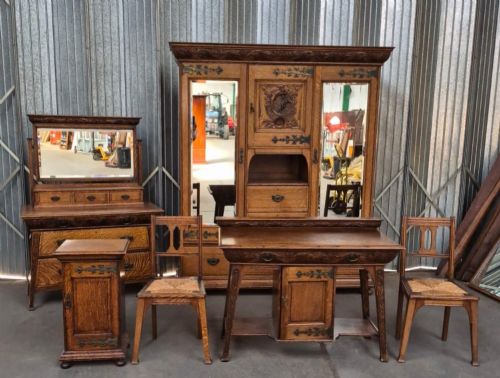
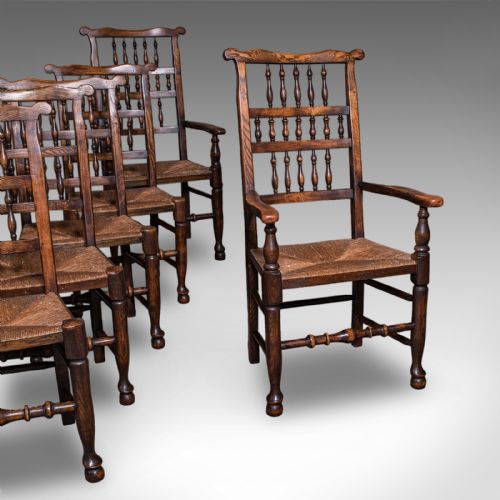


Edwardian Rush Seated Chairs
Edwardian rush seated chairs combine honest vernacular forms with natural plant fibre seats, offering sturdy everyday seating rooted in the Arts and Crafts movement.
Edwardian Rush Seated Chairs
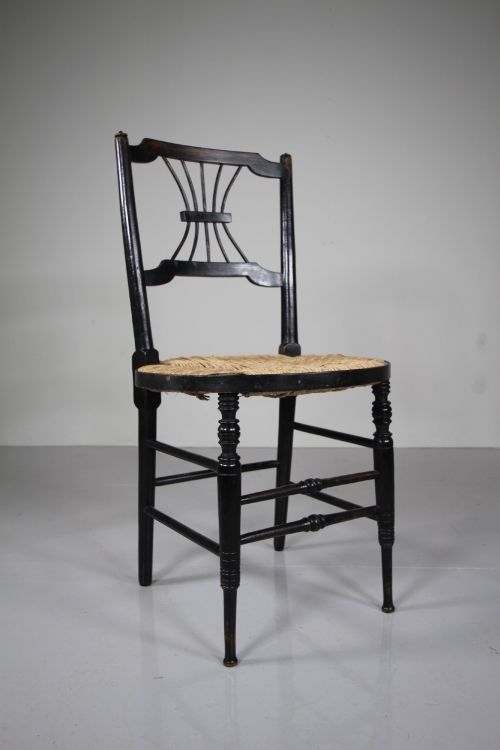
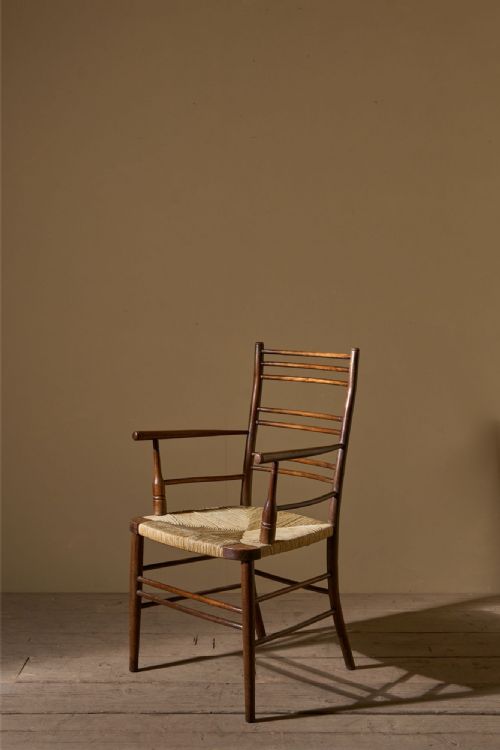
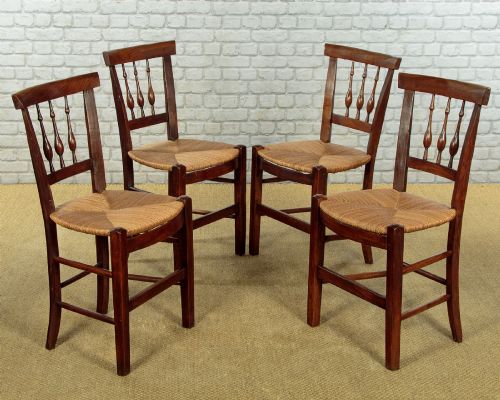
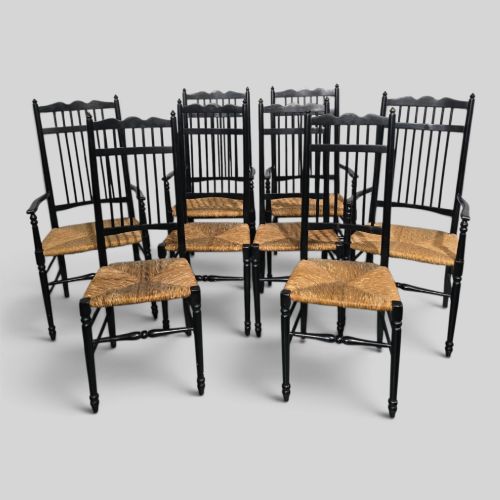
Edwardian rush seated chairs encompass dining chairs, armchairs, and corner chairs shaped by vernacular country traditions and Arts and Crafts ideals. Buyers searching this phrase encounter dining sets, carvers, and high-back side chairs originating around the turn of the twentieth century.
The material expression ranges from plain beech and ebonised frames to golden oak and mahogany. Many pieces reflect simple country forms, while others carry the distinct design lineage of makers associated with the period.
How they were made
Makers utilised native hardwoods such as beech and oak, sometimes applying ebonised finishes to mimic more costly timbers. Frames were joined using traditional woodworking methods to support daily use.
Seats were woven by hand using natural rush, creating a durable and textured surface suspended within the wooden rails. Marquetry inlay occasionally appears on mahogany frames, adding decorative detail to structural forms.
Some ladder-back chairs come with armrests so wide you could rest a small cup of tea on them.
What varies in quality
The distinction lies in the integrity of the timber framing and the tightness of the rush weaving. Subtleties in turning, ladder-back profile design, and overall proportion separate standard country workshop output from pieces bearing maker attributions.
Surface preservation also dictates character, where patinated wood and well-tensioned natural rush retain their original visual balance. Alterations or unsympathetic replacements diminish the cohesion of the piece.
William Morris·Rossetti·Liberty·Morris and Co·Heals
The Edwardian Rush Seated Chairs Glossary
- Rush
- A marsh plant woven to create resilient chair seats. It provides a natural texture that flexes slightly under weight.
- Ladder back
- A chair back featuring horizontal wooden slats between the upright posts. This traditional form offers strong lumbar support.
- Carver
- An armchair designed with armrests, traditionally placed at the head of a dining table. They complement matching side chairs in a set.
- Ebonised
- Wood treated with a dark finish to resemble ebony. It was commonly used on beech frames during the period.
Edwardian Rush Seated Chairs: Frequently Asked Questions
Are these chairs strong enough for daily dining?
Most edwardian rush seated chairs were built for practical domestic use from sturdy timbers like oak and beech. Their traditional construction handles regular seating well.
Buyers should examine the frame joints and rush tension to ensure stability. Well-maintained examples serve reliably in modern dining rooms.
How do I care for a natural rush seat?
Natural rush requires a dry environment and protection from excessive moisture to prevent brittleness. Occasional dusting keeps the woven fibres clean.
Avoiding direct sunlight helps preserve the natural colour of the rush over time. Gentle handling ensures the tight weave remains secure.
Can I mix single chairs with a dining set?
Mixing single chairs or finding larger sets depends on matching timber tones and ladder-back profiles. Many country dining chairs share similar vernacular traits.
Matching heights and seat proportions helps create a cohesive arrangement around a table. Subtle variations in wood grain add character to a dining space.
What defines the Arts and Crafts style here?
The style emphasises honest construction, visible wood grain, and functional vernacular forms over excessive ornamentation. Simple ladder backs and turned uprights reflect this philosophy.
Pieces often showcase the craftsmanship of the maker through balanced proportions. This aesthetic aligns closely with traditional country chairmaking.