
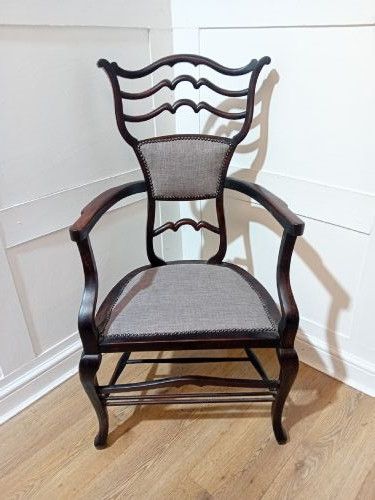
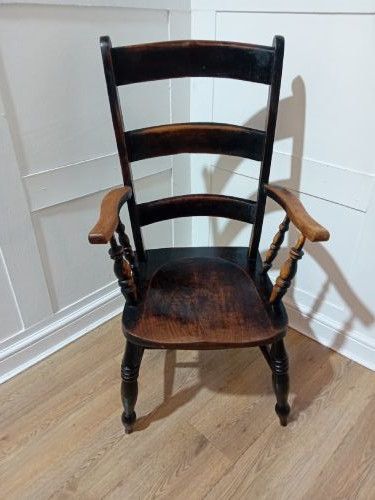
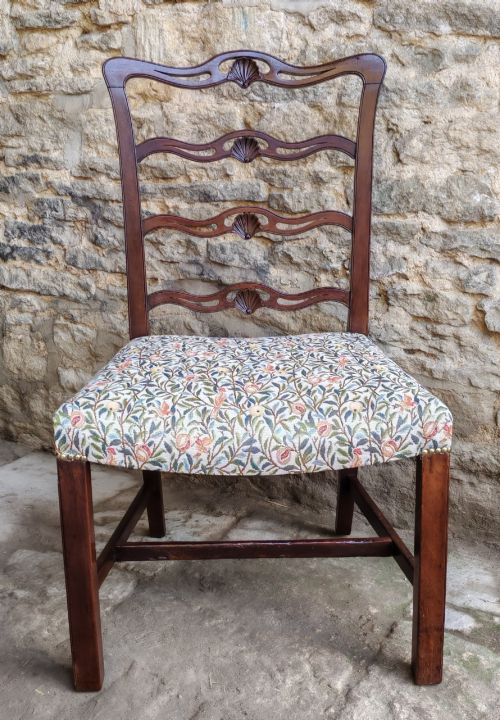
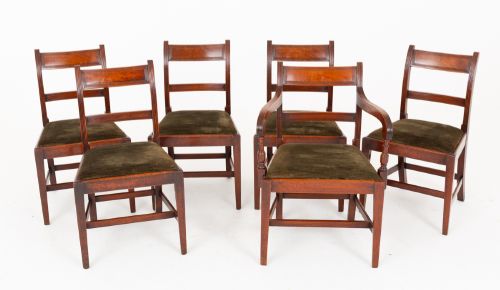


Wooden Ladder Back Chairs
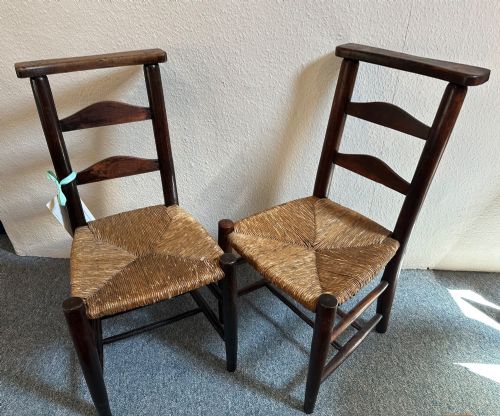
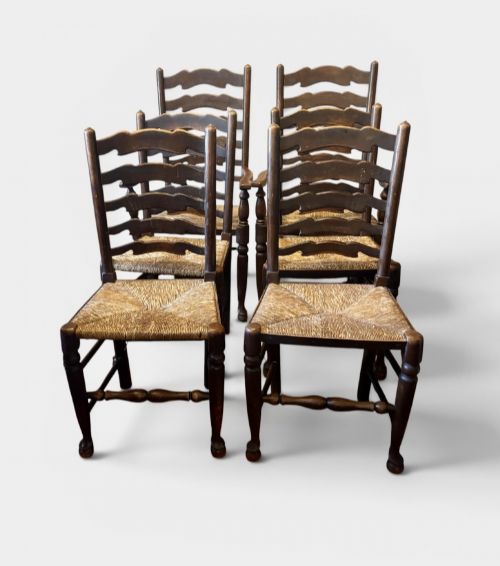
These wooden ladder back chairs bring centuries of country craftsmanship and vernacular design into modern rooms.
Wooden Ladder Back Chairs
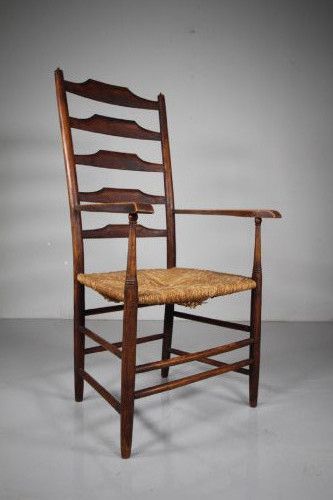
Buyers seeking wooden ladder back chairs find sturdy seating defined by horizontal slats framed between upright posts. These pieces span centuries of domestic life, originating from rural workshops and urban cabinet makers alike.
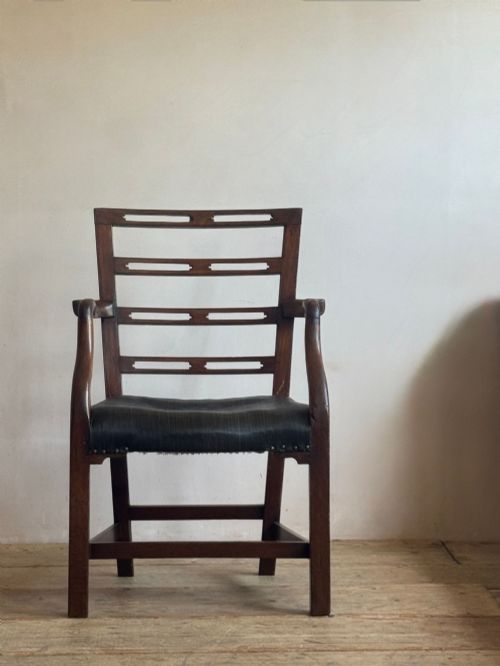
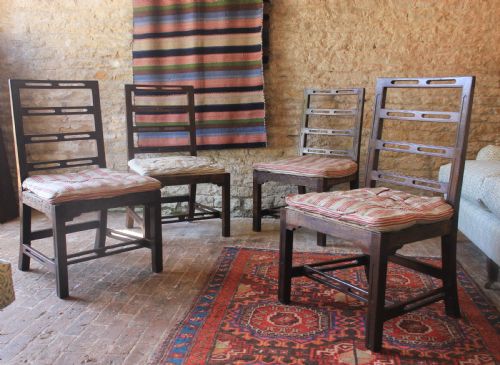
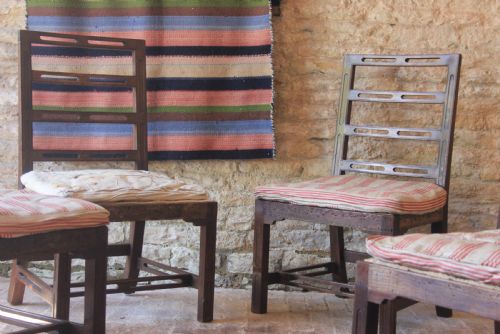
The selections on this page range from Georgian dining chairs in mahogany to ash rocking chairs with rush seats. Simpler country vernacular pieces sit alongside formal styles, including sets intended for dining rooms and occasional armchairs.
Origins stretch across English country workshops, Irish houses, Dutch towns, and French provincial centres. Makers produced variants from standard side chairs to high chairs, settees, and low hall armchairs.
How they were made
Traditional makers shaped frames from native timbers such as oak, ash, elm, and mahogany, selecting woods for strength and grain. Turnery lathes shaped the upright posts and stretchers, while hand tools formed the curved horizontal slats.
Seats utilised woven rush or dropped-in fabric inserts, bound tightly to support daily domestic use. Joinery relied on pegged mortise and tenon joints, uniting turned components into rigid structures.
The inventory records dining chairs, armchairs, rocking chairs, settees, high chairs, and desk chairs.
What varies in quality
Gradations in quality depend upon the harmony of the timber selection and the precision of the turnery. Finer examples display carefully tapered uprights, slender curved ladder rails, and tightly woven original rush seats.
Proportion and execution distinguish standard utilitarian furniture from exceptional regional pieces. Subtle details, such as carved crest rails or crisp shaping on the slats, elevate certain chairs above everyday workshop output.
Philip Clissett·Dicon Nance·Lawrence Neal·Liberty and Co
The Wooden Ladder Back Chairs Glossary
- Rush seat
- A seating surface woven from dried marsh rushes twisted into cords. This traditional method provides a flexible and durable platform.
- Ladder back
- A chair design featuring multiple horizontal slats resembling a ladder between the back posts. These slats are often arched for back comfort.
- Rush
- Marsh plants utilised historically for weaving chair bottoms. Dried material is twisted to increase tensile strength before hand weaving.
- Turnery
- The craft of shaping wood on a lathe using gouges and chisels. This technique forms the rounded legs, spindles, and uprights of vernacular chairs.
Wooden Ladder Back Chairs: Frequently Asked Questions
How do I date a ladder back chair?
Dating relies upon examining the timber species, construction marks, and tool traces visible on the frame. Regional styles and historical turning patterns also help place a chair within a specific century.
Earlier examples often display hand-split timbers and irregular turnery, whereas later revival pieces show uniform machine work. Comparing joint construction and seat weaving methods clarifies the period.
Are these chairs suitable for daily dining?
Most wooden ladder back chairs were built for practical domestic use and remain robust enough for regular seating. Solid frames and woven rush bottoms handle daily wear when treated with care.
Pairs and large sets function well around modern dining tables. Heavier armchairs and rocking chairs suit studies or living spaces.
What is the difference between ash and oak ladder backs?
Ash timber provides exceptional flexibility and shock absorption, making it the preferred choice for country framework and bent components. Oak offers greater rigidity and weight, frequently seen in formal or vernacular dining sets.
Both timbers weather distinctively over centuries, developing rich patinas depending on their exposure and finish.
How do I care for a rush seat?
Rush seats require dry environments to prevent moisture damage and rotting of the natural fibres. Occasional gentle dusting keeps debris from settling between the woven cords.
Avoid placing these chairs near direct heat sources that dry out the marsh fibres. Weight should be distributed evenly to maintain the tension of the weave.