

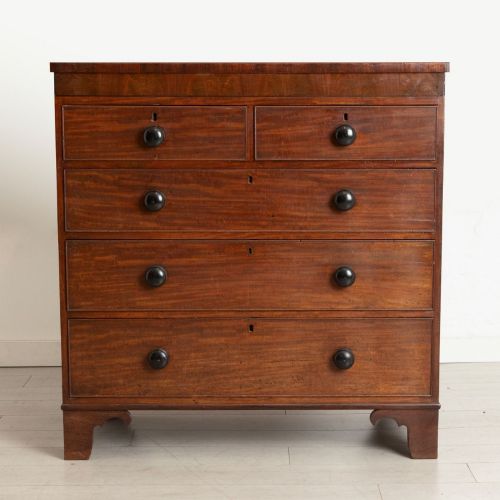
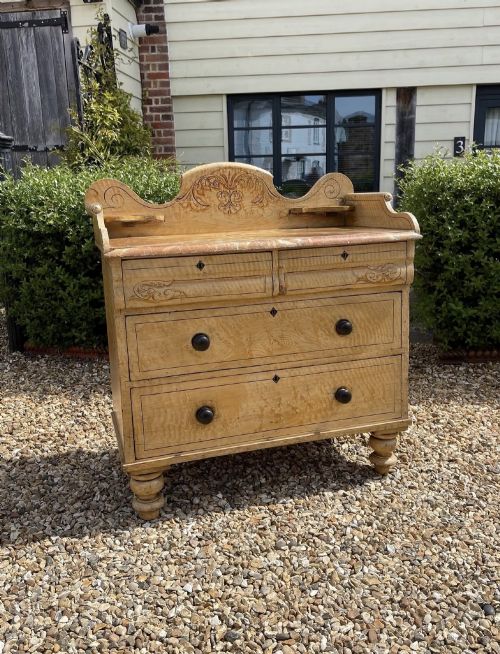
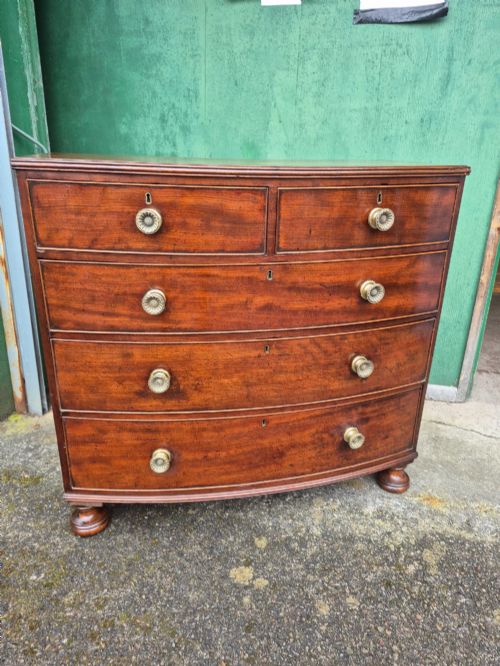
Wooden Knob Drawers
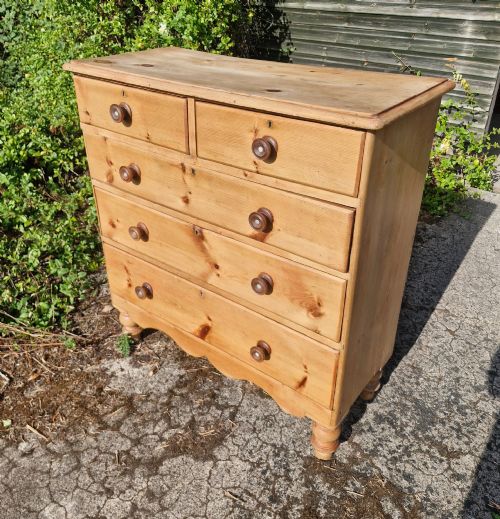
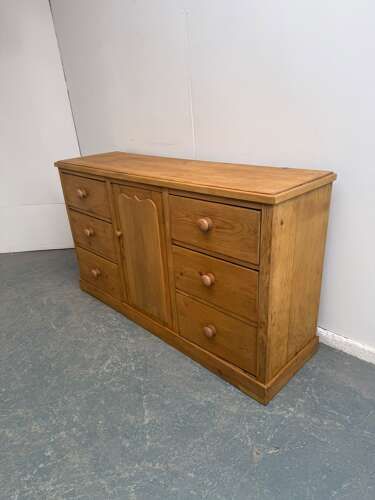
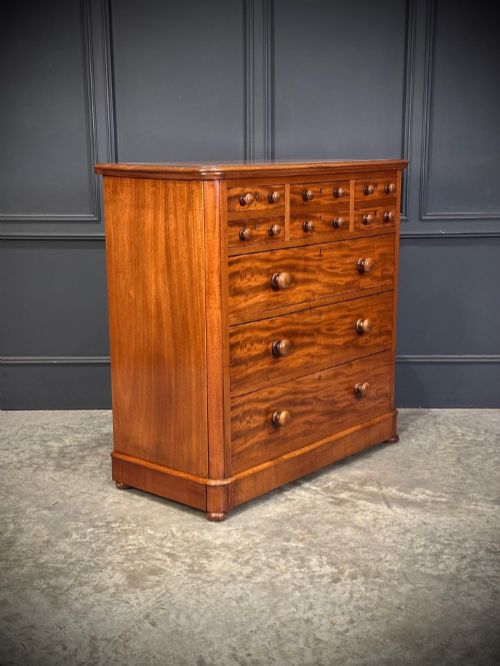
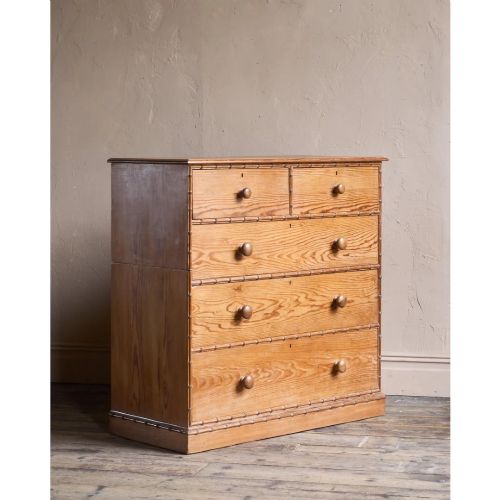
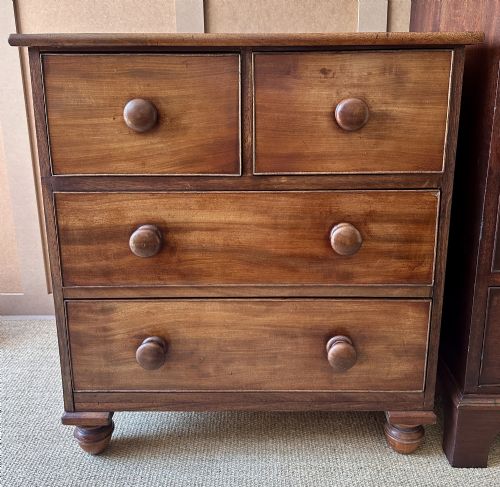
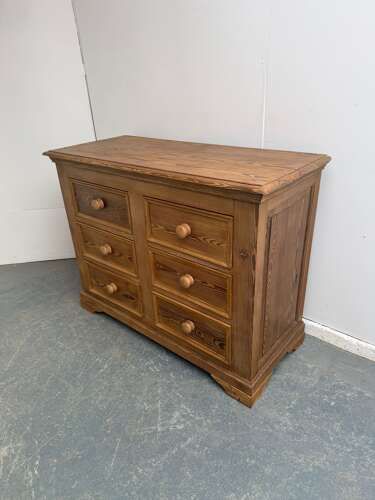
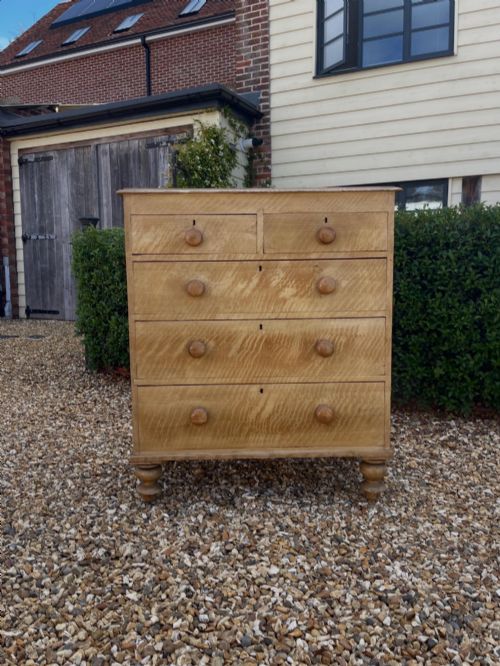
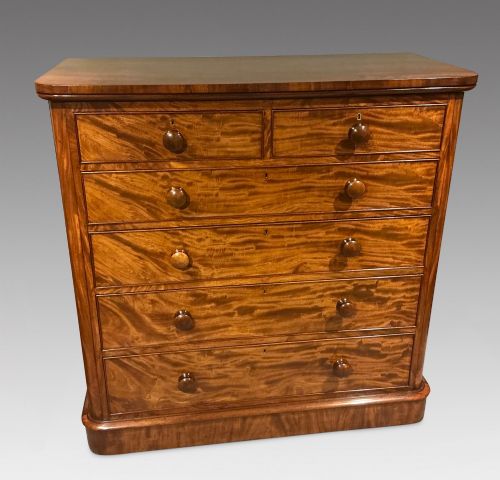
Wooden knob drawers offer straightforward storage, pairing the character of pine and mahogany with simple turned handles.
Wooden Knob Drawers
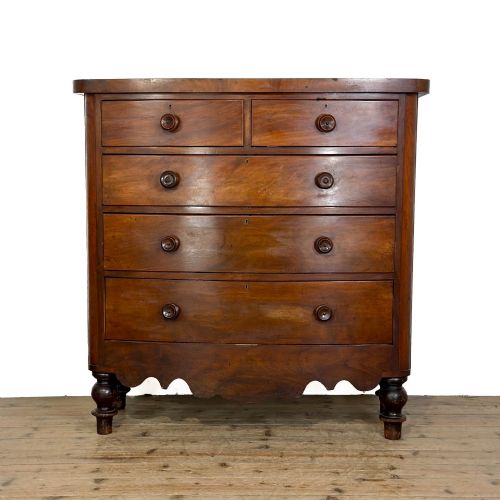
When you search for wooden knob drawers, you encounter practical storage pieces built across the Georgian, Regency and Victorian periods. These pieces include standard chests of drawers, bow front chests, and smaller apprentice pieces or apothecary cabinets.
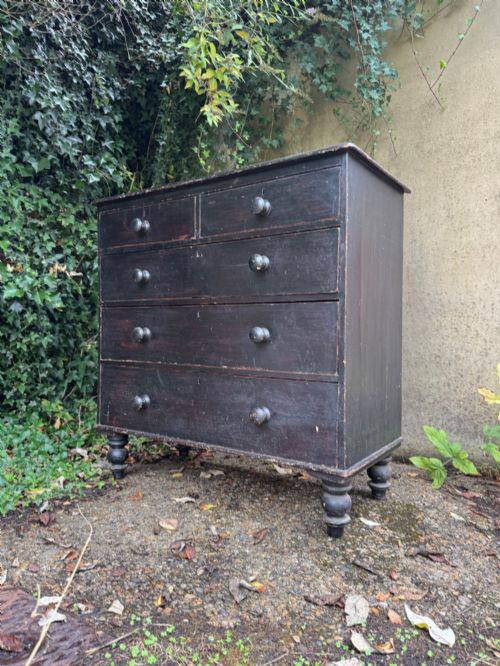
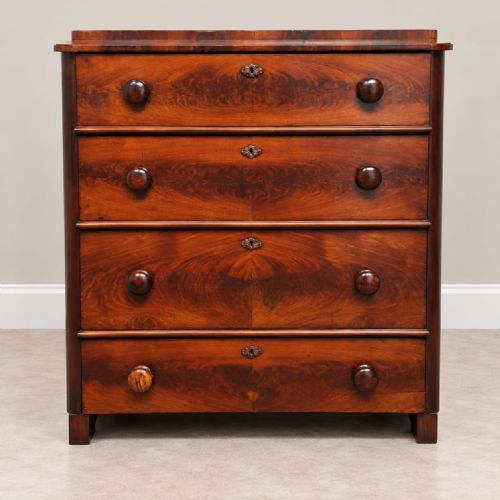
Pine and mahogany dominate the offerings on this page, often finished with wax or retained in original paint. You will frequently meet Victorian examples featuring turned wooden handles alongside classic drawer configurations.
How they were made
Cabinet makers utilised solid timbers such as pine and mahogany, constructing carcasses with dovetailed drawer joints and applied mouldings. Turned wooden knobs were turned on a lathe and fitted directly to the drawer fronts.
Surfaces received traditional finishes including clear wax, applied paint layers, or decorative inlay work. Brass elements occasionally appear alongside the timber construction, while glass or iron details feature on specific utilitarian forms.
Forms on this page range from full sized kitchen dresser bases down to miniature apprentice chests.
What varies in quality
Quality rests in the choice of timber and the crispness of the cabinet work, distinguishing utilitarian pieces from finer parlour furniture. Mahogany examples with flame veneers and crossbanding sit at a different level from everyday painted pine.
The integrity of the construction, the survival of original paint or rich wax finishes, and the presence of matching original wooden knobs determine the standing of each piece.
Howard and Sons
The Wooden Knob Drawers Glossary
- Bow front
- A convex curved drawer front that projects outward at the centre. This style gained popularity during the Georgian and Regency periods.
- Crossbanding
- A narrow strip of veneer laid around the border of a drawer front so the grain runs perpendicular to the surrounding wood.
- Apprentice piece
- A smaller scale model demonstrating a cabinet maker's skill for evaluation before full qualification. These often mirror the form of larger chests.
- Plinth base
- A heavy solid platform at the base of a cabinet supporting the main carcass. It replaces traditional bracket feet on certain Victorian designs.
Wooden Knob Drawers: Frequently Asked Questions
How do I date a chest of drawers?
Examine the construction methods, timber choice, and hardware styles to determine the era. Georgian pieces often display fine crossbanding, while Victorian examples frequently utilise pine or mahogany with turned wooden knobs.
Secondary woods inside the drawers and the type of fixings used provide further clues regarding the manufacturing period.
Are painted chests original?
Many nineteenth century pine pieces retain their original painted surfaces, which shows through wear and patina. Inspect the paint layers for signs of age and consistency with the period.
Original paint finishes add distinct character to utilitarian furniture and country pieces.
What is an apprentice chest?
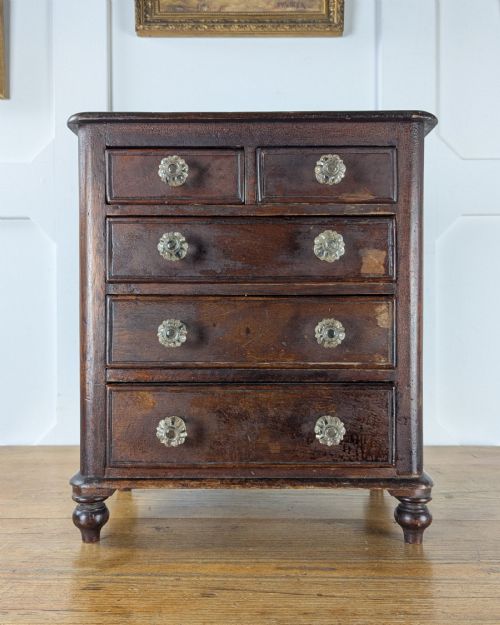
An apprentice chest is a miniature version of a full sized chest of drawers created to demonstrate proficiency. These small pieces share the same construction quality and timber as their larger counterparts.
Collectors prize them for their detailed scale and practical footprint in modern homes.
How should I care for waxed pine?
Maintain waxed pine surfaces by applying a traditional beeswax polish periodically and buffing with a soft cloth. Avoid placing these pieces in direct sunlight or near heat sources to prevent timber movement.
Regular care preserves the warm lustre of the wax and protects the wood.