
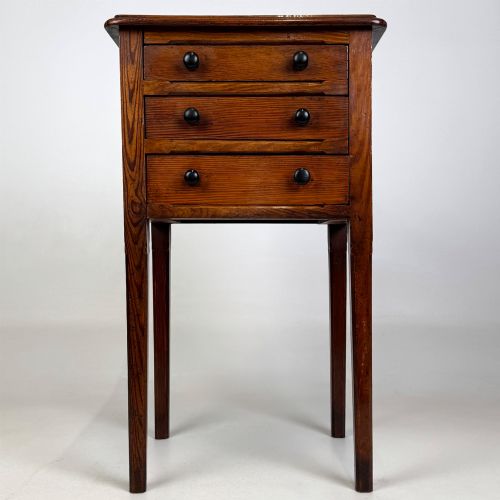
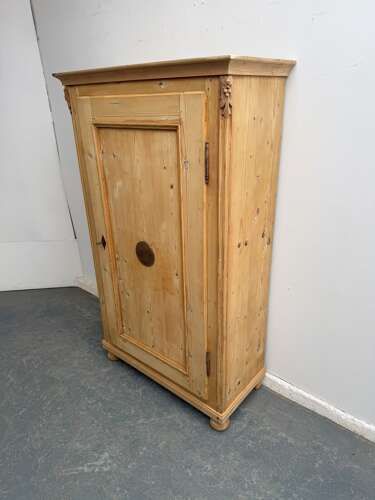
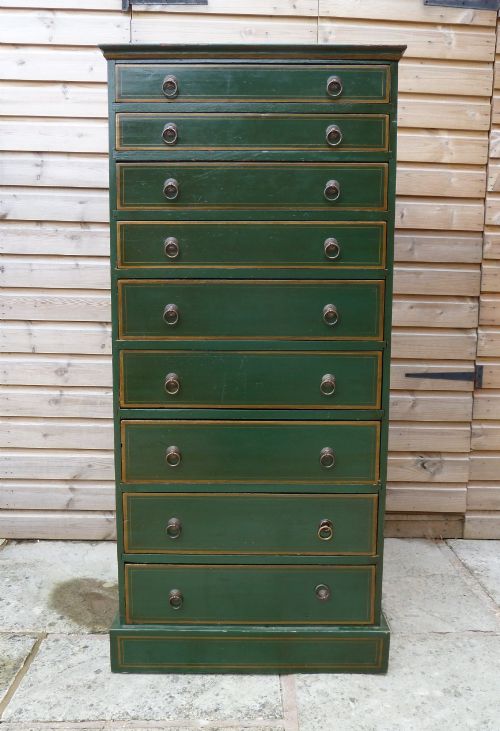
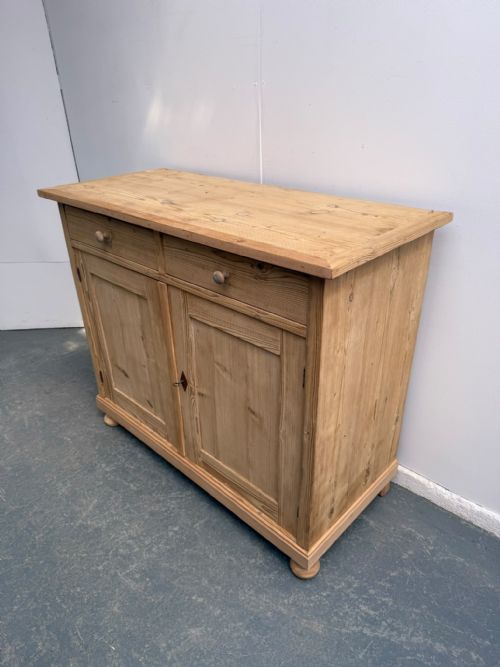

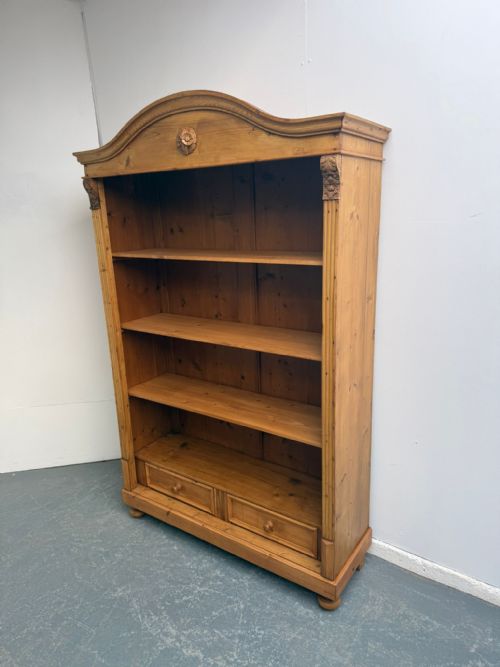


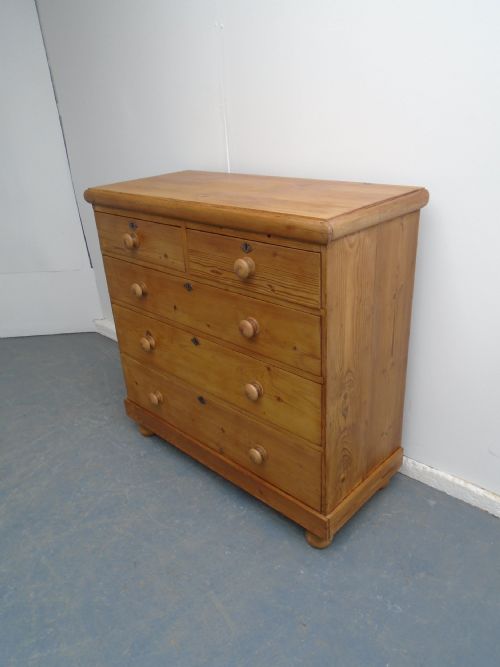
Tall Pine Drawers
Tall pine drawers bring vertical storage and honest utility into a room, offering generous capacity within a compact footprint.
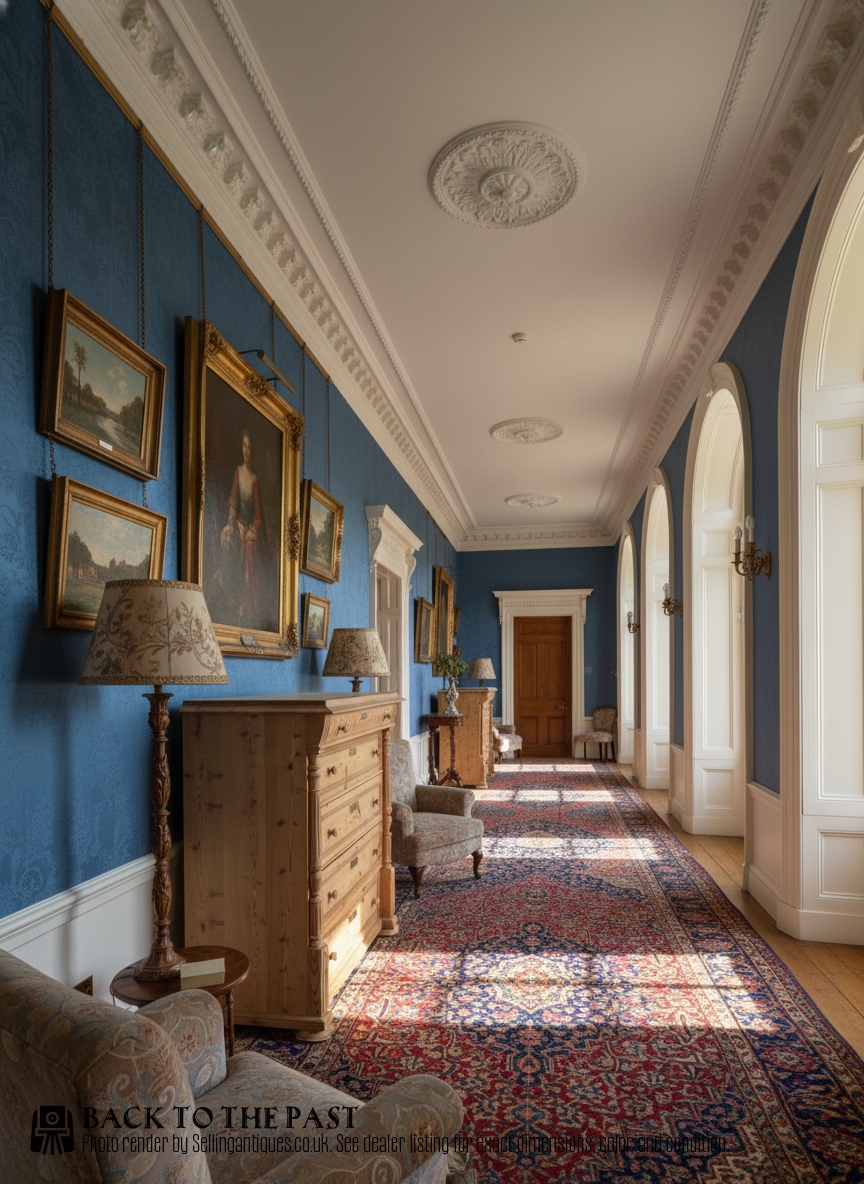
Tall Pine Drawers
When you search for tall pine drawers, you encounter vertical storage solutions ranging from traditional chest of drawers and tallboys to banks of drawers and linen presses. The standard forms include narrow five and six-drawer chests from the Victorian period alongside country house cupboards with integrated drawer sections.
Most pieces date from the nineteenth century and the Edwardian era, constructed in English, Scottish, or Scandinavian workshops. Their tall, slender proportions make them practical for modern rooms where floor space is limited but vertical capacity is needed.
These items transition easily between domestic settings, serving in bedrooms, kitchens, and studies for clothes, linen, or paperwork storage. Their character reflects decades of domestic use, often finished in natural wax or traditional painted surfaces.
How they were made
Cabinet makers built these pieces primarily using solid pine and pitch pine, selected for its workability and strength in tall structures. Secondary timbers often appear on drawer linings and backboards, demonstrating traditional frame and panel construction.
Hardware typically includes brass, iron, and ceramic fittings, ranging from turned wooden knobs to campaign handles and drop pulls. Surfaces were left bare for custom waxing, or finished with traditional paint treatments such as scumble glazes.
Listings feature pieces spanning the Victorian era, the 1920s, and the 1960s, constructed in pine, pitch pine, iron, and ceramic.
What varies in quality
Quality rests in the integrity of the joinery and the retention of original components, such as drawer runners, backboards, and handles. Heavy use means drawer bases and frames require careful fitting to ensure smooth operation across multiple tiers.
The choice of timber creates distinct differences, with dense pitch pine and older growth timber offering superior weight and durability compared to softer varieties. Original surface treatments, whether aged paint or scumble finishes, separate untouched examples from later adaptations.
Gillows
The Tall Pine Drawers Glossary
- Pitch pine
- A dense, resinous softwood timber prized for its durability and distinctive grain patterns.
- Tallboy
- A tall piece of furniture formed of a chest of drawers positioned on top of another or a lower base.
- Scumble paint
- A decorative glaze technique applied over a base coat to imitate the grain of finer woods or create aged texture.
- Linen press
- A tall cupboard featuring sliding trays or drawers enclosed by doors, originally designed for storing household textiles.
- Bank of drawers
- A multi-drawer unit designed for workshops, offices, or commercial use, offering numerous shallow compartments.
Tall Pine Drawers: Frequently Asked Questions
How do I clean antique pine?
Use a soft, dry cloth to remove dust from the surfaces of the wood regularly. Avoid modern silicone polishes that build up residue and instead apply a traditional beeswax to nourish the pine.
Keep these pieces away from direct heat sources and strong sunlight to prevent the timber from drying out or splitting over time.
Are tall pine drawers heavy?
Solid pine and pitch pine are dense woods, meaning these tall vertical units carry considerable weight. Their height also makes them top-heavy when the upper drawers are fully loaded with items.
Take care during placement and consider securing tall units to the wall for stability, particularly in homes with children or pets.
Can I paint raw pine drawers?
Many examples are offered in bare timber specifically to allow buyers to wax or paint them to match their interior scheme. Traditional water-based or milk paints adhere well to prepared pine surfaces.
Ensure the wood is clean and free of old wax residues before applying any new primer, paint, or protective finish.
How do I date a pine chest?
Examine the construction methods used on the drawer boxes, such as hand-cut dovetails and the thickness of the backboards. Tool marks, timber selection, and the style of hardware provide reliable clues to the manufacturing period.
Machine-sawn components and standardised fixings typically indicate later nineteenth or twentieth-century production.