
Stripped Pine Drawers
Stripped pine drawers bring the warm, honest grain of nineteenth-century domestic timber into modern rooms.
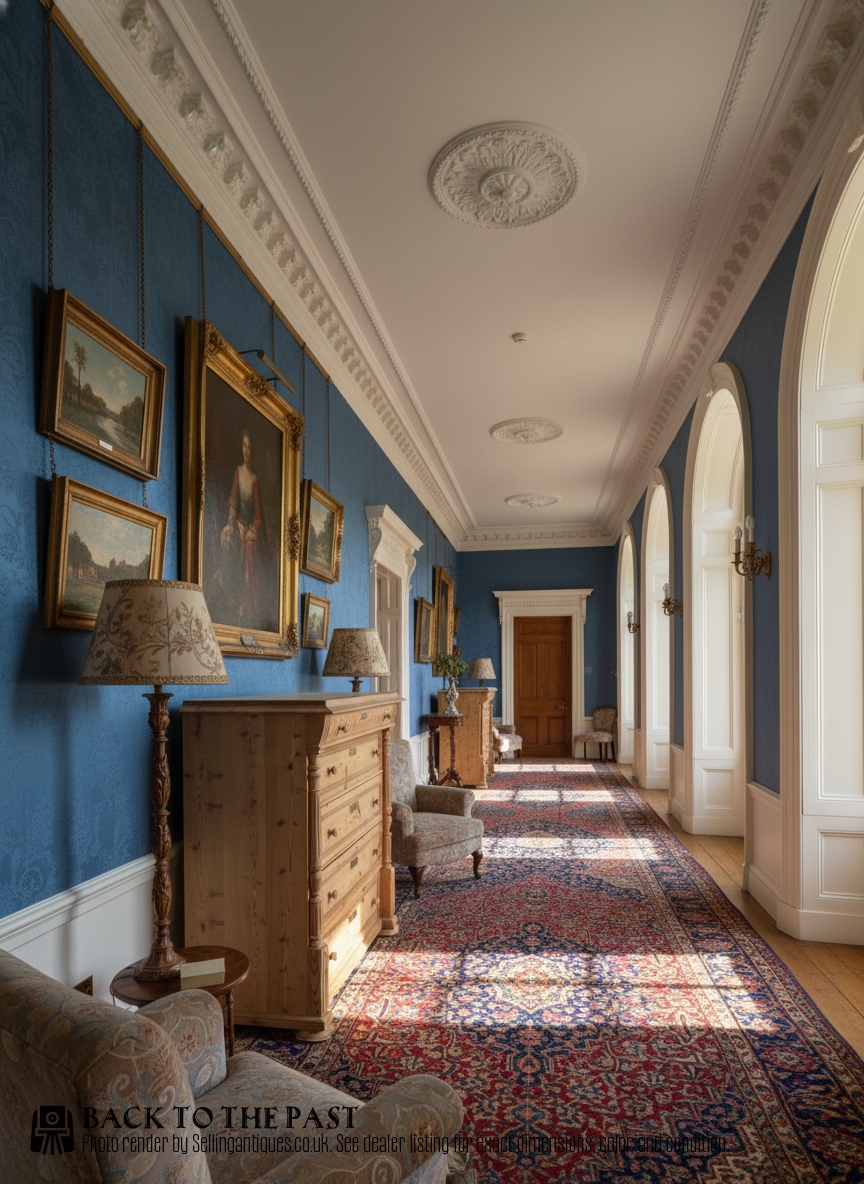
Stripped Pine Drawers
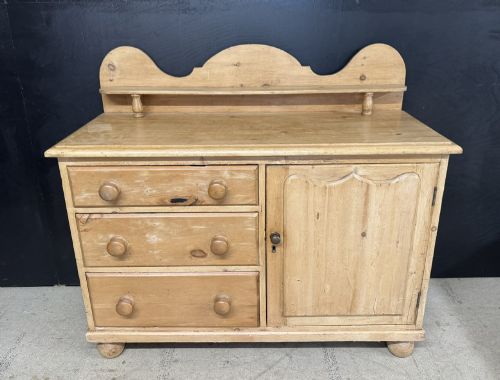
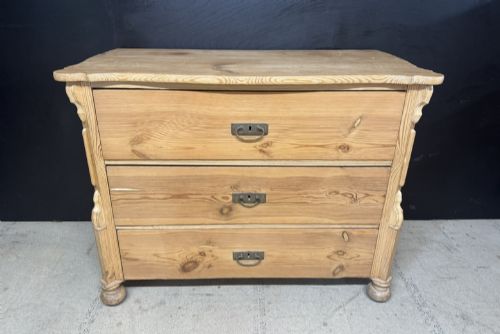
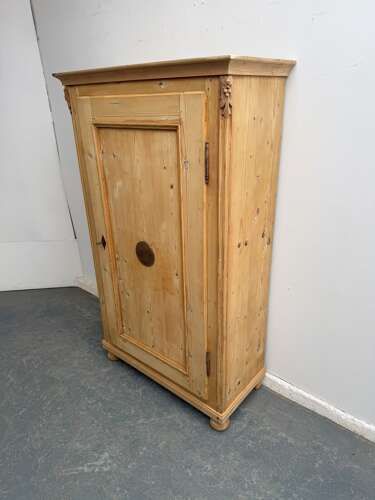
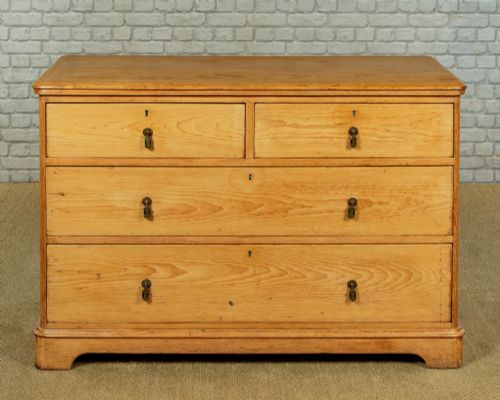
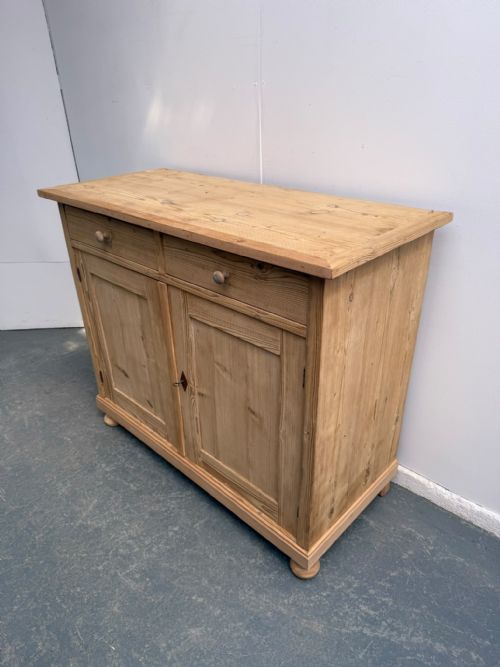
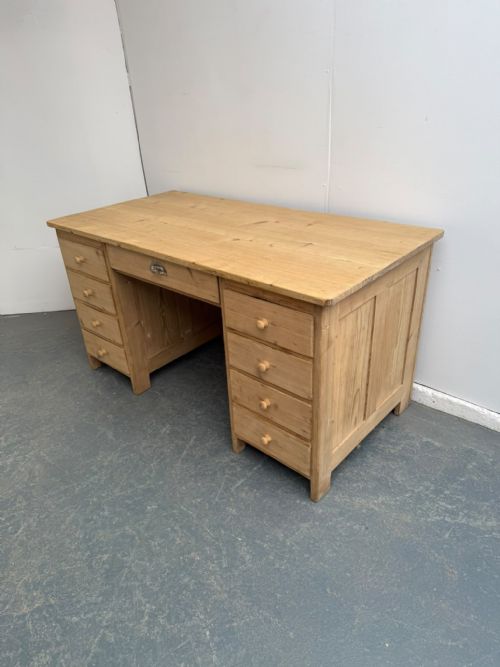
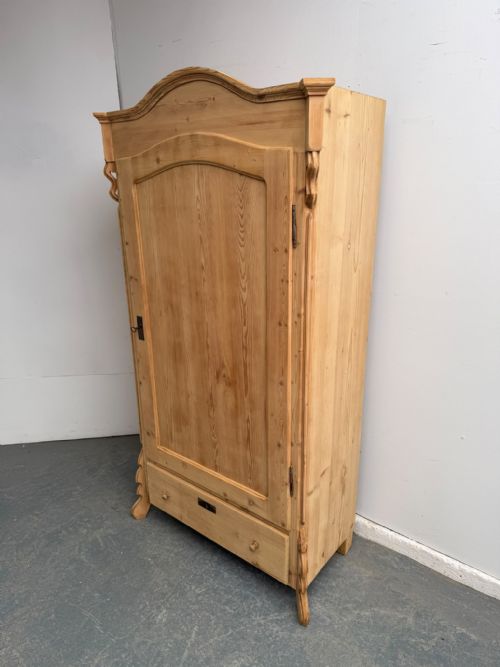
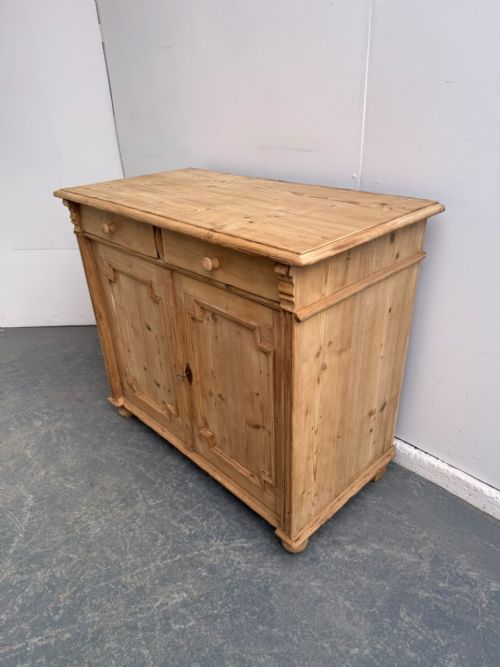
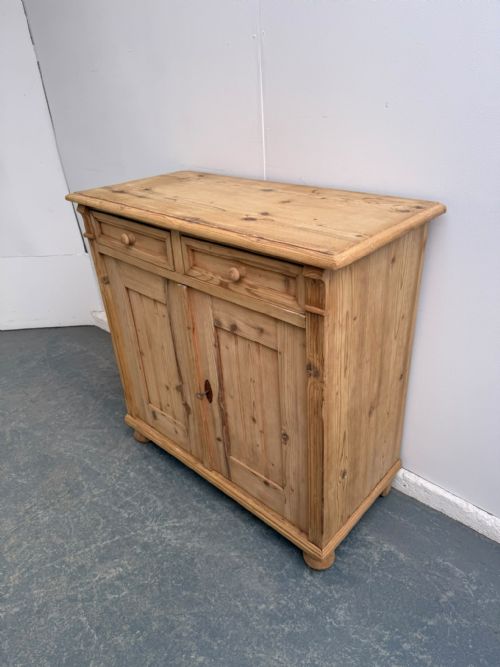
Stripped pine drawers encompass functional storage pieces built during the Georgian, Victorian, and Edwardian periods, primarily from softwoods intended for everyday household utility. The selection frequently includes chests of drawers, dresser bases, and utility cupboards that originally served kitchens, bedrooms, and sculleries.
Makers constructed these storage items using robust local timbers, favouring practical utility over decorative display. Many surviving examples emerge from rural workshops and country houses, displaying straightforward proportions and unadorned drawer fronts.
How they were made
Carpenters utilised solid pine planks for the main carcasses and drawer boxes, often combining dovetail joints on drawer corners with panelled backs and sides. Iron, brass, and ceramic hardware provided functional handles and key escutcheons for daily operation.
Modern restoration typically involves stripping later coats of paint to reveal the underlying grain, which conservators then finish with clear wax or oil to protect the bare softwood.
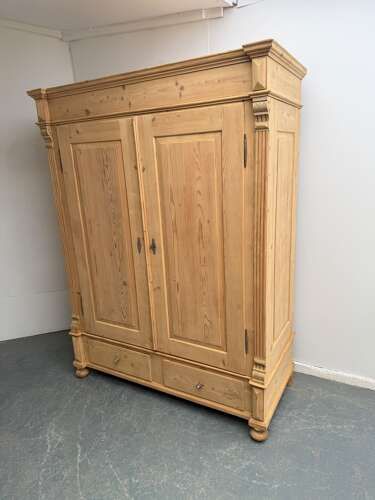
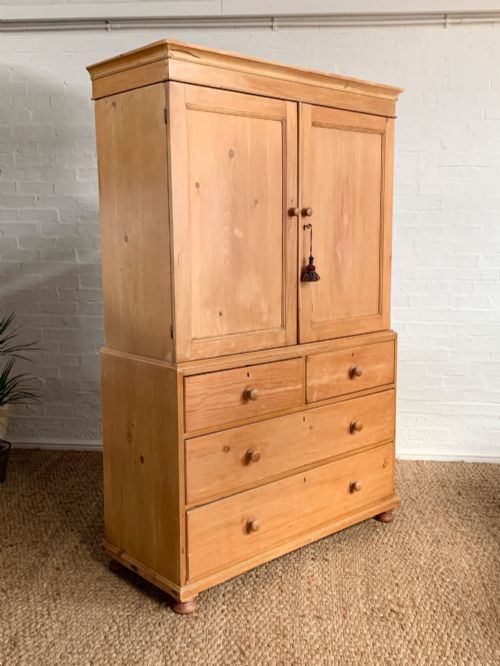
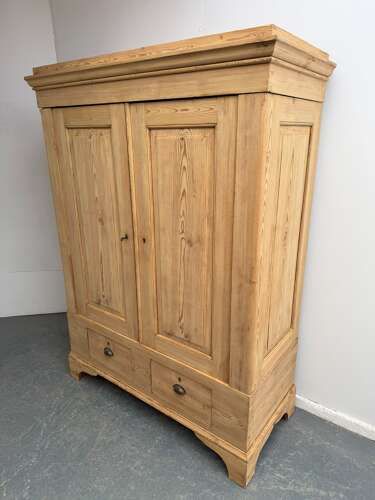
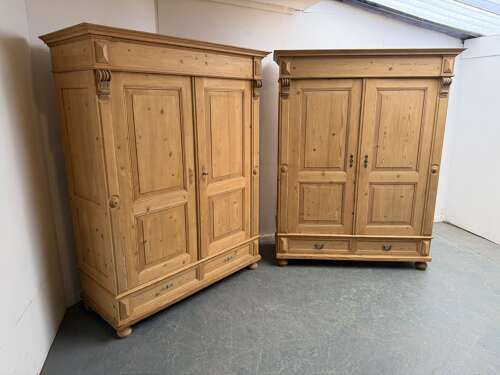
Listings feature pine storage items spanning the Georgian, Victorian, and Edwardian eras, incorporating brass, iron, and ceramic hardware.
What varies in quality
Construction methods dictate the integrity of each piece, distinguishing utilitarian workshop output from finer domestic furniture through timber selection and joint precision. Drawers that slide smoothly on original runners reflect careful initial joinery and minimal warping of the softwood over decades of use.
The extent of historical alteration also alters desirability, as pieces retaining original hardware, untouched backboards, and proportioned feet command greater interest than heavily modified examples.
The Stripped Pine Drawers Glossary
- Pine
- A softwood timber harvested from coniferous trees, widely utilised across British and European vernacular furniture for its workability and distinct grain patterns.
- Dovetail joint
- A woodworking technique locking adjoining boards together with interlocking fan-shaped wedges, commonly found at the corners of drawer boxes.
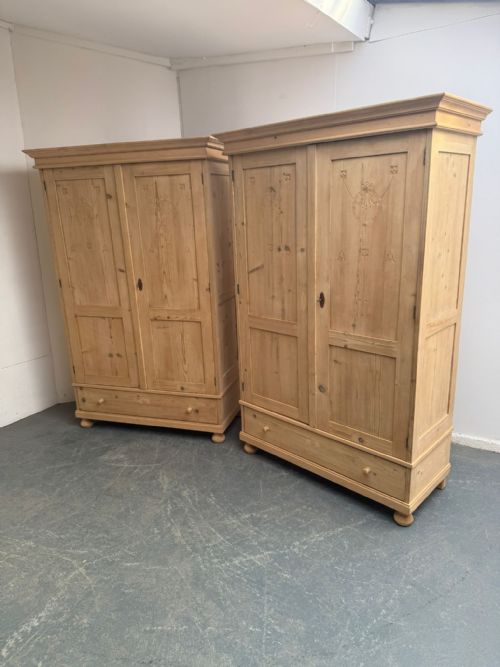
- Knockdown wardrobe
- A large storage cabinet designed to dismantle into flat panels and separate sections for ease of transport between rooms.
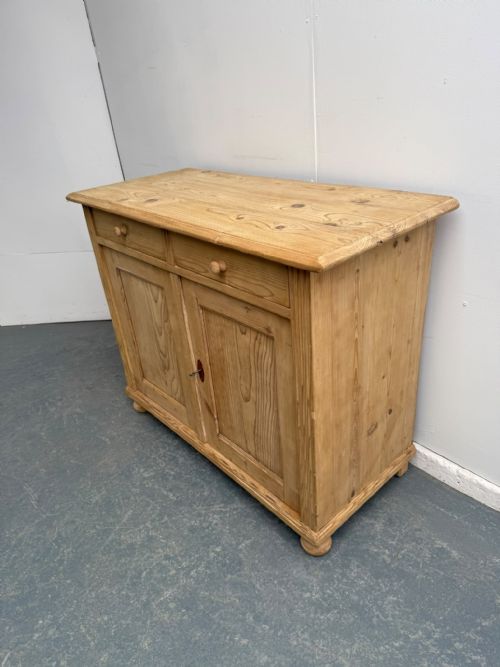
- Dresser base
- A low sideboard unit typically featuring a combination of cupboards and drawers beneath a sturdy wooden top, originally used for food preparation and storage.
Stripped Pine Drawers: Frequently Asked Questions
How do I care for stripped pine furniture?
Apply a clear bees wax periodically to nourish the bare wood and maintain a protective barrier against moisture and household dust.
Keep pieces away from direct heat sources and strong sunlight to prevent the softwood from drying out, cracking, or warping over time.
Were these pieces originally painted?
Many nineteenth-century pine items spent decades coated in layers of utilitarian paint or dark varnish to protect the softwood surfaces in busy domestic settings.
Restorers later strip these finishes away to expose the natural grain and golden tones that modern buyers prefer for country house interiors.
How can I date a pine chest?
Examine the construction of the drawer boxes and the cut of the timber, noting that hand-cut dovetails generally indicate earlier Georgian or early Victorian origins.
Machine-sawn boards, simpler fixtures, and standardised fixings typically point toward late Victorian, Edwardian, or early twentieth-century production.
Do these chests come apart for moving?
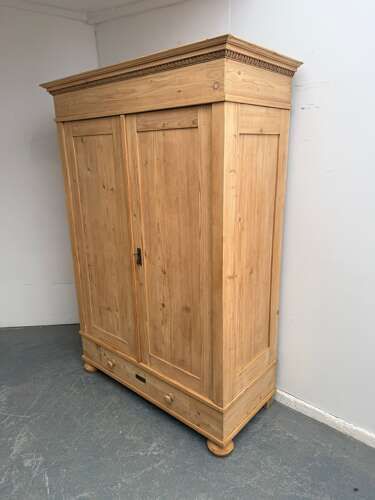
While standard chests of drawers and dresser bases are constructed as single solid units, larger wardrobes and specific cupboards often feature knockdown designs.
These sectional pieces dismantle into separate components, making them easier to navigate through narrow doorways and up staircases.