
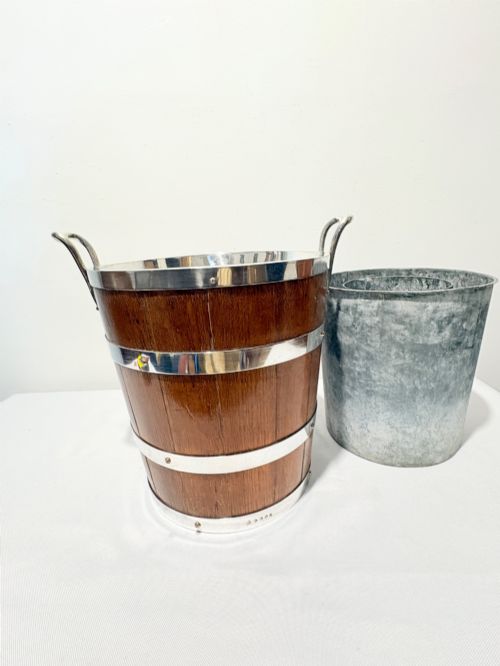


Wooden Ice Bucket
These wooden ice bucket examples combine mahogany or oak with brass, copper, or silver plate, offering functional period charm for entertaining.
Wooden Ice Bucket
When you search for a wooden ice bucket, you encounter pieces that historically served as wine coolers, cellarettes, presentation bowls, and jardiniere planters. These items span periods from the eighteenth century through the Edwardian era and Art Deco years, encompassing Georgian elegance and French Provincial design.
The versions most commonly met on this page are mahogany and oak vessels, frequently bound with brass or fitted with silver plated mounts and metal or ceramic liners. They bridge the gap between practical barware and period decorative objects, adapting easily to modern interiors as ice buckets or bottle coolers.
How they were made
Cabinetmakers constructed these vessels using dense hardwoods like mahogany, walnut, and oak, often shaping them into stave-built barrel forms or panelled drum shapes. These wooden bodies required precise joinery to hold weight and liquid safely.
Metalworkers added structural and decorative support through brass bands, copper linings, and silver plated mounts, securing the wood against moisture while providing handles and rims. Interior liners of zinc, metal, or ceramic creamware ensured the vessels remained practical for holding ice and bottles.
Some biscuit barrels disguised themselves so thoroughly as miniature wine casks that guests surely tried to pour a vintage.
What varies in quality
Quality rests upon the choice of timber and the precision of the cooperage or cabinetwork, where tightly fitted staves and rich grain figuring distinguish finer examples. The integration of metal elements, from heavy cast brass bands to substantial silver plate, also dictates the distinction between standard utility items and high status pieces.
The survival of original internal liners, such as ceramic creamware or fitted metal inserts, elevates a piece's integrity. Furthermore, crispness in period styling, whether Georgian proportion or Art Deco line, separates ordinary receptacles from masterworks.
The Wooden Ice Bucket Glossary
- Cellarette
- A lockable container used for storing wine and spirits within a dining room. These often took the form of large wooden buckets or small chests.
- Jardiniere
- An ornamental pot or stand designed to hold plants or flowers. In sturdy wood and metal configurations, these vessels frequently doubled as wine coolers.
- Creamware
- A fine light-coloured earthenware developed in Yorkshire during the eighteenth century. It provided a clean, impervious lining for buckets and coolers.
- Stave
- One of the narrow vertical blocks of wood fitted together to form the sides of a barrel or bucket. Coopers shaped these pieces to create watertight tapered vessels.
- Silver plate
- A thin layer of silver applied to a base metal surface such as copper or brass. This technique offered the visual appeal of solid silver at a lower cost for functional barware.
Wooden Ice Bucket: Frequently Asked Questions
How were these buckets used historically?
Historically, these vessels stood in dining rooms or near sideboards to chill wine, champagne, and water for meals. Servants filled them with ice or cold water to maintain beverage temperatures during lengthy gatherings.
Beyond cooling wine, certain forms acted as biscuit barrels, presentation bowls, or decorative planters. Their robust construction allowed them to carry heavy loads of glass, liquid, and ice repeatedly.
How do I care for wooden ice buckets?
Caring for these pieces involves protecting the wood from excessive moisture and sudden temperature changes. Using a modern insert or secondary container inside the original liner prevents water damage to antique timber.
Polishing the exterior wood with appropriate wax maintains the finish, while gentle cleaning preserves silver plate and brass mounts. Keeping them away from direct heat sources prevents the wood staves from shrinking or cracking.
How can I tell the period of a bucket?
Dating relies upon observing the wood species, construction methods, and stylistic details of the mounts and handles. Georgian and eighteenth century pieces display characteristic timber selection and joinery, whereas Edwardian and Art Deco examples show different decorative vocabularies.
The presence of specific elements like ceramic creamware liners or particular silver plating techniques often helps narrow down the manufacturing era to the nineteenth or early twentieth century.