


19th Century Mahogany Bucket
A 19th century mahogany bucket brings robust coopered craftsmanship and rich timber tones straight from formal dining rooms and country houses into modern interiors.
19th Century Mahogany Bucket
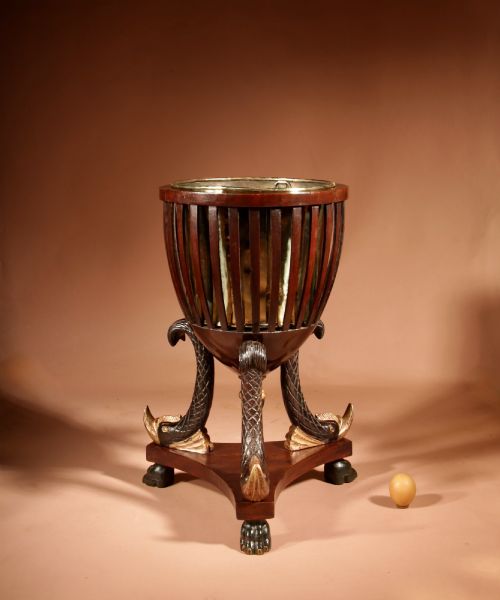
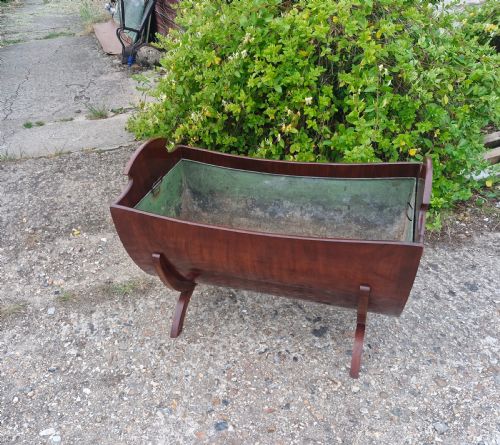
A 19th century mahogany bucket typically takes the form of a coopered vessel designed for practical utility, often functioning as a wine cooler, champagne receptacle, peat bucket or planter. These pieces span periods from the Regency era through to the late 19th century, drawing upon Georgian restraint and Dutch traditional forms.
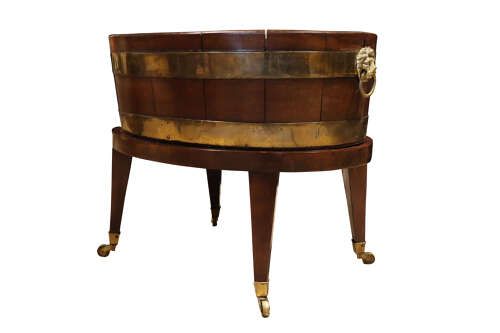
The most frequent iteration on this page is the brass bound mahogany bucket, frequently associated with Dutch workshops or British country houses. Alongside these standard cylindrical forms, buyers encounter specialised variations such as oyster buckets, teestoof warmers, and footed planters on stands.
Origins stretch across British and continental European workshops, encompassing French Empire designs and Dutch country pieces. Whether utilised for holding fuel or chilling bottles, each object reflects the utilitarian roots of domestic storage transformed through decorative timber.
How they were made
Construction relies upon traditional cooperage techniques, where individual vertical staves of solid timber are shaped and bound together tightly with metal bands. Mahogany serves as the primary wood, though secondary timbers such as oak, fruitwood, walnut, and ebonised wood appear in specific variants.
Brass bands and swing handles provide structural reinforcement while offering visual contrast against the dark grain of the timber. Internal linings of zinc or metal frequently protect the wooden staves from moisture when used for ice, wine, or damp plants.
Some nineteenth century households utilised these stately wooden vessels simply to keep oysters chilled on crushed ice.
What varies in quality
Quality rests upon the precision of the cooperage and the richness of the timber grain. Tightly fitted staves and substantial brass work indicate a higher grade of manufacture intended for formal entertaining rather than basic hearthside utility.
The presence of original fittings, such as matching swing handles, secure metal liners, and intact stands, elevates the standing of a piece. Finer examples display harmonious proportions and subtle decorative turnings rather than purely utilitarian assembly.
The 19th Century Mahogany Bucket Glossary
- Coopered
- Constructed from vertical wooden staves fitted together and bound by metal hoops, much like a traditional barrel. This technique provided the essential strength needed for vessels holding liquids or heavy fuel.
- Teestoof
- A traditional Dutch foot warmer or small bucket featuring internal heating compartments, often rendered in fine mahogany. These pieces reflect specific domestic habits of continental households during the period.
- Jardiniere
- An ornamental receptacle designed to hold growing plants or flowers indoors. In mahogany examples, these often feature protective metal liners to prevent water damage to the staves.
- Cellarette
- A dedicated container for storing bottled wine near the dining table, frequently taking a coopered bucket form. They often incorporated brass bands and interior divisions.
- Staves
- The narrow vertical strips of wood shaped with bevelled edges to form the curved sides of a bucket. The precise joining of these pieces determines the structural integrity of the vessel.
19th Century Mahogany Bucket: Frequently Asked Questions
How were these buckets originally used?
These vessels served diverse utilitarian purposes in period households, ranging from chilling wine and champagne with ice to holding peat or coal near the fireplace. Many also functioned as decorative planters or foot warmers.
Over time, their roles shifted from purely domestic service to ornamental display within grand dining rooms and libraries, a transition reflected in their survival today.
Are brass bands always original?
Brass bands frequently endure well, though replacement hoops do occur during historical maintenance or restoration work. Close inspection reveals whether the securing pins and patination match the age of the timber staves.
Original bands typically exhibit signs of age-appropriate oxidation and fit snugly against the contours of the coopered body without awkward gaps.
How do I distinguish British from Dutch pieces?
British examples often display restrained lines aligned with Regency and Georgian furniture traditions, utilising clean mahogany grains and simple brass handles. Dutch pieces frequently incorporate more robust cooperage, distinctive proportions, and occasional use of varied timbers like walnut or oak.
Regional characteristics also appear in specialised forms, such as the characteristically shaped teestoof or butter barrel designs originating from the Netherlands.