


English Mahogany Wine Cooler
An english mahogany wine cooler holds bottles at table height and brings solid timber and brasswork straight from the dining rooms of the eighteenth and nineteenth centuries.
English Mahogany Wine Cooler
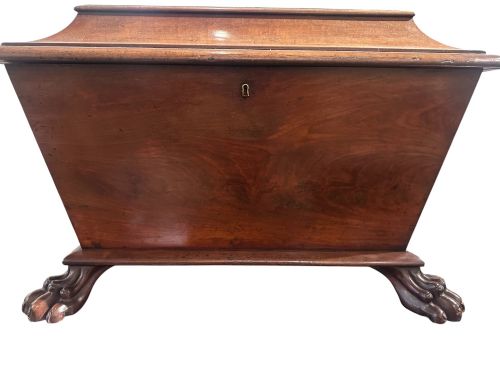
When you search for an english mahogany wine cooler, you are looking at substantial timber containers designed to hold bottles and ice near the dining table. The pieces available here span the Georgian and Regency periods, showing the shift from plain oval buckets to heavy architectural sarcophagi.
You will most commonly meet sarcophagus-shaped examples dating from around eighteen twenty, often raised on short feet or a dedicated stand. These vessels served the dual purpose of chilling wine and showing off rich cabinet timber.
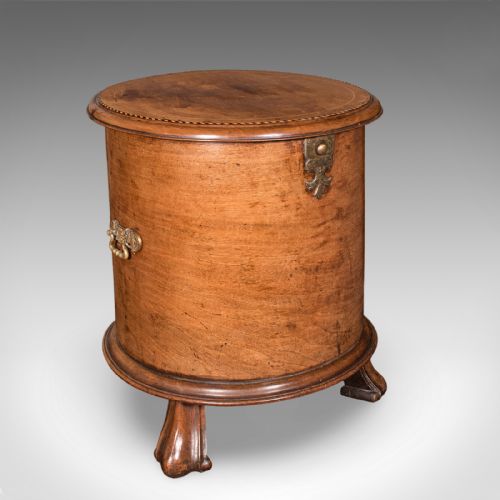
The selection also includes oval brass-bound buckets and fluted stands, reflecting how varied the forms were for holding ice and bottles in domestic spaces.
How they were made
Makers built these pieces primarily from solid timber and veneers, using flame mahogany to create deep, shifting grain patterns across the front panels. Cabinetmakers applied brass binding and cast metal mounts to reinforce the staves and corners of bucket and tub forms.
Internal spaces required waterproof linings to contain melting ice, utilising zinc and other metal inserts to protect the surrounding wood. Stands and plinths were joined separately, supporting the heavy weight of timber, metal, and ice combined.
Listings for this phrase include examples in mahogany, walnut, and box tree, paired with brass, zinc, and cast metal fittings.
What varies in quality
The quality of an english mahogany wine cooler rests on the choice of timber and the crispness of the secondary details like brass bands and carrying handles. Better pieces display carefully selected flame veneer matched across the lid and body, rather than plain stock.
Interior condition matters significantly, particularly whether the original metal or zinc lining survives beneath later alterations. The proportion of the stand and the weight of the timber reveal whether a piece was made for a grand formal dining room or a modest parlour.
The English Mahogany Wine Cooler Glossary
- Cellarette
- A lockable container used to store wine bottles in the dining room before the contents were served. These units often doubled as wine coolers by incorporating internal metal liners for ice.
- Sarcophagus
- A monumental container shape featuring a domed lid and heavy plinth base, popular during the Regency period. This architectural form echoed ancient stone tombs.
- Flame mahogany
- A veneer cut from the fork where a branch joins the main trunk, producing a distinctive flickering flame pattern. Cabinetmakers reserved this timber for the most prominent display surfaces.
- Jardiniere
- A decorative stand or container intended to hold plants or flowers within a room. Some examples share forms with cooler buckets and stands.
- Brass bound
- Constructed with overlapping metal bands secured by small pins to hold wooden staves tightly together. This technique is common on oval bucket forms.
English Mahogany Wine Cooler: Frequently Asked Questions
What is the difference between a cellarette and a wine cooler?
A cellarette primarily functioned as a lockable storage chest for keeping bottles secure from household staff. A wine cooler specifically incorporated a metal lining designed to hold ice around the bottles during a meal.
Over time, the terms became interchangeable in antique listings, as many lidded storage cases were adapted or originally built to serve both functions.
How were these coolers used during dinner?
Servants filled the internal metal or zinc lining with ice brought from estate icehouses, then placed wine bottles directly into the chilled well. The low height allowed the pieces to sit neatly beneath the sideboard or beside the dining table.
Once the meal concluded, the lockable lid kept the remaining stock secure until the next gathering.
How do I tell a Georgian piece from a Regency one?
Georgian coolers tend to feature oval or bucket shapes with brass staves and handles, reflecting a lighter aesthetic associated with the eighteenth century. They often sit on slender integrated or separate wooden stands.
Regency coolers shift toward heavy, classical sarcophagus forms with paw feet, bold gadrooning, and architectural mahogany veneers that mimic ancient stone monuments.
Can I still use an antique wine cooler for ice?
While original zinc or metal liners are present in many surviving examples, modern condensation and temperature changes can stress old timber joints. Most modern buyers prefer to use them for dry storage, magazine display, or as decorative stands.
If you do use ice, check the integrity of the internal lining first to prevent moisture reaching the mahogany carcass.
Where did these pieces stand in a historic house?
They sat on the floor of the dining room, usually positioned close to the sideboard where the butler managed the drinks service. Their substantial weight meant they remained in one room rather than moving about the house.
In some homes, they doubled as general fireside storage when not required for entertaining.