

Wooden Farmhouse Kitchen Chairs
Wooden farmhouse kitchen chairs are robust country seating built from elm, beech, ash and oak for daily use around the hearth.
Wooden Farmhouse Kitchen Chairs
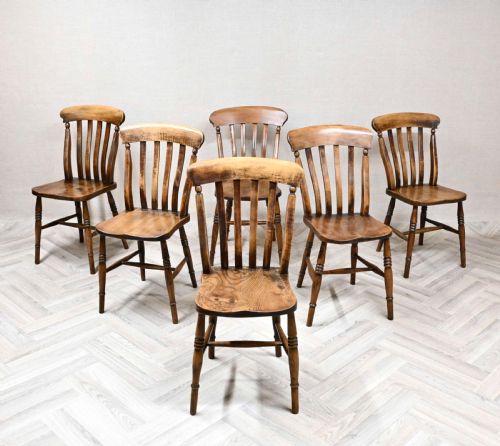
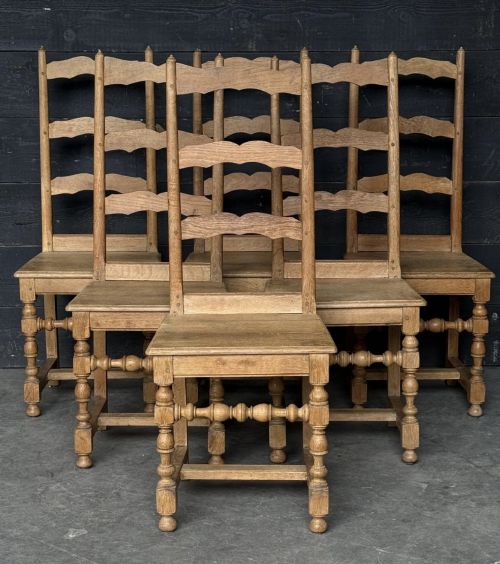
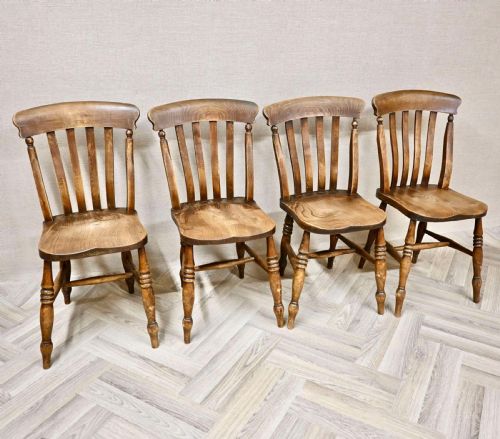
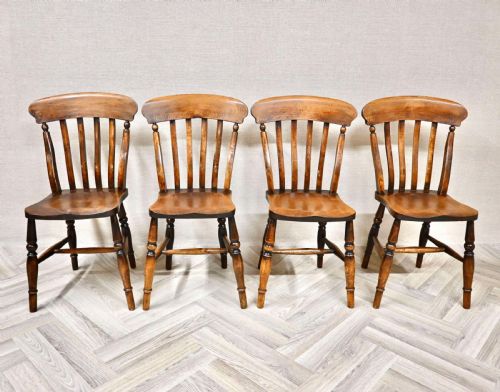
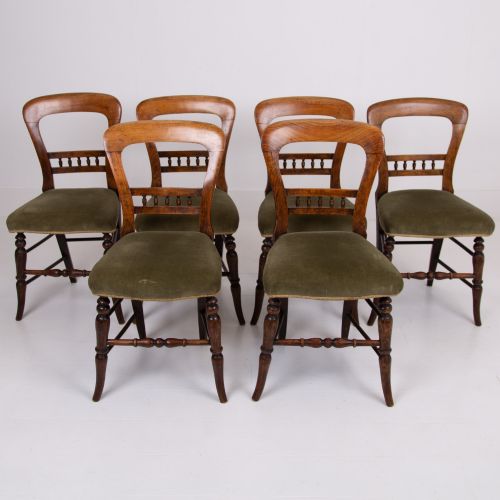
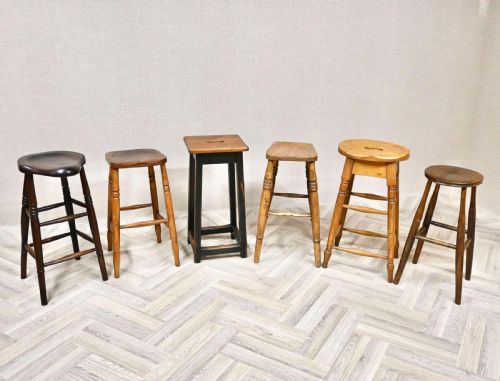
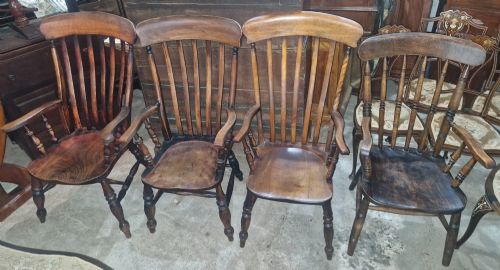
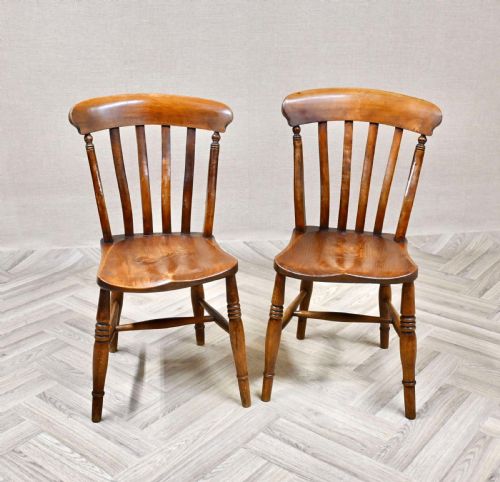
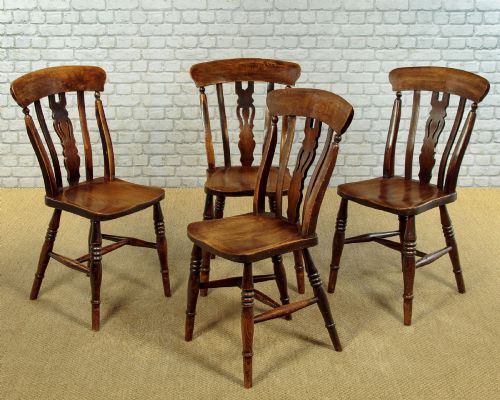
When you search for wooden farmhouse kitchen chairs, you encounter sturdy vernacular seating spanning the Georgian, Victorian and early twentieth-century periods. These include sets of dining chairs, carver armchairs, bar stools and benches shaped for robust utility.
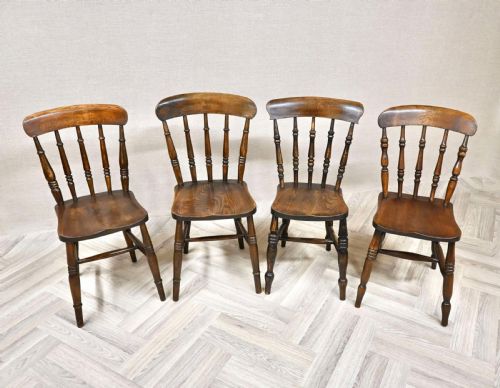
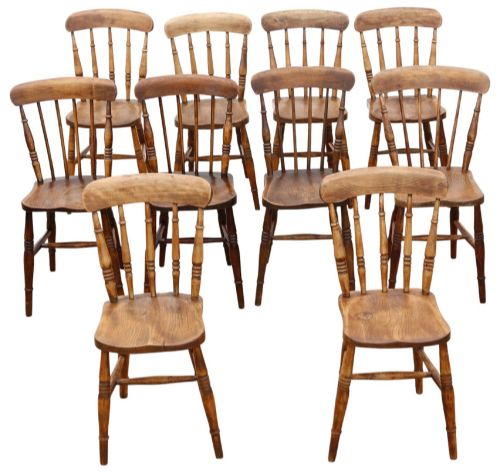
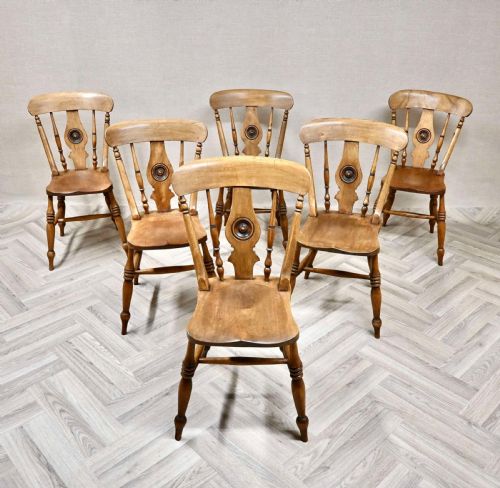
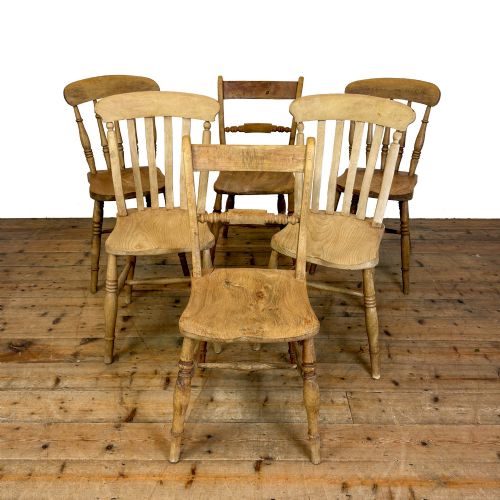
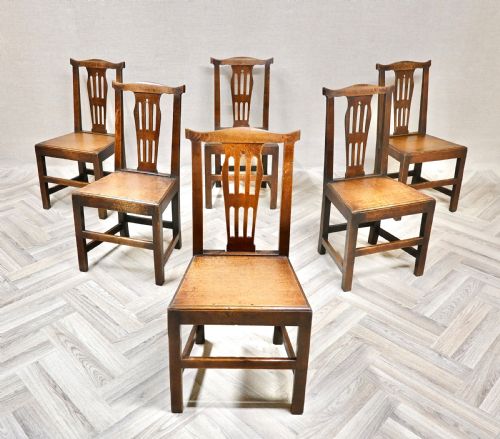
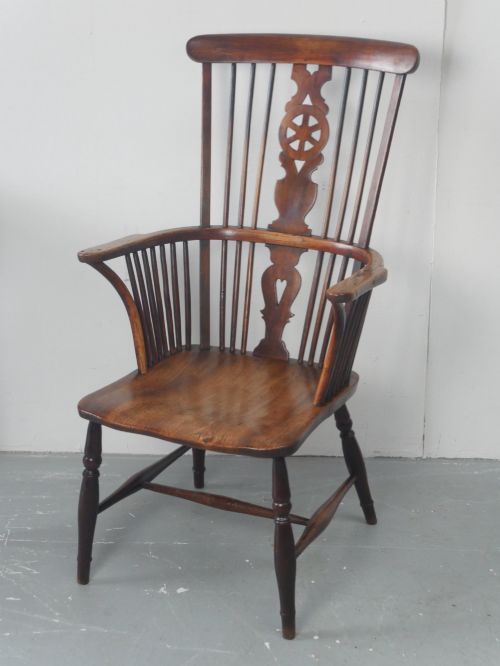
The most common forms on this page are Windsor chairs featuring lath backs, hoop backs, stick backs and comb backs. Sets range from pairs and quartets up to larger groupings of six, eight or ten pieces, often assembled as harlequin sets.
Originating in English country workshops, these pieces draw on regional traditions such as the Thames Valley style. Their diverse backs and turned spindles reflect the practical needs of rural domestic life.
Materials and construction
Maker construction relies on mixing native hardwoods to utilise the specific properties of each timber. Elm provides a tough, splitting-resistant seat saddle, whilst beech and ash supply strong turned spindles, legs and bentwood hoops.
Joinery techniques combine wedged tenons, double stretchers and steam-bent components to withstand heavy daily wear. Seats are typically carved from a single solid block of timber into a comfortable saddled shape.
Wooden Farmhouse Kitchen Chairs Retail Price Guide 2026
Typical asking prices for wooden farmhouse kitchen chairs among the pieces listed under this phrase on Sellingantiques today, from the lower quarter to the upper quarter. They describe what is for sale here now, not the wider market.
Makers occasionally added extra tall backs to armchairs, ensuring the master of the kitchen sat safely out of draughts.
Evaluating quality and character
Quality rests upon timber selection, timber figuring in the seat, and the crispness of the spindle turnings. A well-balanced hoop and generous elm saddle separate superior workshop production from simpler utilitarian seating.
Uniformity across a matched set versus the charming variation within a harlequin collection dictates the character of the grouping. Original surface patination and tight structural joints determine the integrity of the piece.
Worksop best model
The Wooden Farmhouse Kitchen Chairs Glossary
- Windsor
- A chair built with a solid wooden seat into which the legs, back spindles and bow are independently fitted. This design creates a durable, skeletal frame characteristic of country seating.
- Harlequin set
- A collection of chairs closely matched in style, period or material, assembled together rather than originating from a single workshop batch. Such sets offer coordinated variety around a dining table.
- Lath back
- A chair back featuring a flat central vertical wooden splat flanked by turned spindles. This form provides solid lumbar support.
- Double stretcher
- An arrangement of two parallel stretchers connecting the legs beneath the seat for added structural rigidity. They are common on robust kitchen and bar seating.
- Rush seat
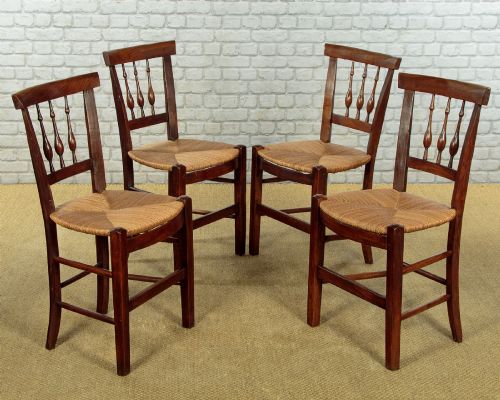
- A seating platform woven from dried rushes over a wooden frame, providing a textured and flexible surface. These are seen on ladderback kitchen chairs.
Wooden Farmhouse Kitchen Chairs: Frequently Asked Questions
What defines a Windsor kitchen chair?
A Windsor chair is characterised by a thick wooden saddle seat that holds the legs and back spindles directly. This construction creates a sturdy, resilient frame suited for heavy domestic work.
Such chairs often feature steam-bent hoops, comb backs or stick backs supported by turned legs and stretchers.
How do I care for antique wooden chairs?
Keep wooden chairs away from direct heat sources and drastic humidity changes to prevent timber shrinkage and joint loosening. Regular dusting and occasional feeding with suitable wax preserve the surface patination.
Avoid harsh chemical cleaners that strip the historic finish and dry out the grain.
What is a harlequin set of chairs?
A harlequin set is a collection of dining chairs that share a similar period, style or material without being an exact factory-matched set. They allow you to seat multiple people around a table with cohesive visual character.
These sets often combine individual finds gathered over time from various country homes.
Which woods were used in these chairs?
Makers utilised native timbers that were readily available around their workshops. Elm was the preferred choice for comfortable, durable seats due to its interlocking grain.
Beech, ash and oak provided the strength needed for turned legs, spindles, stretchers and bentwood backs.