
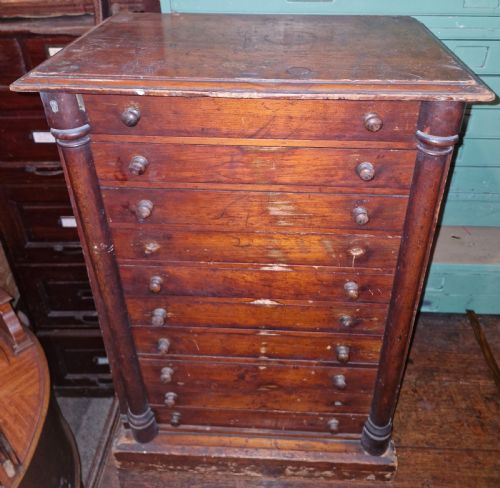


Wooden Entomology Drawers
These wooden entomology drawers are specialised storage chests built to preserve delicate scientific specimens, prized today for their meticulous craftsmanship and versatile utility.
Wooden Entomology Drawers
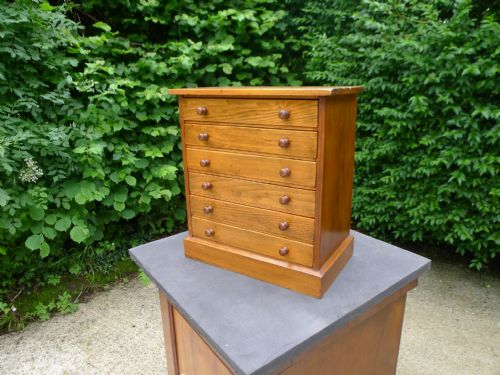
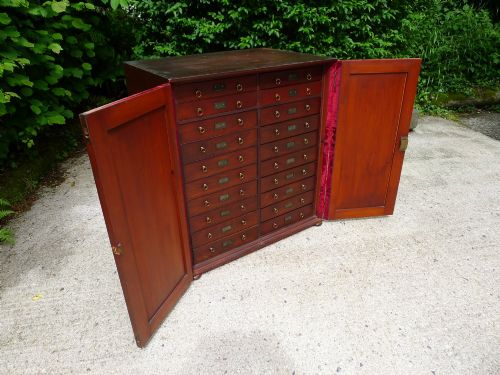
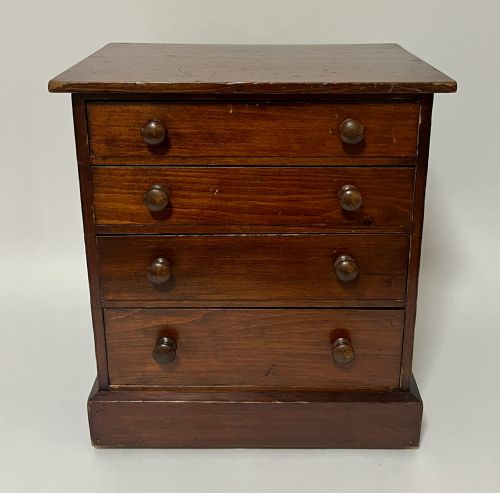
Wooden entomology drawers take the form of collectors cabinets, specimen chests, and multi-drawer cabinets designed to organise and protect natural history collections. When searching for wooden entomology drawers, buyers encounter pieces configured with multiple shallow drawers built to house insects and small artefacts.
The selections span several distinct eras, encompassing Georgian, Victorian, and Edwardian periods alongside pieces dated through the nineteenth and early twentieth centuries. Surviving examples reflect the meticulous storage requirements of past naturalists and collectors.
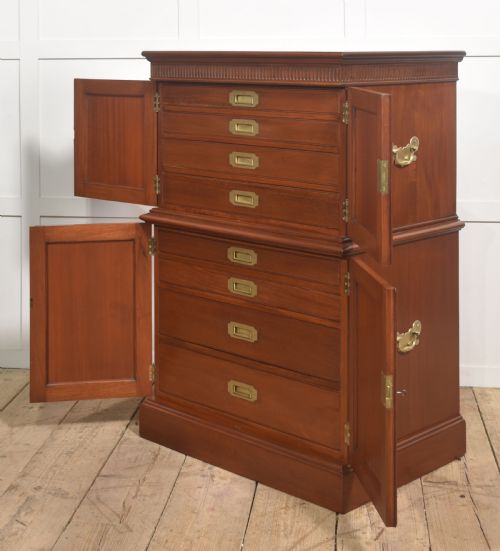
Cabinets on this page typically appear in forms ranging from compact six-drawer specimens to larger architectural arrangements featuring numerous glass-fronted compartments. These pieces function equally well today as specialised storage or as striking focal points in a room.
How they were made
Cabinet makers utilised dense hardwoods such as mahogany and oak alongside domestic softwoods like deal, pine, and satin walnut to construct the outer carcases and internal drawer frames. These timbers were selected for stability and durability, ensuring the contents remained undisturbed by environmental changes.
Interiors frequently incorporated glazed frames and brass fittings, including inset handles and locking mechanisms designed to keep drawers secure. Joinery techniques focused on tight tolerances to prevent dust and pests from reaching the delicate contents housed within.
Current listings feature pieces spanning the Georgian, Victorian, and Edwardian eras, constructed from mahogany, pine, oak, and deal.
What varies in quality
Brady·William John Burchall·Charles William Schofield
The Wooden Entomology Drawers Glossary
- Collectors cabinet
- A piece of furniture fitted with numerous shallow drawers designed for organising small specimens.
- Specimen chest
- An enclosed wooden chest built to house scientific samples, minerals, or insects securely.
- Deal
- A softwood timber, typically pine or fir, commonly utilised for secondary framing and simpler cabinet carcases.
- Satin walnut
- A durable American hardwood featuring a warm tone and fine grain, favored for Victorian and Edwardian cabinet work.
Wooden Entomology Drawers: Frequently Asked Questions
What were wooden entomology drawers used for?
These cabinets served as secure, dust-free housing for scientific collections, particularly butterflies, moths, and other insect specimens gathered by naturalists.
The shallow drawers allowed specimens to be pinned securely beneath glass covers, keeping them organised by species and protected from light damage.
How do I date a collectors cabinet?
Dating relies on observing construction methods, timber choices, and hardware styles associated with specific periods like the Georgian or Victorian eras.
Hand-cut dovetails, secondary wood usage, and original brasses often provide clear indicators of a piece's approximate age and origin.
Are these drawers suitable for modern storage?
The shallow drawer depth makes them exceptionally well-suited for organising jewellery, stationery, small collections, and flat ephemera in a contemporary home.
Their sturdy wooden construction ensures they remain practical functional furniture while adding distinct historic character to an interior.
What woods were commonly used?
Cabinet makers utilised a range of materials, most frequently employing dense hardwoods like mahogany and oak for high-status pieces.
More utilitarian or regional examples were frequently constructed from pine, deal, or satin walnut, depending on the maker's workshop and budget.