
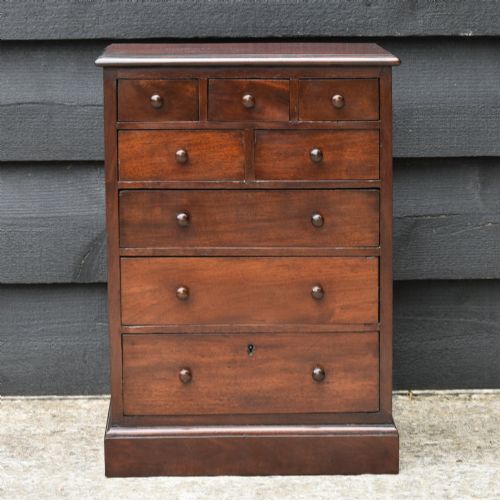


Rich Brown Collector Chest
A rich brown collector chest is a small storage piece in dark timber used to house specimens or precious items.
Rich Brown Collector Chest
When buyers search for a rich brown collector chest, they encounter miniature furniture, specimen cabinets, and apothecary chests dating from the seventeenth century through to the early twentieth century. The selection leans heavily towards nineteenth-century mahogany pieces, alongside Victorian Wellington chests and specialised slide cabinets.
These items take various structural forms, ranging from side cabinets on stands to miniature chests of drawers and multi-tier chemist drawers. Materials shift between rich timbers like mahogany, olive wood, and goncalo alvez, often detailed with brass fittings and glass elements.
The most frequent items met on this page are Victorian mahogany miniature chests and specialist specimen cabinets designed for organised storage. Their compact proportions make them suitable for tabletop display while retaining the joinery of larger furniture.
How they were made
Makers utilised dense hardwoods such as mahogany and oak as the structural carcase, often applying decorative veneers like oyster-cut olive wood to the visible exterior surfaces. Boxwood stringing and brass handles provided contrast and functional operation to the small drawers and doors.
Joinery methods involved precise dovetailing for the drawer boxes and mortise and tenon joints for the main frames to ensure stability in miniature proportions. Surfaces received hand-applied finishes that brought out the deep natural grain of the timber.
Tiny brass locks on these chests whisper secrets of Victorian slide collections.
What varies in quality
The standard of a piece rests on the selection of timber grain and the precision of the cabinetmaker's joinery in miniature scale. Finely figured veneers and well-matched drawer linings separate standard utility items from superior examples.
Original hardware, such as brass drop handles and working locks with keys, elevates the integrity of the piece. The crispness of the exterior mouldings and the smooth travel of individual drawers indicate the level of craftsmanship involved.
The Rich Brown Collector Chest Glossary
- Wellington chest
- A tall, narrow chest of drawers secured by a locking hinged pilaster on one side. This locking mechanism keeps all internal drawers safely closed.
- Oyster veneer
- Timber sections cut transversely from small branches to produce circular or oval patterns. This technique appeared on seventeenth-century pieces.
- Specimen cabinet
- A specialised storage unit containing shallow drawers designed to hold natural history collections or microscope slides. The interiors often retain original partitions.
- Goncalo alvez
- A dense exotic hardwood with distinctive contrasting brown and dark stripes. Cabinetmakers utilised this timber for Regency decorative furniture.
- Apprentice piece
- A miniature item of furniture created to demonstrate a craftsman's skill before gaining guild admission. These objects display full-scale joinery techniques in a smaller format.
Rich Brown Collector Chest: Frequently Asked Questions
What were collector chests originally used for?
These chests stored small, valuable items such as natural history specimens, coins, minerals, and microscope slides. Naturalists and enthusiasts relied on the shallow drawers to keep delicate objects organised and protected.
Over time, smaller versions also served as apprentice pieces or decorative tabletop furniture within refined Victorian interiors.
How do I date a mahogany chest?
Dating relies on examining the construction methods of the drawer boxes, the type of secondary timbers used, and the style of the brass hardware. Hand-cut dovetails and deep, rich patination typically point towards earlier periods.
Comparing the exterior styling, such as Regency or Victorian moulding profiles, helps narrow down the exact decade of manufacture.
Are these chests suitable for daily use?
Most pieces function well for storing small modern items like jewellery, stationery, or collection pieces. The shallow drawers provide practical organisation for desktop or tabletop placement.
Care should be taken not to overload the smaller miniature drawers, as their internal runners are scaled for delicate items rather than heavy loads.
What woods are commonly found?
Mahogany is the predominant timber across nineteenth-century examples, offering a dark and stable surface with a rich reddish-brown tone. Other variants incorporate olive wood with oyster veneers and exotic goncalo alvez.
Secondary woods inside the drawer linings often include oak or pine, depending on the region and workshop origin.