

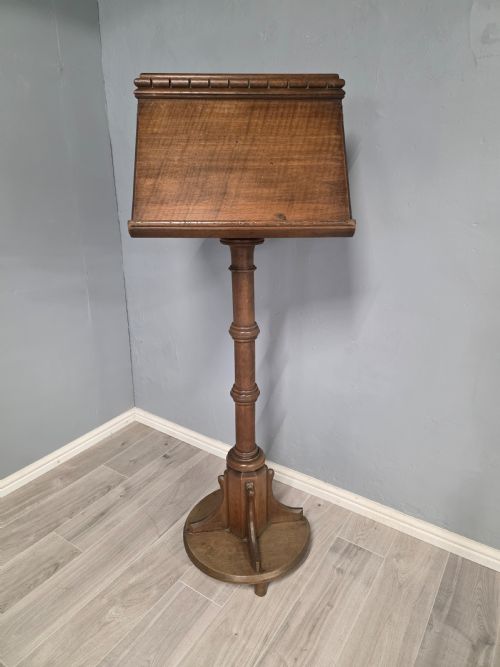


Wooden Dictionary Stand
These wooden dictionary stand pieces offer sturdy architectural support for heavy volumes, bringing period craftsmanship directly into your library or study.
Wooden Dictionary Stand
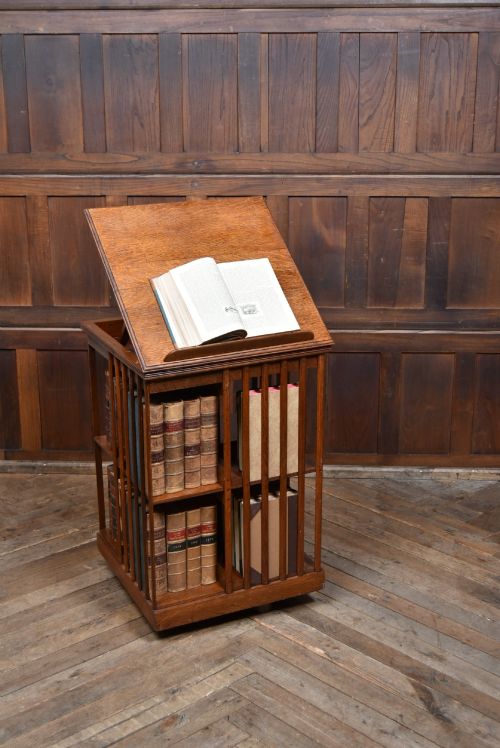
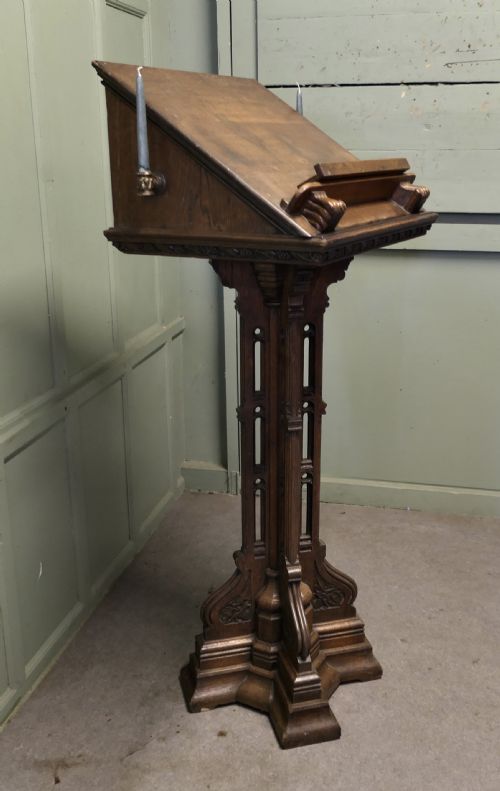
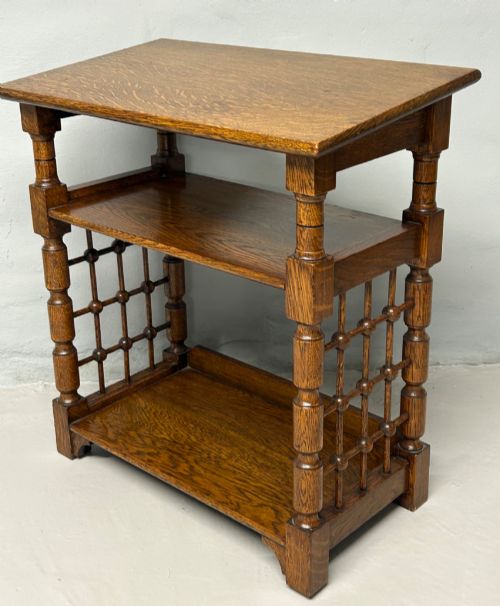
A wooden dictionary stand encompasses a range of reading furniture including revolving bookcases, reading podiums, and church lecterns. When you browse this selection, you encounter forms derived from nineteenth century designs such as Regency music stands and Edwardian book racks.
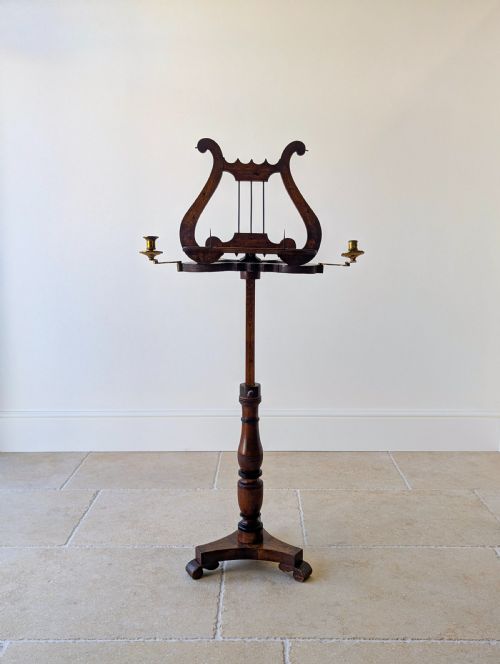
The objects serve primarily to hold large books at an adjustable angle for reading or display. Pieces span from simple oak reading stands to elaborate William IV lyre-form music stands and Victorian Gothic Revival lecterns.
Makers utilised various timber species to construct these reading platforms, incorporating brass adjustments and cast iron bases for stability. You find revolving models alongside tripod bases and stationary pedestals designed for specific domestic or ecclesiastical settings.
How they were made
Joiners and cabinet makers built these pieces using solid timbers like oak, mahogany, and walnut, often accentuating the grain with polished finishes. Secondary woods such as pine appear in structural components, while rarer timbers like gonçalo alves provide distinctive visual character.
Metal components play an essential functional role alongside the woodwork. Brass mechanisms allow for height adjustments and reading angles, while cast iron forms heavy bases for stability on floor-standing lecterns and music stands.
Listings feature oak, mahogany, walnut, and gonçalo alves alongside brass and cast iron hardware.
What varies in quality
The sophistication of the mechanical adjustment mechanism separates standard utilitarian items from finer library pieces. Smooth movement in revolving tiers and robust brass ratchets indicate superior original manufacture.
Carving depth and timber selection distinguish workshop output. Finely figured mahogany and deeply carved oak with precise joints command greater attention than plain utility pieces.
The Wooden Dictionary Stand Glossary
- Lectern
- A tall stand with a sloping top designed to hold a book for reading aloud. These pieces often feature adjustable heights and heavy bases.
- Revolving Bookcase
- A low or table-top case mounted on a pivot so books remain accessible from any angle. Edwardian examples utilise this efficient space-saving design.
- Lyre-Form
- A furniture shape resembling the ancient Greek stringed instrument, frequently utilised for the central pillar of Regency music stands.
- Gonçalo Alves
- A dense tropical hardwood with contrasting dark brown streaks, used in high-status nineteenth century furniture.
- Gothic Revival
- An architectural and decorative style drawing on medieval forms, prominent in Victorian church lecterns and ecclesiastical fittings.
Wooden Dictionary Stand: Frequently Asked Questions
What is a wooden dictionary stand used for?
These stands provide a dedicated, angled surface to support heavy reference books, folios, and bibles during reading. They keep large volumes open at a readable angle while protecting fragile bindings.
Historically, larger examples served in churches, libraries, and studies where heavy texts needed frequent consultation. Domestic versions often sat on tables or rotated for easy access.
How do I identify a Victorian reading stand?
Victorian pieces frequently display darker polished timbers, heavy oak construction, and decorative motifs inspired by Gothic Revival styles. Look for robust joinery and functional brass fittings designed for heavy use.
Many examples from this period incorporate adjustable mechanisms for height and tilt, reflecting the era's focus on utilitarian comfort.
Are these stands adjustable?
Many of the pieces listed feature adjustable mechanisms using brass screws, ratchets, or sliding stems. These allow the user to alter the reading angle and height to suit different books.
Floor-standing lecterns and music stands are particularly likely to include movable parts, whereas small book stands are usually fixed.
What woods were used for these stands?
Maker workshops primarily worked with durable domestic and imported timbers such as oak and mahogany. Walnut and exotic woods like gonçalo alves also appear on finer nineteenth century pieces.
Pine and secondary softwoods frequently form internal structures or hidden backing boards within larger bookcases and lecterns.