







Antique Pedestal Lectern
These antique pedestal lectern pieces bring historic utility and refined joinery into any room, serving as adjustable stands for reading and music.
Antique Pedestal Lectern
An antique pedestal lectern is a functional stand designed to hold books, scores, or papers at a comfortable reading angle atop a central column and base. Examples range from simple music stands to elaborate reading tables and folding book pedestals.
Buyers browsing this selection encounter pieces spanning the Regency, Victorian, and Edwardian eras, alongside specific pieces from the George III and William IV periods. These furnishings reflect the changing domestic and scholarly habits of the nineteenth and early twentieth centuries.
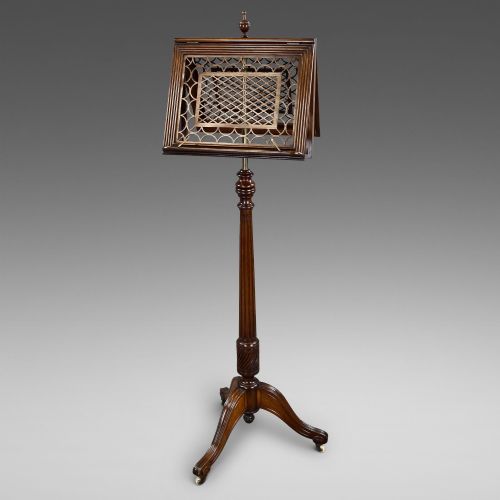
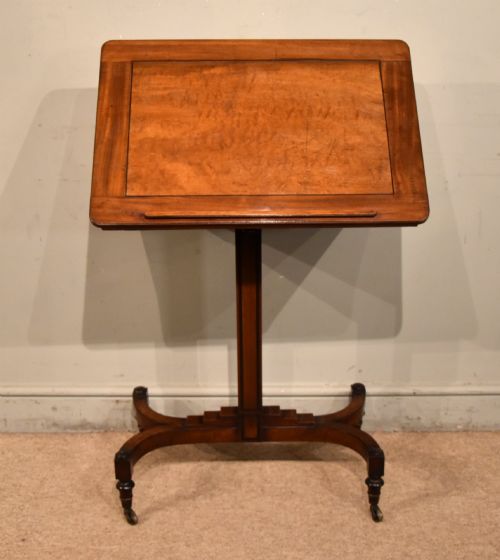
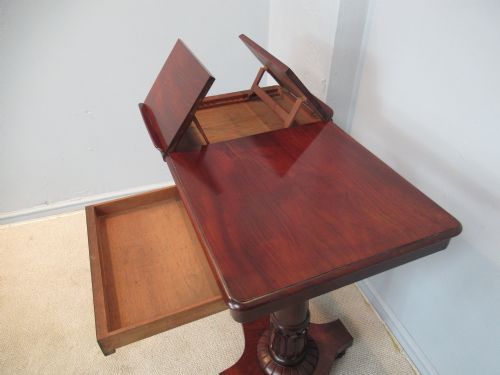
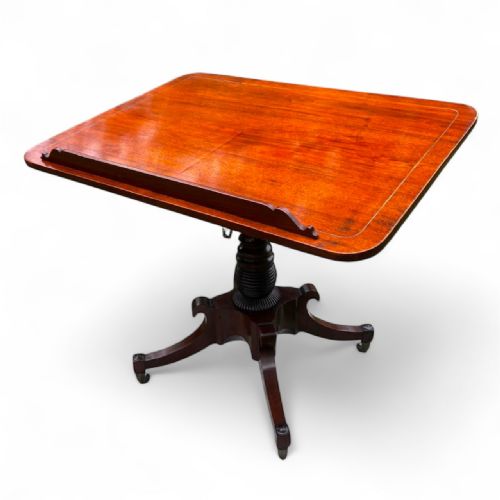
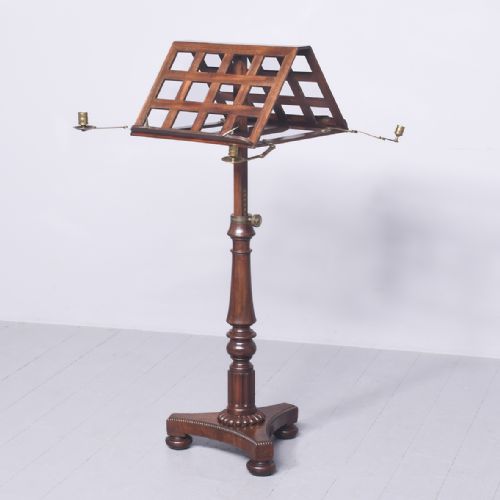
Common forms include duet stands, adjustable reading tables, and occasional tables with book rests. Mahogany is the dominant timber, often accompanied by rosewood, ebonised wood, pine, and teak.
How they were made
Cabinet makers utilised dense hardwoods such as mahogany and rosewood to construct the structural columns and reading surfaces of these stands. Timbers were selected for stability and grain figure, allowing for turned pedestals and fretted details.
Metal components, particularly brass, appear in adjustable mechanisms and inlay work, facilitating movement for reading stands and music desks. Cast iron also provides weight and stability in certain heavy bases.
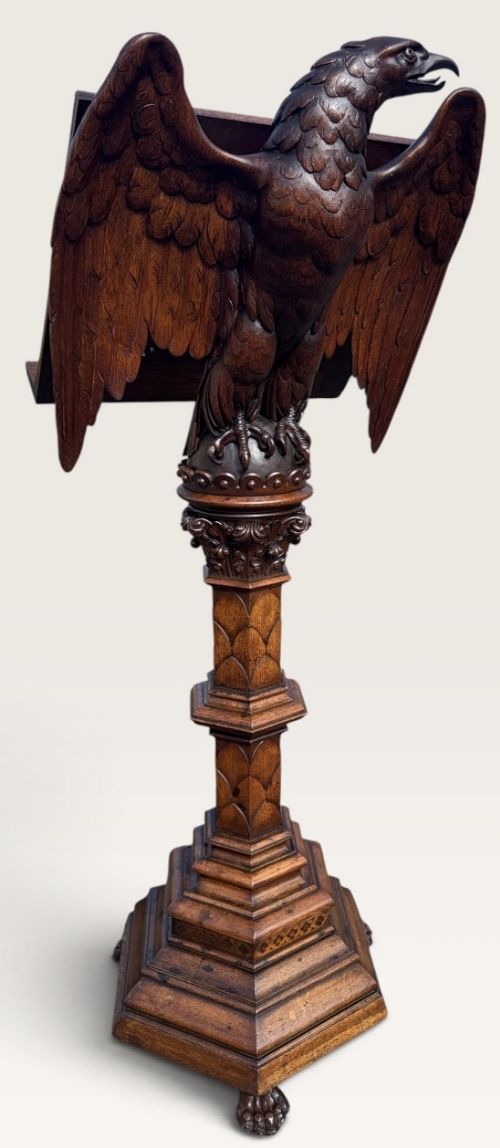
Some nineteenth-century readers apparently required avian assistance, as evidenced by a carved oak eagle holding the book.
What varies in quality
Quality in an antique pedestal lectern rests upon the sophistication of its mechanical adjustments and the crispness of its carved or fretted woodwork. Pieces that transition smoothly between heights and angles demonstrate superior initial workmanship.
The choice of materials and secondary ornamentation, such as brass inlay or detailed carving like an eagle form, marks out finer examples from simpler utilitarian items.
The Antique Pedestal Lectern Glossary
- Duet stand
- A music stand or reading desk wide enough to accommodate two musicians reading from the same open score. These often feature adjustable heights and folding mechanisms.
- Reading table
- A domestic table equipped with an adjustable top or book rest to facilitate reading or writing. They frequently appear with metamorphic properties.
- Ebonised wood
- Timber treated with a finish to imitate the dense, black appearance of ebony. This technique was popular for specific decorative furniture styles.
- Gothic Revival
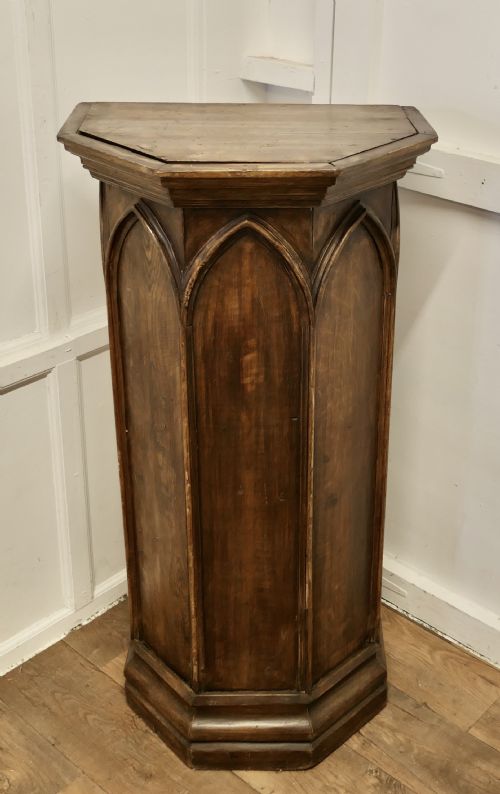
- An architectural and decorative style drawing inspiration from medieval design. Pieces in this manner display pointed arches and ecclesiastical motifs.
Antique Pedestal Lectern: Frequently Asked Questions
What is an antique pedestal lectern used for?
These pieces were originally designed to hold books, sheet music, or documents at a readable angle while the user stood or sat nearby. They served scholars, musicians, and readers in libraries, drawing rooms, and parlours.
Today, they function as practical book display stands or decorative occasional furniture in modern homes.
How do I adjust the height on these stands?
Many examples incorporate mechanical brass ratchets, sliding brass columns, or screw mechanisms built into the wooden pedestal. These allow the reading surface to be raised, lowered, or tilted to the desired angle.
Care should be taken when operating historical mechanisms to avoid placing undue stress on original joints.
What woods were commonly used?
Mahogany is the primary timber found in these stands, valued for its strength and rich grain. Rosewood, teak, pine, and ebonised wood also appear across different periods.
Inlay work in brass and decorative carvings frequently complement the primary timber.