


Victorian Music Rest
These Victorian music rest pieces offer solid timber build and adjustable design, holding books and scores securely on desks or floors.
Victorian Music Rest
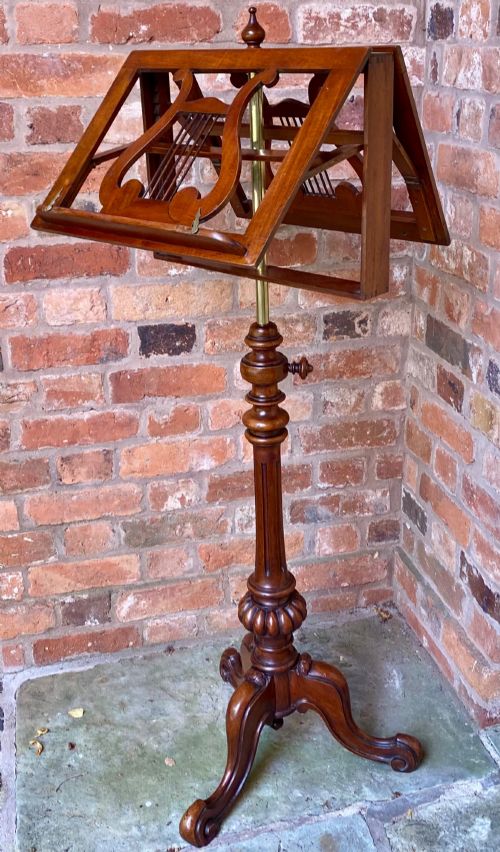
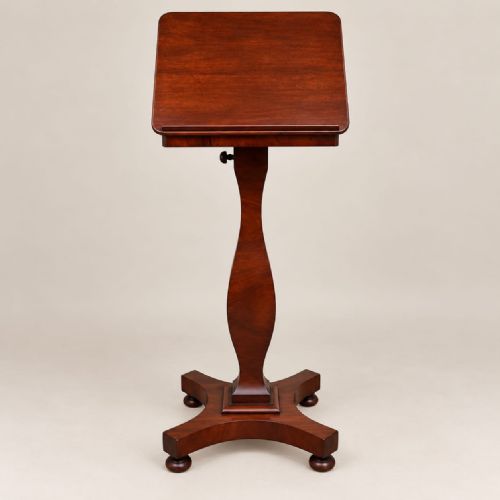
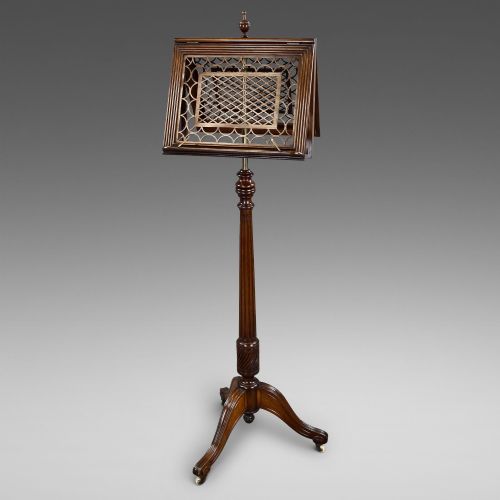
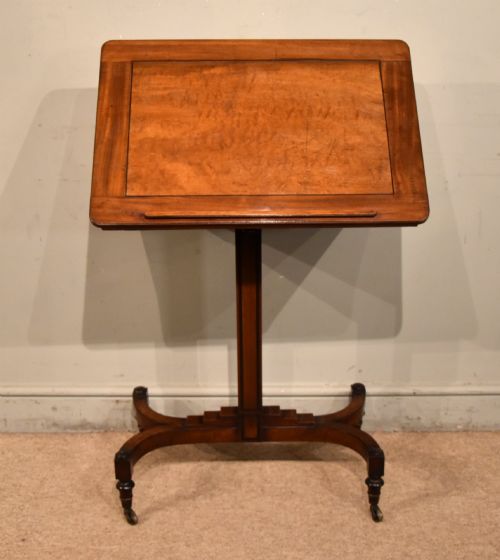
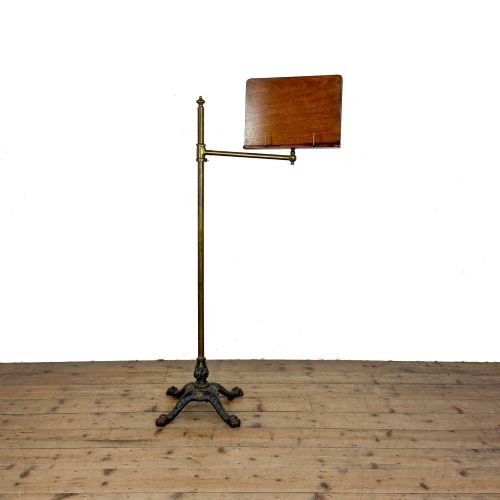
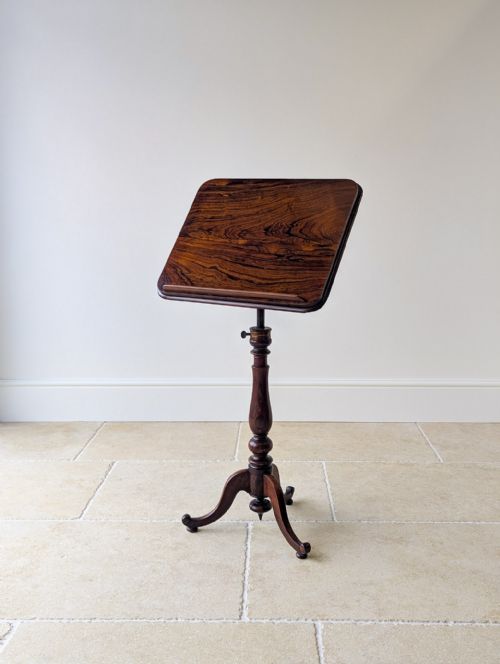
A victorian music rest supports sheet music, folios and books for players and readers alike. The options found here span several distinct forms from the nineteenth century, including floor-standing duet stands, table-top reading stands and combined occasional furniture.
Most examples date to the Victorian era or slightly earlier, using robust timbers and adjustable mechanisms to alter height and angle. Buyers often encounter pieces configured as lecterns, music stands or portfolio racks designed for home use.
Makers of the period produced both simple pivoting ledges and elaborate carved designs incorporating lyre shapes and fretted woodwork. These items served parlours, music rooms and libraries, blending practical utility with decorative cabinet work.
How they were made
Cabinet makers utilised dense hardwoods such as mahogany, walnut, rosewood and oak for the primary structures. Burr walnut veneers and satinwood inlay frequently enriched the surfaces of finer table-top and duet stands.
Heavy brass components enabled the adjustable brackets, screws and hinges that let users alter the pitch of the rest. Carved wood details, notably in Black Forest pieces and eagle lecterns, required skilled hand chiselling to achieve deep relief.
The selection includes styles from the Regency period, William IV era, Gothic Revival and Black Forest carving.
What varies in quality
The refinement of the adjustment mechanism distinguishes standard production from superior examples. Smooth movement in the brass screws and reliable locking action show greater care in manufacture.
Timber selection and decorative technique also set pieces apart. Figured veneers, intricate fretted carving and inlaid satinwood details indicate workshop output intended for wealthy patrons.
The Victorian Music Rest Glossary
- Duet stand
- A music stand designed to hold scores large enough for two musicians to read simultaneously. These often feature wider double desks or adjustable twin ledges.
- Lectern
- A slanted reading desk intended to hold books or papers at a comfortable angle for a standing speaker or reader. Many nineteenth century examples feature pivoting mechanisms.
- Burr walnut
- Timber taken from the wart or growth on a walnut tree, yielding highly patterned wood grain. Cabinet makers used veneers of this material on prominent surfaces.
- Fretted
- Woodwork pierced or cut through with decorative patterns using a fretsaw. This technique added lightness and visual detail to music stand panels.
Victorian Music Rest: Frequently Asked Questions
What is a music rest?
A music rest is a slanted support designed to hold sheet music or books at a readable angle. They appear as table-top stands or floor-standing units.
Victorian examples often include adjustable stems and pivoting desks so the user can alter the height and tilt to suit their posture.
How do you adjust the height?
Adjustment typically relies on a sliding wooden stem secured by a brass thumbscrew or side lever. Turning the screw loosens the inner rod.
Once set to the desired position, tightening the screw locks the desk firmly in place.
Where were they used?
These pieces found places in Victorian drawing rooms, parlours, music rooms and libraries. They held sheet music for piano players and sacred texts for readers.
Floor-standing lecterns and table rests also served to display heavy books and portfolios.