

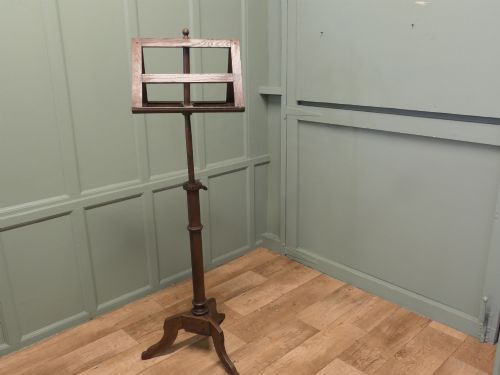
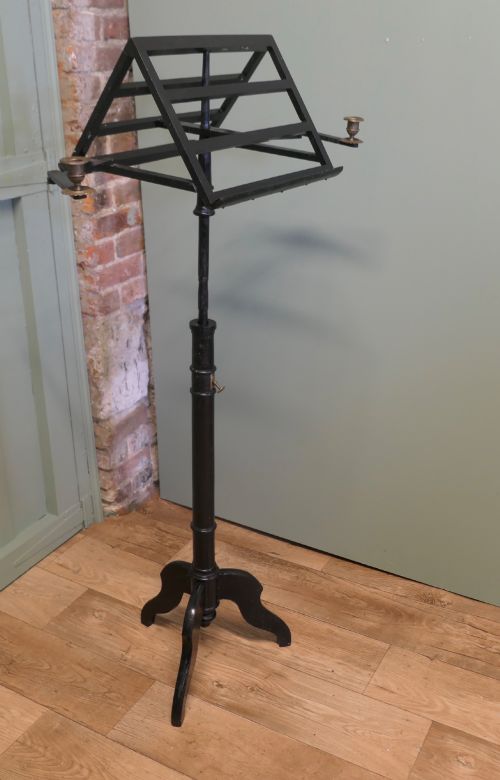
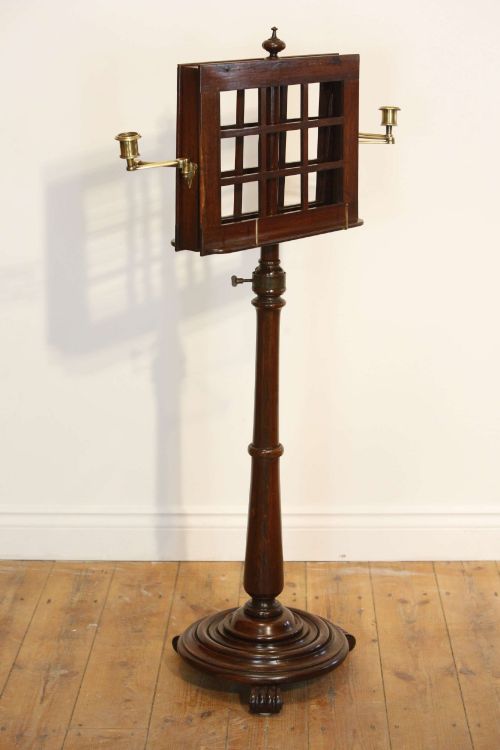
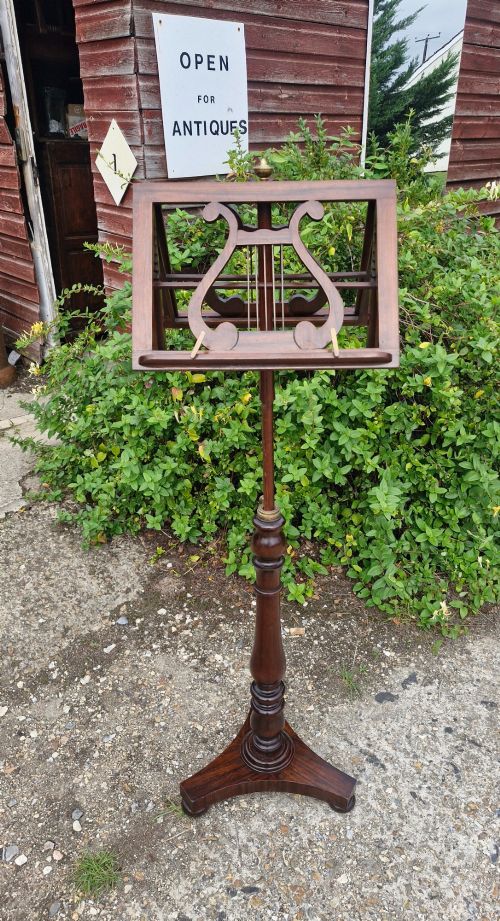



Victorian Adjustable Music Stand
A victorian adjustable music stand brings mechanical ingenuity and rich timber to the parlour, offering a steady rest for scores or books.
Victorian Adjustable Music Stand
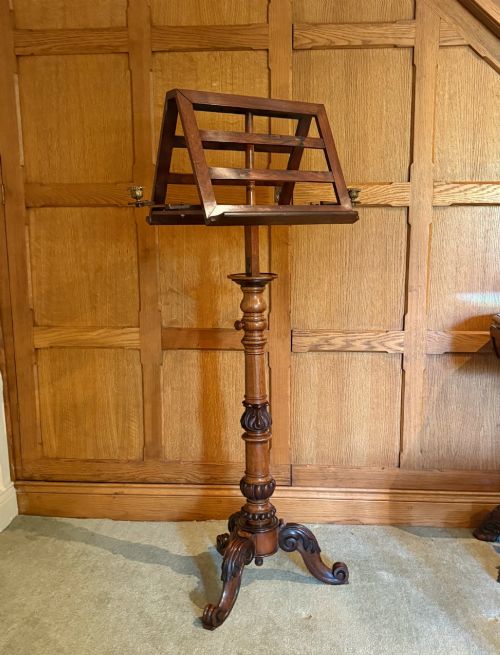
A victorian adjustable music stand combines height and angle regulation with traditional tripod or pedestal forms, designed for practical use in the home. These pieces appear in forms ranging from dedicated reading stands and lecterns to multifaceted tables equipped with folio supports.
The materials span mahogany, rosewood, walnut and burr walnut, alongside occasional uses of oak and ebonised timber. Cabinetmakers built these pieces during the nineteenth century, drawing on Regency, William IV and Victorian design idioms.
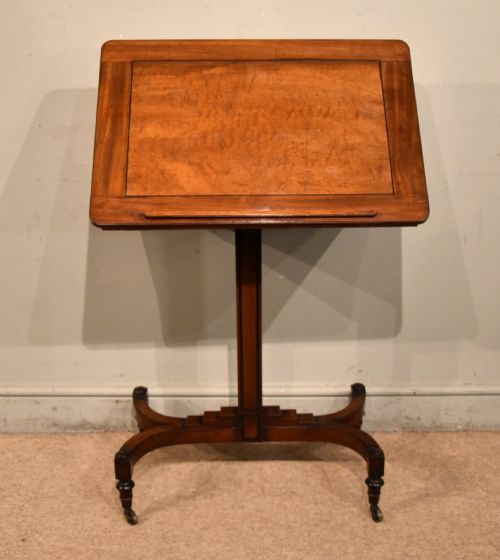
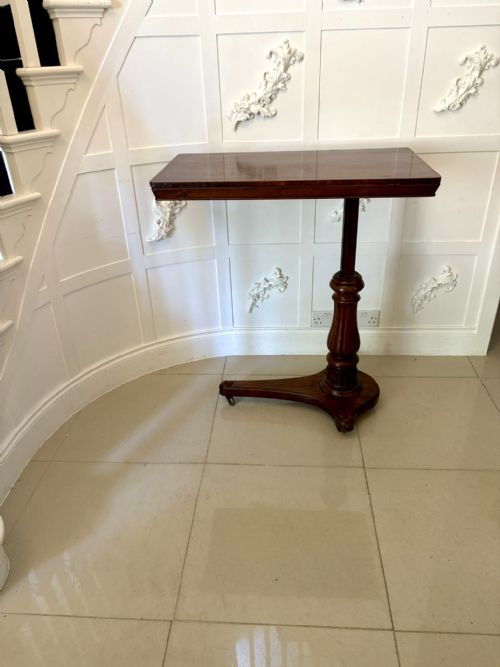
Makers adapted the mechanical fittings to suit both solo performers requiring a single desk and musicians sharing a duet score. Such items doubled as occasional furniture, serving as reading tables or writing surfaces when not holding sheet music.
How they were made
Cabinetmakers utilised dense hardwoods like mahogany, rosewood and walnut for the structural columns, reading desks and tripod bases. Satinwood inlay and burr walnut veneers added decorative contrast to the surfaces of finer examples.
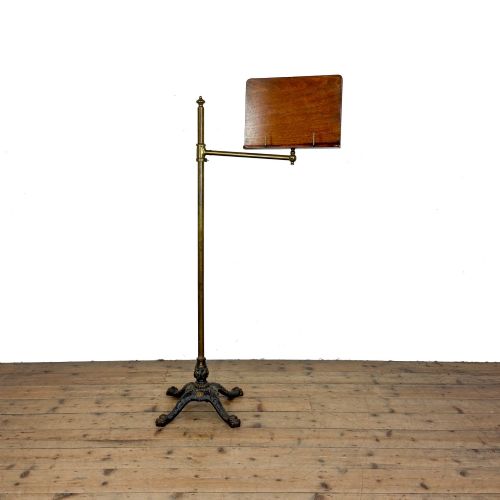
Makers integrated brass ratchets, screws and sliding pillar mechanisms to allow the height and angle of the desk to shift smoothly. These metal fittings were engineered to lock firmly into place once adjusted by the user.
Victorian Adjustable Music Stand Retail Price Guide 2026
Typical asking prices for victorian adjustable music stand among the pieces listed under this phrase on Sellingantiques today, from the lower quarter to the upper quarter. They describe what is for sale here now, not the wider market.
Materials recorded across the selection include brass, mahogany, rosewood, walnut, burr walnut, oak and satinwood inlay.
What varies in quality
The refinement of the adjustment mechanism dictates much of the standing of a piece, separating basic turned pillars from complex ratcheted assemblies with fluid movement. Heavier brass hardware and robust locking screws indicate higher standards of manufacture.
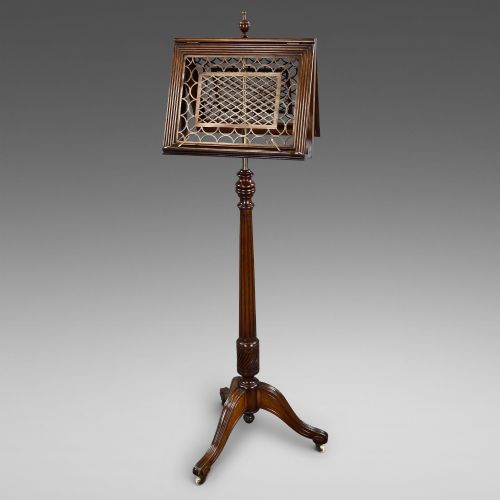
Timber selection and decorative treatment also divide the range, from plain mahogany boards to figured burr walnut veneers paired with intricate satinwood inlay. The integrity of the tripod base and the sharpness of carved details, such as lyre forms or reeded columns, complete the distinction.
The Victorian Adjustable Music Stand Glossary
- Duet stand
- A music stand wide enough to accommodate two musicians reading shared or separate scores simultaneously. These desks often feature dual folding ledges.
- Lectern
- A tall reading stand designed to hold a heavy book or manuscript at a comfortable angle for a standing reader. They frequently share the adjustable pillar mechanisms found on music stands.
- Folio stand
- A piece of furniture incorporating a vertical or sloped rack to hold large portfolios of paper, prints or sheet music. They appear integrated into writing tables and occasional furniture.
- Gonçalo Alves
- A dense, exotic timber displaying rich contrast and figuring, utilised by nineteenth-century cabinetmakers for distinctive occasional furniture. It provides both structural strength and decorative warmth.
- Tripod base
- A three-legged support structure commonly fitted to music stands and reading tables to ensure stability on uneven nineteenth-century flooring. The legs often terminate in scroll or pad feet.
Victorian Adjustable Music Stand: Frequently Asked Questions
How do I adjust the height?
Most stands utilise a sliding central wooden or brass pillar secured by a side thumbscrew or collar. Loosening this fitting allows the desk to slide vertically before being locked at the desired level.
Heavier reading stands may employ internal counterweights or rack-and-pinion mechanisms operated by a key or handle. Care should be taken to support the weight of the desk while releasing the locking mechanism.
Can I use it as a book stand?
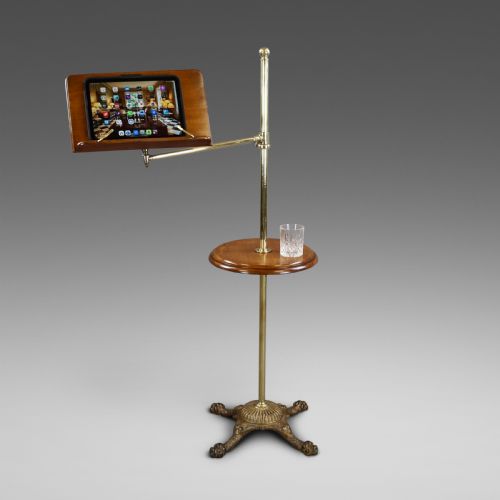
These pieces function readily as reading stands for books, tablets or folios in a study or living room. The adjustable angle prevents strain by positioning the text toward the reader.
Original brass page-retainers, where present, hold open the leaves of a heavy volume. The sturdy tripod bases ensure stability even when supporting substantial nineteenth-century tomes.
What is a lyre-form music stand?
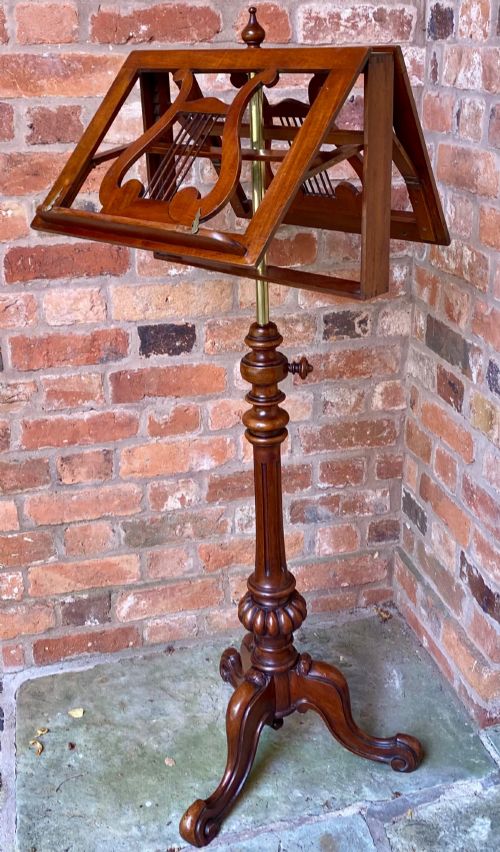
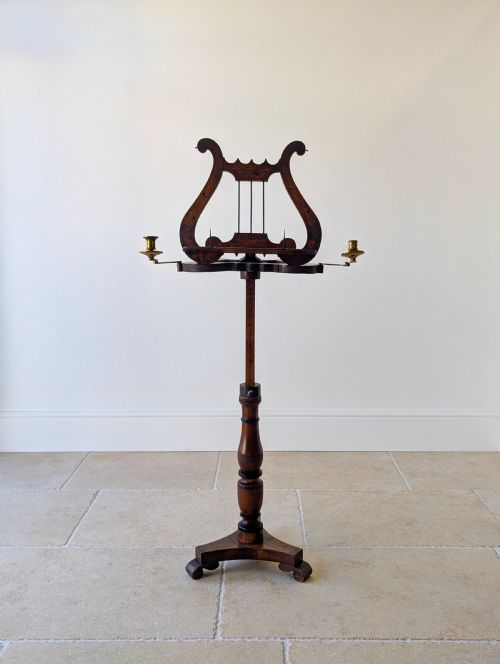
A lyre-form stand incorporates the stylized outline of a classical lyre into the central support or the desk fretwork. This decorative motif gained popularity during the Regency and William IV periods.
Cabinetmakers carved or pierced the timber to mirror the curved strings and frame of the musical instrument. This design detail adds visual lightness to a heavy hardwood pedestal.
How do I distinguish William IV from Victorian stands?
William IV pieces, produced between roughly eighteen-thirty and eighteen-thirty-seven, often display bold carved scrollwork, robust architectural pedestals and dark rosewood or mahogany timbers. They favour classical proportions and substantial brass fittings.
Victorian stands span a broader stylistic range from gothic revival to rococo revival, frequently introducing burr walnut veneers, satinwood inlay and ebonised finishes. The latter half of the century saw increasingly complex adjustable mechanisms.