
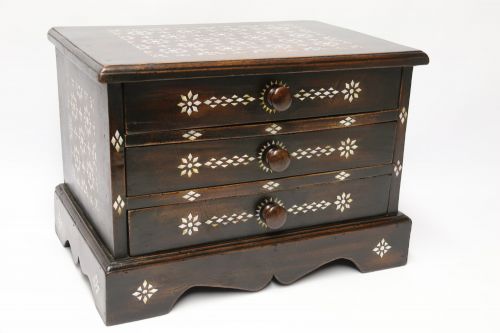
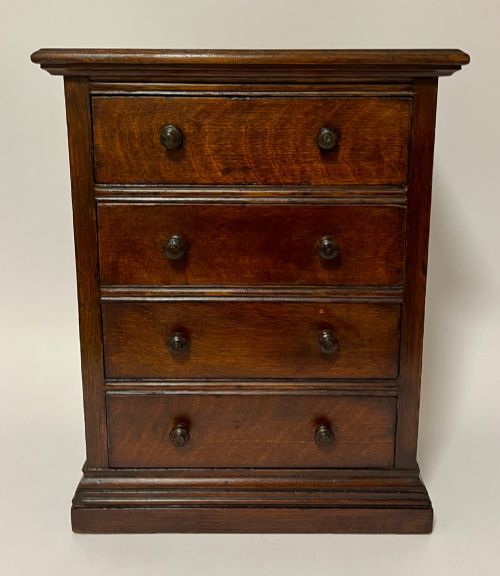
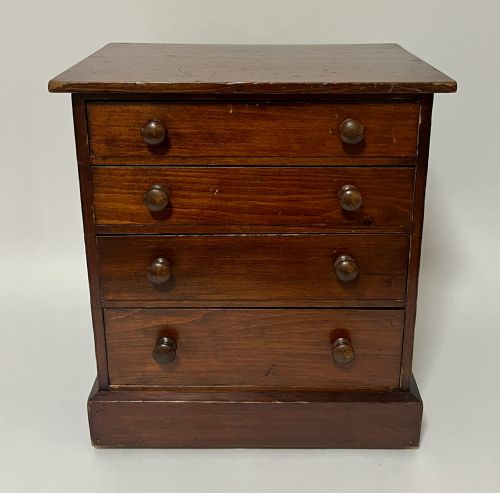
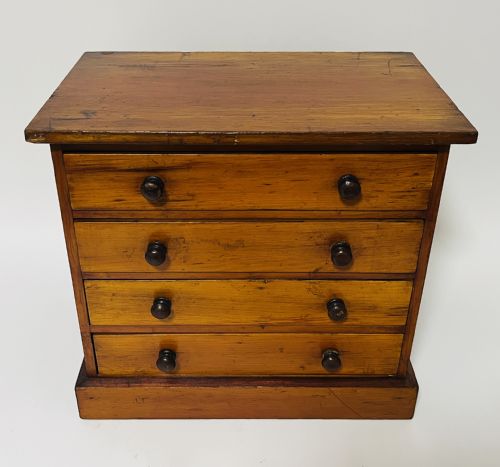

Wooden Desktop Cabinet Drawers
These wooden desktop cabinet drawers offer compact storage for small collections, bringing period craftsmanship directly to your work surface.
Wooden Desktop Cabinet Drawers
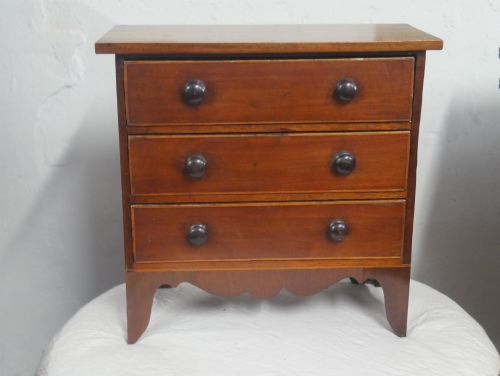
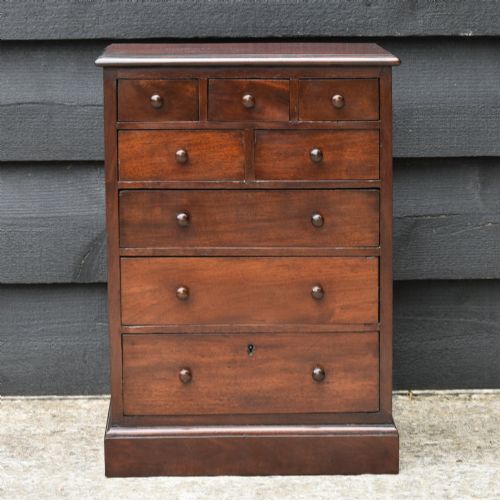
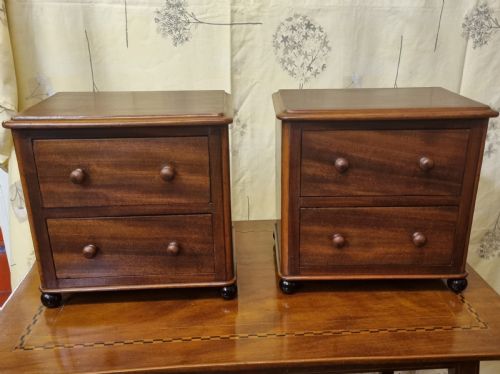
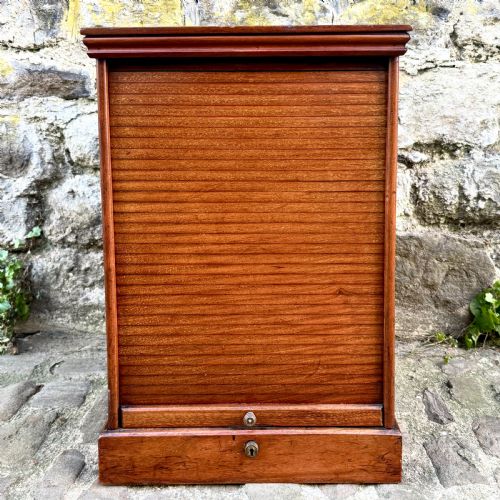
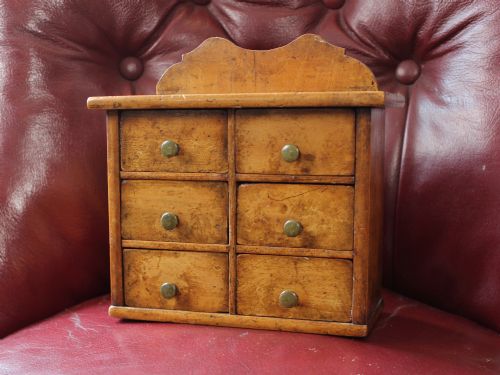
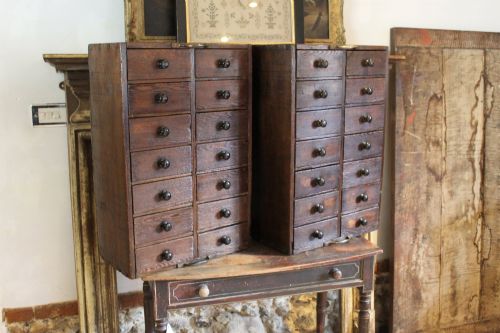
Wooden desktop cabinet drawers encompass miniature chests, specimen cases, and tabletop storage units designed for papers, spices, cigars, or small valuables. Buyers seeking these pieces encounter an array of formats ranging from Victorian apprentice chests to Edwardian smoking cabinets and Regency collector cases.
The objects derive from various historical eras, with nineteenth-century and Victorian examples appearing frequently alongside Georgian, Regency, and Edwardian specimens. These pieces function equally well on modern desks or sideboards for organising letters, stationery, and curiosities.
Materials and Construction
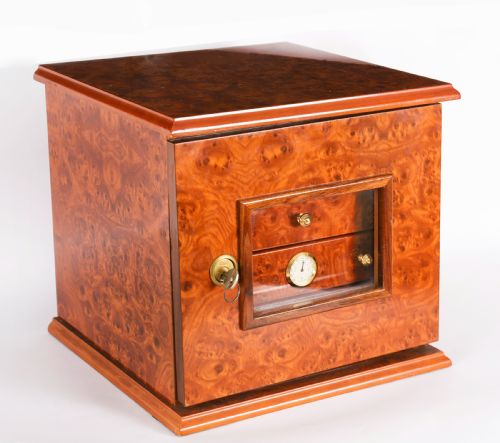
Cabinet makers utilised dense hardwoods such as mahogany, walnut, oak, and rosewood, often pairing them with secondary softwoods like deal and pine. Many examples incorporate burr veneers, fruitwood, palmwood, or hardwood inlay to create decorative exterior surfaces on compact bodies.
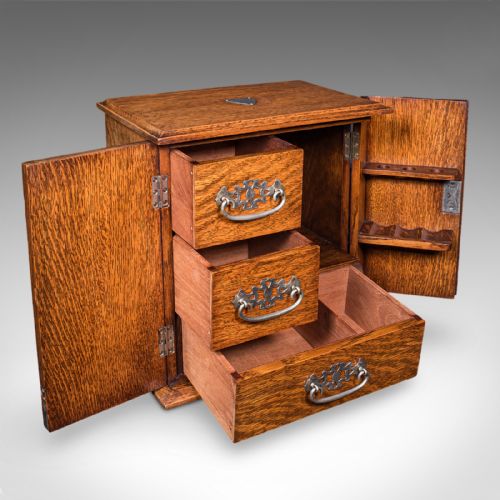
Hardware details typically involve brass drop handles, locks with keys, and glass panels for display cases. Joinery methods reflect traditional cabinet making, resulting in sturdy structures built to house specimens, jewellery, or documents over centuries.
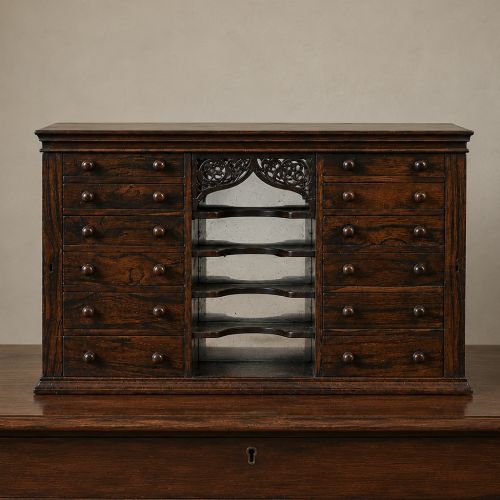
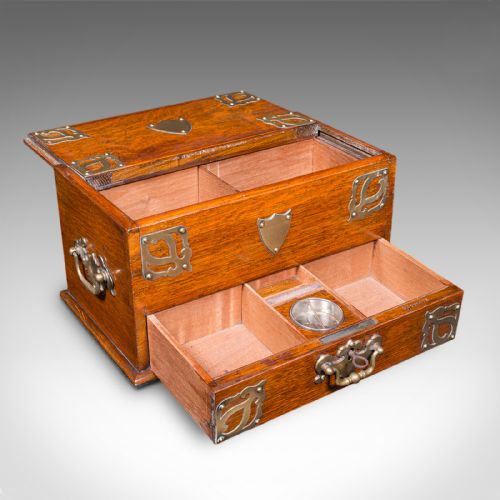
Several Victorian doctor's smoking cabinets survive complete with their original compartments for pipes, tobacco, and cigars.
Judging Quality
Quality rests upon the selection of timbers, such as figured walnut, burr elm, or richly patinated mahogany, and the precision of inlaid details. Superior cabinets display harmonious proportions, tight joinery, and well-fitted drawers that operate smoothly within their frames.
The refinement of internal fittings, including velvet linings, mirror backs, or specialised dividers for cigars and specimens, distinguishes finer pieces. Original brass handles, functional locks with keys, and untouched patination further elevate the standing of a desktop cabinet.
The Wooden Desktop Cabinet Drawers Glossary
- Apprentice piece
- A small-scale item created by a trainee craftsman to demonstrate mastery of joinery and furniture making before admission to a guild.
- Specimen cabinet
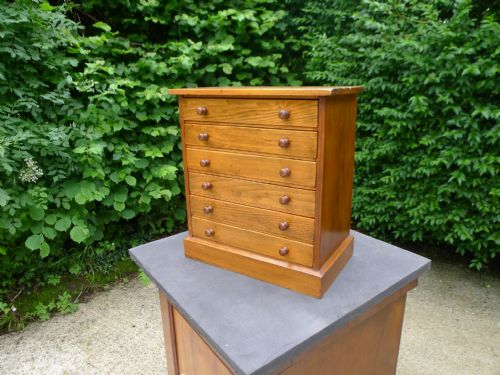
- A small storage unit fitted with multiple shallow drawers designed to organise natural history collections, coins, or small artefacts.
- Wellington chest
- A tall, narrow chest of drawers secured by a hinged locking stile on one vertical edge that fastens with a key.
- Humidor
- A specialised storage box or cabinet designed to maintain humidity, frequently utilised for cigars and lined with aromatic woods.
- Patina
- The surface sheen and depth of colour developed by wood through age, handling, and polishing over many decades.
Wooden Desktop Cabinet Drawers: Frequently Asked Questions
What were wooden desktop cabinet drawers originally used for?
These cabinets served diverse domestic and professional purposes, from storing documents and medical supplies to housing cigars, jewellery, and natural history specimens.
Owners kept them on tables and desks for convenient access to small items requiring secure or orderly containment.
How do I distinguish an apprentice chest from a regular chest?
Apprentice chests are built to miniature proportions while exhibiting the exact construction methods, dovetailing, and decorative veneers found on full-sized furniture.
They were made as demonstration pieces rather than for dolls' houses or children's bedrooms.
What timbers should I look for in these cabinets?
Mahogany, walnut, and oak appear most frequently, often enhanced by burr veneers, satinwood stringing, or exotic hardwoods like palmwood and rosewood.
Finer versions utilise figured grains that catch the light across small drawer fronts.
Where should I place a desktop cabinet in my home?
These compact units sit comfortably on top of writing desks, sideboards, chests of drawers, or bookshelves where their small footprint does not crowd the room.
They provide practical storage for modern stationery while adding period character to a workspace.