


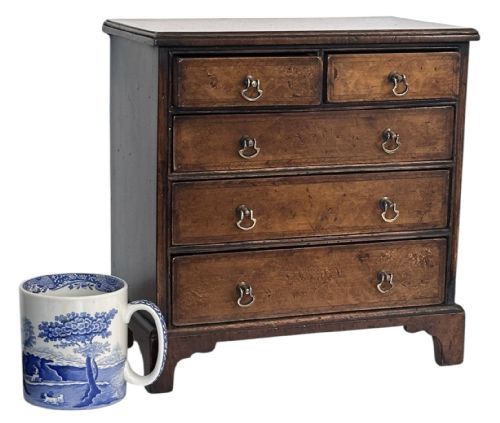


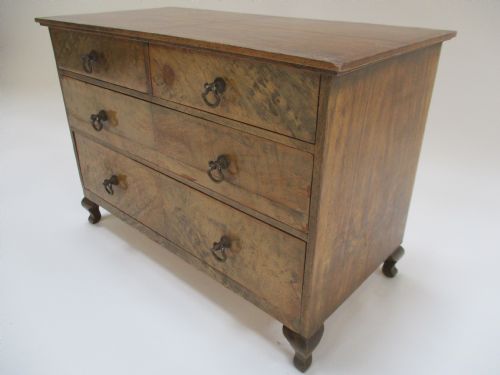
Walnut Apprentice Chest Drawers
Walnut apprentice chest drawers are miniature furniture pieces crafted to demonstrate woodworking skill, highly prized by collectors for their intricate domestic scale.
Walnut Apprentice Chest Drawers
When you search for walnut apprentice chest drawers, you encounter small-scale chests of drawers and miniature furniture originating from periods spanning the seventeenth century through to the early twentieth century.
The pieces appearing on this page range from early Georgian and Queen Anne style examples to Victorian burr walnut specimens and French models, reflecting diverse regional cabinet-making traditions.
Most items you meet here take the form of compact miniature chests or specimen cabinets, constructed by journeymen or master craftsmen to prove their proficiency.
How they were made
Makers utilised solid walnut and decorative wood veneer, often selecting burr walnut to create striking figured grain patterns across the drawer fronts and top surfaces.
Secondary timbers such as oak and fruitwood support the internal carcase construction, while small brass handles and occasionally bone details provide functional and decorative contrast.
Walnut Apprentice Chest Drawers Retail Price Guide 2026
Typical asking prices for walnut apprentice chest drawers among the pieces listed under this phrase on Sellingantiques today, from the lower quarter to the upper quarter. They describe what is for sale here now, not the wider market.
Some miniature drawers slide shut with such precision that the displaced air quietly pushes the adjacent drawer outward.
What varies in quality
The standard of these small chests depends heavily on the precision of the joinery and the choice of veneer, where highly figured burr walnut commands greater attention.
Proportion and scale distinguish finer early pieces from later variants, as does the subtlety of the mouldings and the original state of the brass hardware.
The Walnut Apprentice Chest Drawers Glossary
- Apprentice piece
- A small-scale item made by a craftsman to demonstrate skill to a guild or master. These objects replicate full-size furniture with exact miniature proportions.
- Burr walnut
- A prized timber harvested from walnut tree growths, yielding intricate, swirling grain patterns. Cabinet-makers used thin veneers of this wood on primary display surfaces.
- Miniature furniture
- Small-scale domestic furniture produced either as cabinet-makers' display samples or as high-end children's furnishings. They follow the exact stylistic conventions of full-sized pieces.
- Veneer
- A thin slice of decorative wood adhered to a secondary timber carcase. This technique allowed makers to display rich grain patterns without using solid costly hardwoods.
Walnut Apprentice Chest Drawers: Frequently Asked Questions
What is an apprentice chest?
An apprentice chest is a small-scale piece of furniture created by a woodworker to demonstrate mastery of construction techniques. These items mirrored standard domestic forms in miniature.
Craftsmen produced them as portfolio pieces or showroom samples to secure commissions from prospective clients.
How old are these miniature chests?
The examples on this page span several centuries, with pieces originating from the seventeenth, eighteenth, nineteenth, and early twentieth centuries. Victorian and Georgian periods account for many of the surviving items.
Stylistic details and construction woods help indicate the specific era in which a piece was made.
Were these made for children?
While some small chests served as dolls' furniture or children's toys, most authentic apprentice pieces were built as professional trade samples. Their refined joinery and expensive veneers point toward adult craftsmanship.
Cabinet-makers used them to display their technical ability to buyers in a workshop setting.
Where should I display one?
Their compact scale allows these chests to sit comfortably on side tables, desks, or within dedicated cabinet displays. Collectors often place them where lighting highlights the figured walnut grain.
Keeping them away from direct heat sources protects the historic wood and delicate veneers.