
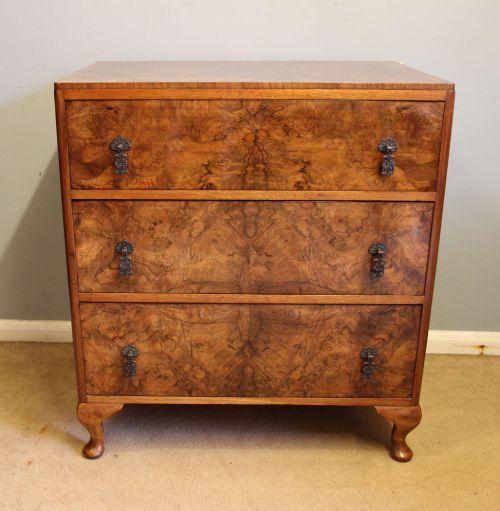

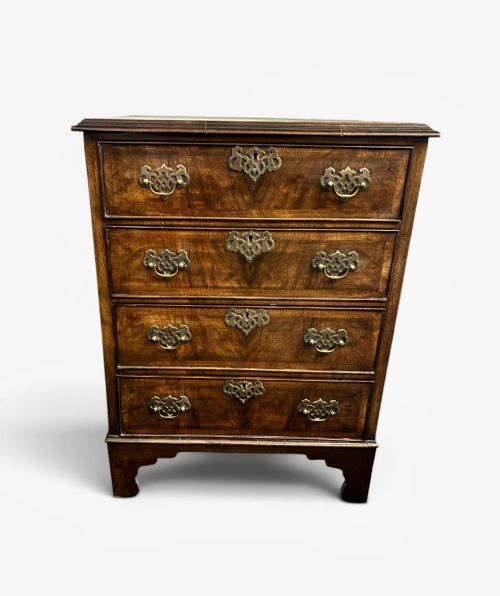
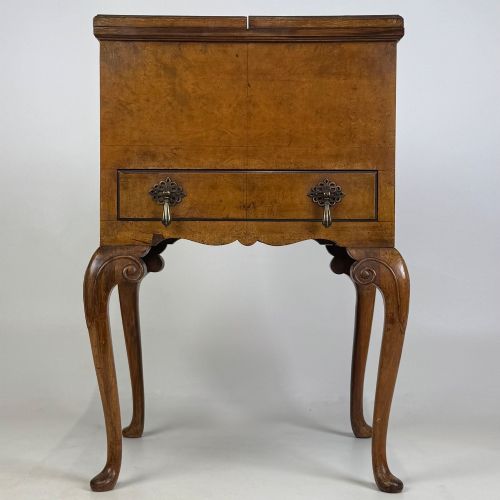
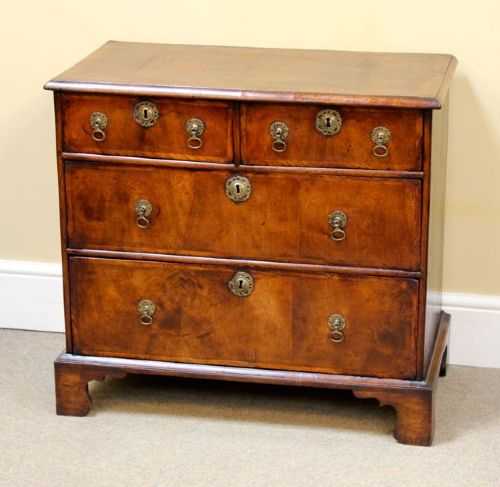
Small Walnut Storage Chest
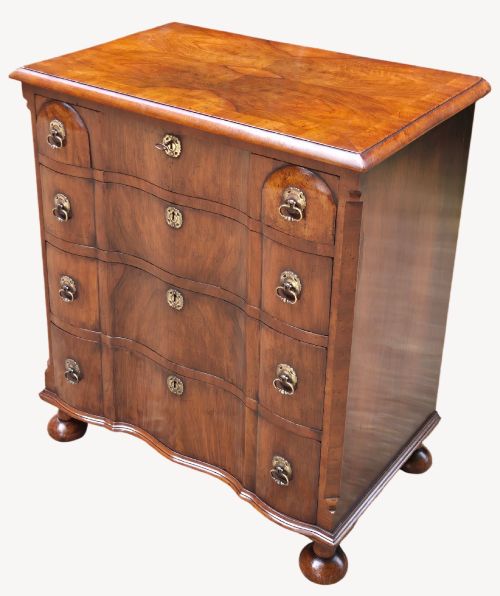
A small walnut storage chest offers compact utility in rich timber, ranging from Georgian proportions to Edwardian revival forms.
Small Walnut Storage Chest
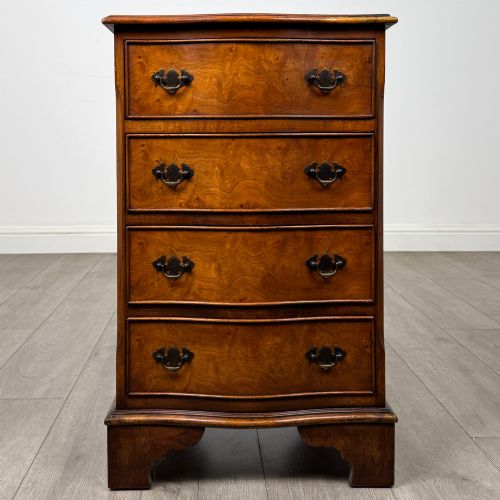
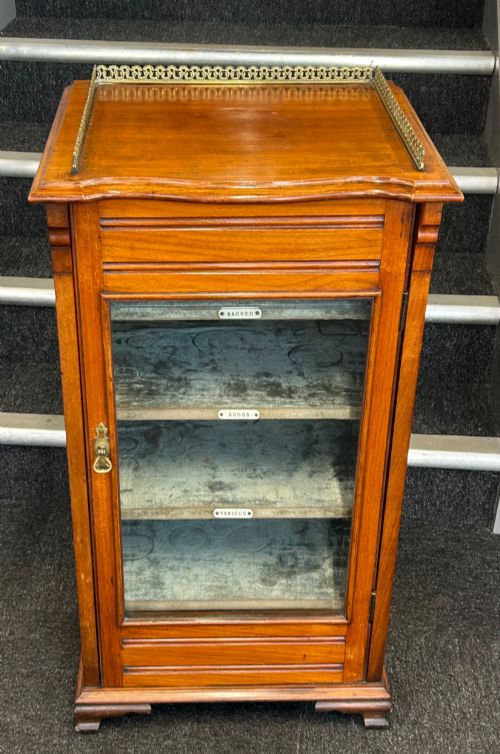
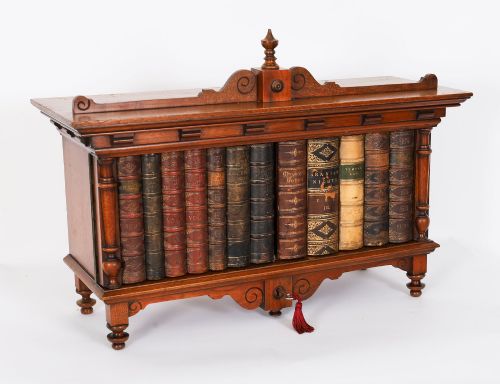
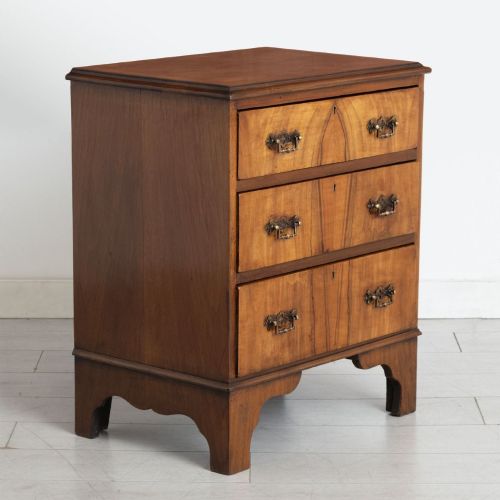
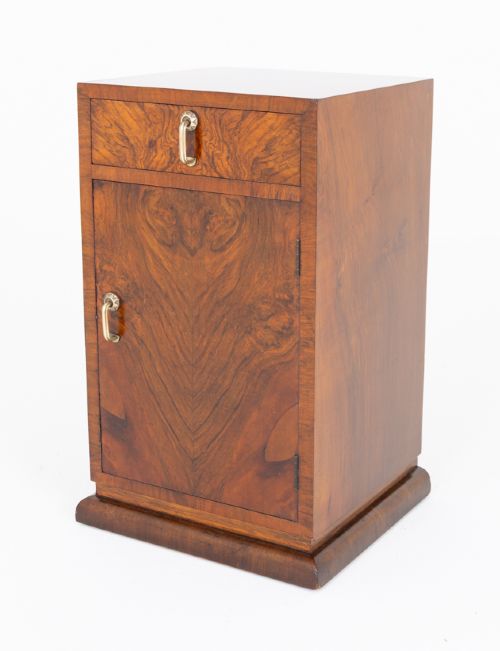
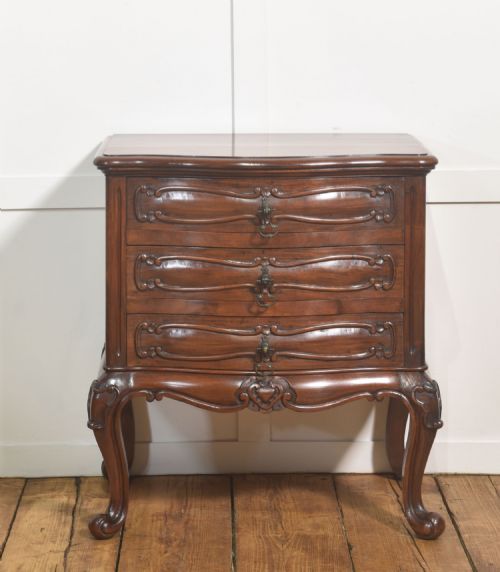
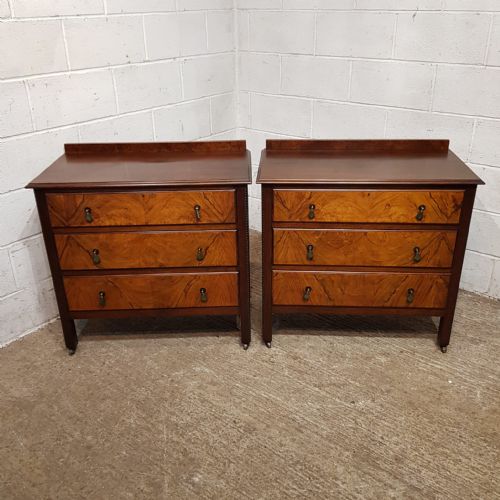
A small walnut storage chest provides practical containment within domestic spaces, taking forms such as chests of drawers, collectors' cabinets, commodes, and bedside cabinets. Buyers seeking this phrase encounter pieces spanning from the eighteenth century through the Victorian, Edwardian, and early twentieth-century periods.
The selection includes regional interpretations like French Provincial commodes and Italian commodes alongside English pieces. Revival movements also feature prominently, with Queen Anne style and Georgian revival items appearing frequently alongside period originals.
How they were made
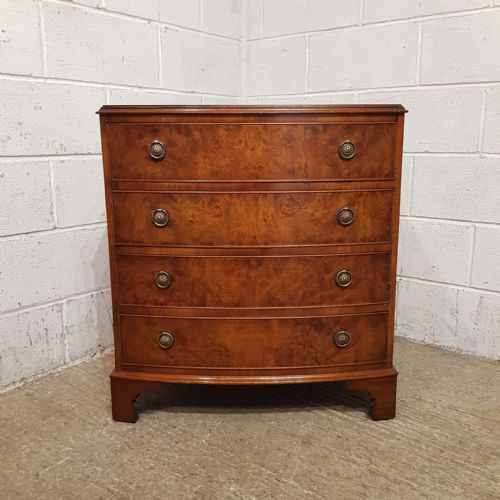
Construction relies heavily on walnut timber, often utilised as burr walnut veneer or figured walnut to display striking decorative grain patterns. Secondary timbers like oak and fruitwood support the primary structure, while brass handles and escutcheons finish the drawer fronts.
Joinery techniques follow traditional cabinet-making standards appropriate to each period, from eighteenth-century dovetailed drawer construction to later twentieth-century production methods. Surface finishing highlights the natural warmth and colour of the timber through polishing.
What varies in quality
The selection of the timber grain marks the distinction between standard and superior pieces, with matched burr walnut veneer representing high-status work. The subtlety of proportion, particularly in miniature or apprentice chests, dictates the visual success of the piece.
Casting and chasing quality in brass hardware separation ordinary mounts from finer period examples. The crispness of carved details on revival pieces and the integrity of the timber ground influence the overall standing of the item.
The Small Walnut Storage Chest Glossary
- Burr walnut
- A wood veneer taken from the warted growth on a walnut tree, producing swirling, highly decorative grain patterns. It commands attention on cabinet fronts and drawer faces.
- Commode
- A low chest of drawers or cabinet, often of French or Italian origin. The term frequently applies to decorative Continental storage pieces with marble tops or serpentine shapes.
- Wellington chest
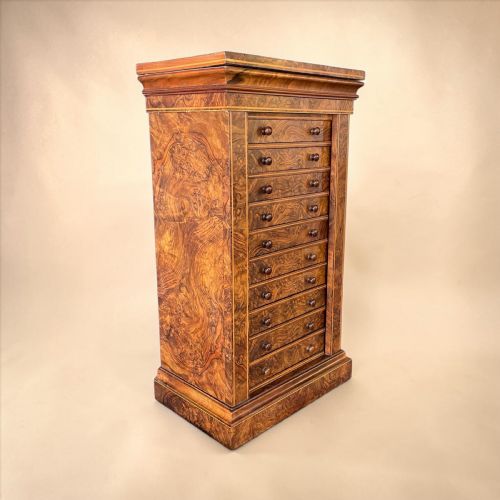
- A tall, narrow chest of drawers secured by a hinged locking side flap that is fastened with a key. This form originated in the nineteenth century for efficient paper and linen storage.
- Serpentine
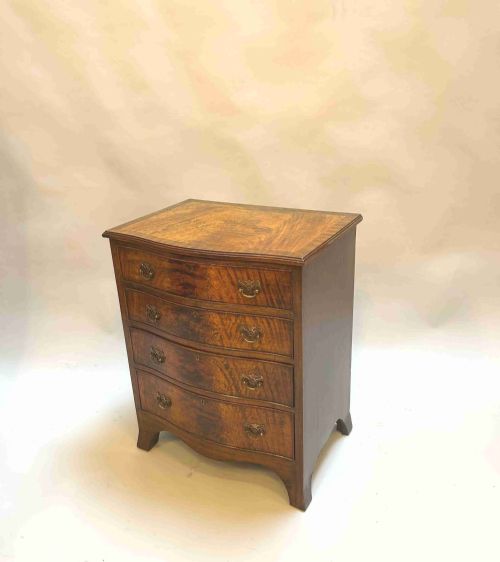
- A front contour characterised by a concave central section flanked by two convex curves, or the reverse. This undulating line demands precise carpentry and appears on high-end chests.
- Apprentice chest
- A small-scale chest constructed by a journeyman to demonstrate mastery of cabinet-making skills. These miniature pieces mirror full-sized furniture in construction and detail.
Small Walnut Storage Chest: Frequently Asked Questions
What is a small walnut storage chest used for?
These chests serve multiple domestic functions, from bedside storage and jewellery organisation to holding sheet music or microscope slides. Their compact footprint allows them to sit comfortably in hallways, bedrooms, or reception rooms.
Historically, specific variations like collectors' cabinets or napkin drawers fulfilled precise household storage needs. Today, they continue to provide surface space and enclosed storage without dominating a room.
How do I identify an 18th-century chest?
Eighteenth-century examples typically display native English walnut or figured timber with hand-cut dovetails and period brasses. Proportions tend to be restrained, often featuring bracket feet or plain moulded bases.
Construction details on the drawer linings and backboards reveal the age of the timber and the methods of the workshop. Comparing the secondary woods helps separate original Georgian pieces from later revivals.
What is the difference between solid walnut and burr walnut veneer?
Solid walnut uses planks cut straight from the tree trunk, showing a regular grain pattern that responds well to everyday wear. Burr walnut veneer applies thin slices of highly figured knot wood over a stable secondary timber.
Veneering allowed cabinet makers to cover large surfaces with symmetrical, decorative patterns that would be structurally unstable if made from solid burr wood.
How do I care for antique walnut furniture?
Keep walnut furniture away from direct sunlight and heat sources to prevent the timber and veneer from drying out or splitting. Gentle dusting with a dry, soft cloth maintains the finish without the need for heavy modern polishes.
Occasional application of traditional beeswax helps nourish the wood and preserves the deep colour developed over centuries. Maintaining stable room humidity protects both the timber and the underlying glue.