







Wooden Decanter Box
A wooden decanter box keeps fine spirits secure and close to hand, uniting sturdy carpentry with the quiet theatre of hosting.
Wooden Decanter Box
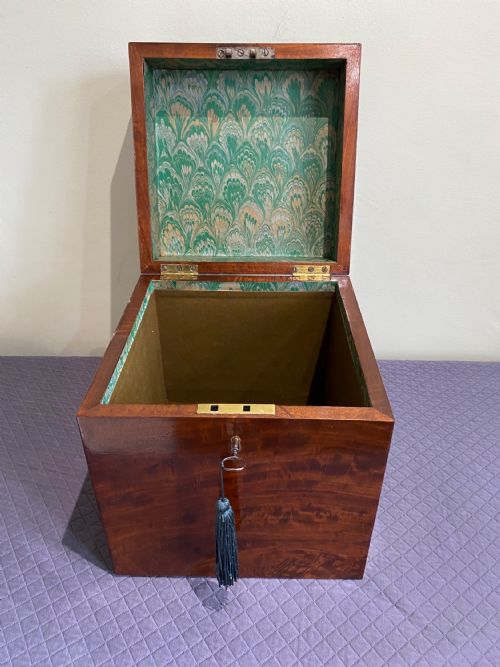
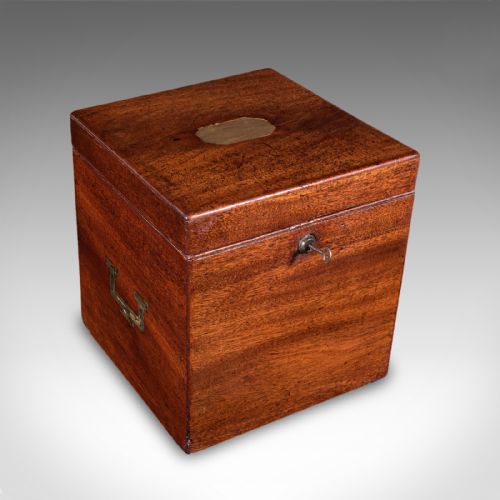
A wooden decanter box brings together portable luxury and secure storage for spirits, appearing across the Georgian, Regency, Victorian, and Edwardian periods. These pieces take several distinct forms, ranging from simple bottle carriers and cellarettes to elaborate tantalus and games compendiums fitted with cut crystal decanters.
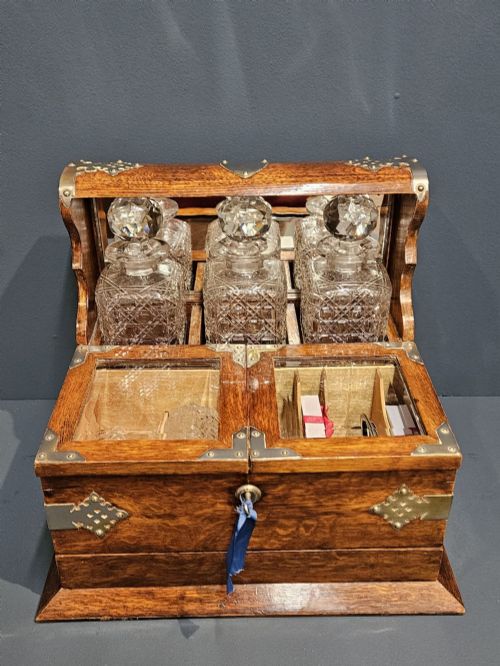
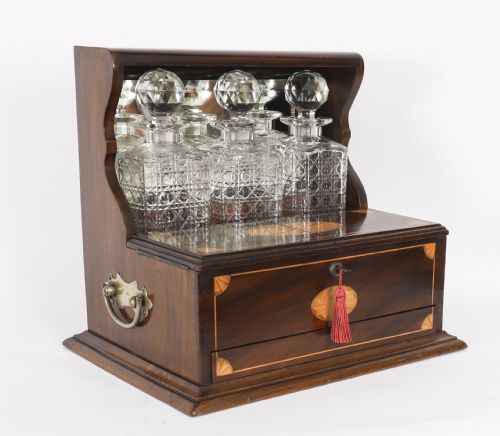
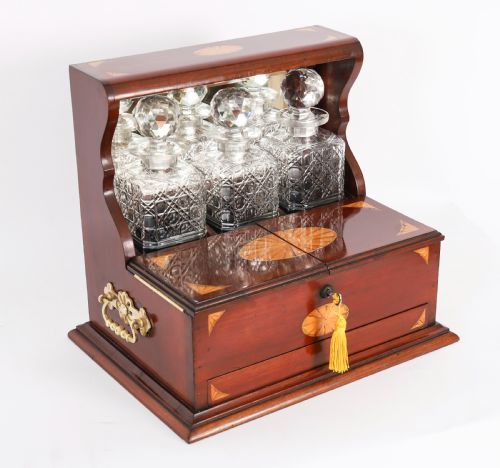
The version most commonly met on this page is the nineteenth-century oak or mahogany tantalus, often housing multiple cut glass bottles alongside spaces for cards and gaming pieces. Such items served as compact dry bars in period drawing rooms and studies.
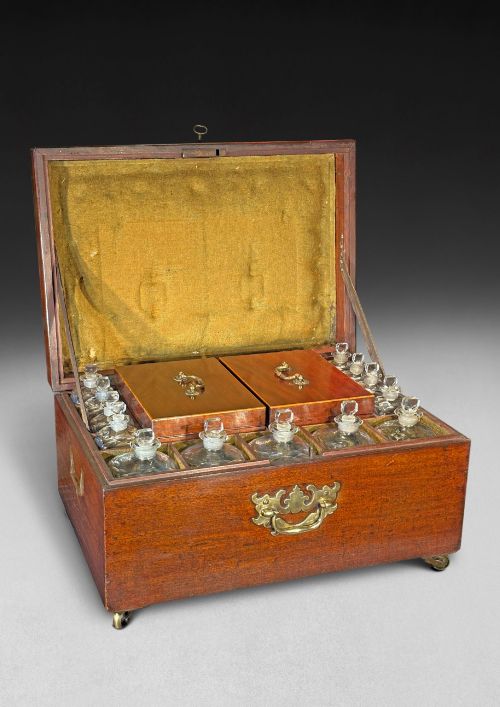
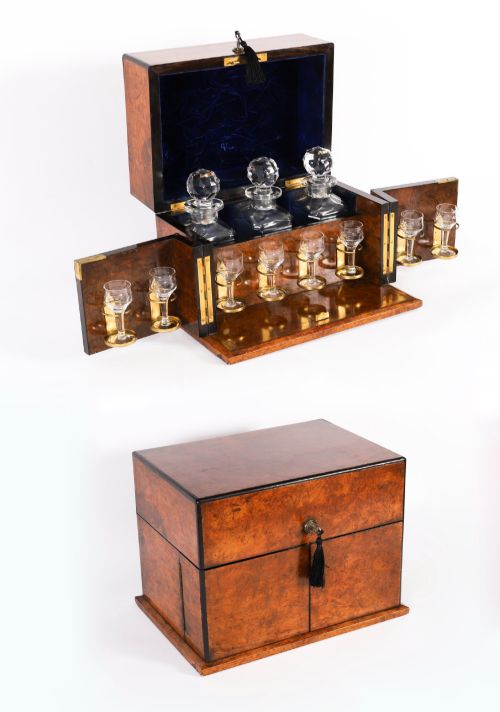
Alongside standard tantalus designs, buyers encounter early mahogany wine boxes and cellarettes, French liquor caskets, and occasional variations in pollard oak, blonde oak, walnut, burr birch, and satinwood inlay.
Materials and construction
Carpenters built these vessels using dense hardwoods such as mahogany, oak, walnut, and satinwood, frequently employing brass mounts, handles, and lock plates for structural reinforcement and security.
Interiors required precise joinery to create fitted compartments that held glass decanters, scent bottles, and crystalware firmly in transit, preventing breakage during movement about the house or estate.
Many examples incorporate silver plated hardware and intricate marquetry stringing, pairing utilitarian strength with decorative refinement appropriate for visible placement in domestic interiors.
Wooden Decanter Box Retail Price Guide 2026
Typical asking prices for wooden decanter box among the pieces listed under this phrase on Sellingantiques today, from the lower quarter to the upper quarter. They describe what is for sale here now, not the wider market.
Some nineteenth-century hosts relied on a locking tantalus to keep the brandy safe from the household staff.
Distinctions in craftsmanship
Quality rests in the selection of timber figure, such as pollard oak or figured mahogany, and the crispness of any inlaid woodwork or brass mounting. Superior items maintain rigid structural integrity in their internal divisions.
The grade of the glass components matters greatly, with heavy cut crystal decanters distinguishing high-status compendiums from simpler utility boxes. Original locking mechanisms and complete sets of matched bottles elevate a piece considerably.
The Wooden Decanter Box Glossary
- Tantalus
- A locking drink cabinet that holds decanters securely in place while displaying the contents, preventing unauthorized pouring through a metal bar mechanism that engages the bottle stoppers.
- Cellarette
- A freestanding or portable container designed to store bottles of wine or spirits near the dining table, often featuring internal dividers and robust wooden construction.
- Compendium
- A multi-functional box combining a spirit cabinet with integrated compartments for games, cards, or smoking accessories.
- Marquetry
- Decorative woodwork where thin pieces of contrasting veneer are applied to a wooden structure to form geometric or floral patterns.
- Casket
- A small, decorative box traditionally used for holding valuables, scent bottles, or jewellery, often lined with velvet or silk.
Wooden Decanter Box: Frequently Asked Questions
What is the difference between a tantalus and a cellarette?
A tantalus utilises a locking metal bar to secure decanters by their necks, allowing guests to see the spirits while restricting access.
A cellarette functions primarily as a storage chest for multiple bottles, often sitting lower to the ground or taking the form of a heavily partitioned box.
How do I date a wooden decanter box?
Dating relies upon timber choice, hardware style, and cabinet construction methods. Georgian and Regency examples typically favour clean mahogany lines, whereas Victorian and Edwardian pieces frequently employ oak, brass mounts, and complex mechanical locks.
Stylistic cues such as Sheraton inlay or Napoleon III French design characteristics help narrow the decade of manufacture.
Were these boxes meant to travel?
Most wooden decanter boxes were designed for domestic use within large houses, moving between the dining room, study, and drawing room.
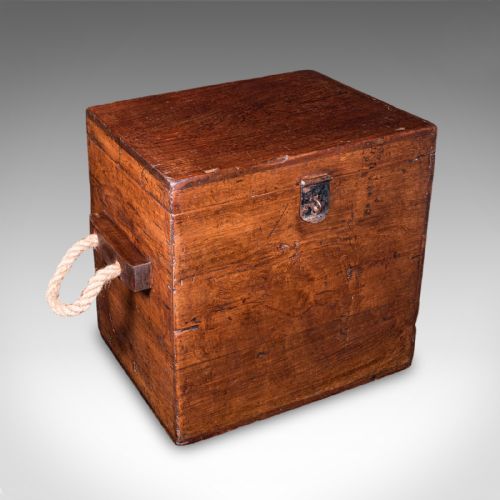
Sturdy carrying handles and secure internal framing allowed estate owners to transport full bottles safely without risking damage to the glassware.
What are games compendiums doing inside spirit boxes?
Late nineteenth-century social habits led manufacturers to combine hospitality with entertainment by housing playing cards and counters beneath the decanter tray.
This all-in-one design served as a complete social station for evening gatherings in Victorian and Edwardian drawing rooms.