





Edwardian Drinks Cabinet Box
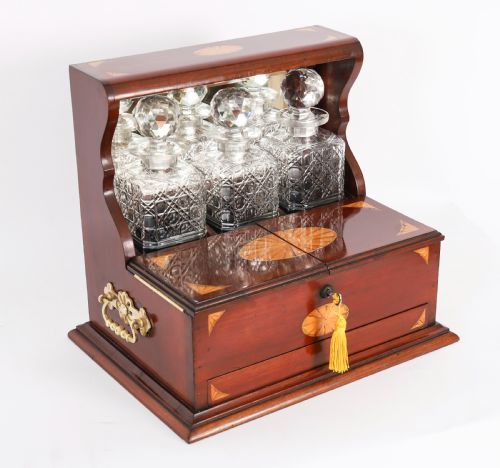
These Edwardian drinks cabinet box examples are clever portable cellars and games compendiums designed to keep spirits and entertainment secure.
Edwardian Drinks Cabinet Box
An edwardian drinks cabinet box brings together fitted compartments for crystal decanters, games compendiums, and dry bar accessories within a secure wooden housing. The pieces span periods from the Victorian era into the early twentieth century, though Edwardian examples predominate alongside late nineteenth-century iterations.
Forms vary from compact tantalus cabinets and games boxes to larger wine coolers, cellarettes, and safe cabinets incorporating specialised security. Many incorporate locking mechanisms designed to restrict access to the spirits housed within.
Materials range from figured mahogany and oak to satinwood, pollard oak, and coromandel, frequently enhanced by brass mounts and marquetry stringing. Interiors often house cut glass and cut crystal decanters alongside dedicated spaces for cards or gaming pieces.
Assessing quality and execution
Superior examples demonstrate meticulous timber selection, using highly figured pollard oak, coromandel, or satinwood with precise marquetry stringing rather than plain secondary woods. The integration of complex mechanisms, such as locking tantalus bars and integrated games compendiums, marks out finer workshops.
The hardware specification also dictates standing, with substantial brass mounts, complete sets of matching cut crystal decanters, and fitted safe interiors elevating an object above standard production pieces.
Edwardian Drinks Cabinet Box Retail Price Guide 2026
Typical asking prices for edwardian drinks cabinet box among the pieces listed under this phrase on Sellingantiques today, from the lower quarter to the upper quarter. They describe what is for sale here now, not the wider market.
Some boxes double as high-security vaults, pairing three crystal decanters with a built-in Withers safe for ultimate discretion.
Whytock & Reid
The Edwardian Drinks Cabinet Box Glossary
- Tantalus
- A locking device that holds decanters securely by their necks, preventing them from being removed without a key while still displaying the contents. The mechanism typically slides or lifts once unlocked.
- Cellarette
- A dedicated container or cabinet designed to hold bottles of wine or spirits, often lined and positioned near the dining table. Earlier forms include sarcophagus shapes standing on feet or pedestals.
- Games Compendium
- A fitted box containing equipment for multiple parlour games, such as cards, chess, and dice, frequently integrated into drinks cabinets of the period.
- Marquetry
- The art of applying decorative veneer pieces of different woods to a structural carcase to form geometric or floral patterns. Stringing refers to thin lines of contrasting wood inlaid into the surface.
- Coromandel
- A dense, heavily figured timber imported from Asia, prized by nineteenth-century cabinet makers for luxury boxes and small cabinet work.
Edwardian Drinks Cabinet Box: Frequently Asked Questions
How were tantalus mechanisms used?
A tantalus mechanism locks the stoppers of the decanters in place so the bottles cannot be lifted out of their frame without a key. This kept expensive spirits secure from household staff.
Owners would unlock the metal bar only when serving guests after dinner.
Where were these cabinets kept?
They typically sat on sideboards, side tables, or dedicated stands in dining rooms, libraries, or drawing rooms. Their portable nature allowed them to be moved between rooms as needed.
Larger cellarettes and safe cabinets often remained stationed in one primary entertaining space.
How do I distinguish periods?
Victorian pieces often display heavier proportions, gothic revival influences, or rich coromandel veneers, while Edwardian examples favour lighter mahogany or inlaid satinwood. Eighteenth-century revivals like Sheraton styles also appear.
Hardware design, timber choice, and locking technology help narrow the date of manufacture.